() ·

A painting made for you, by hand

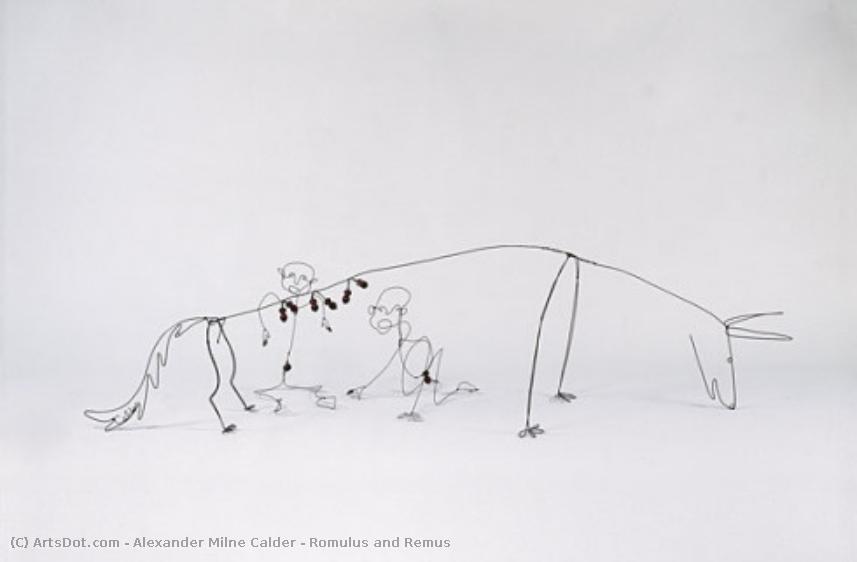
Romulus and Remus

Rankų darbo aliejinės reprodukcijos

Rankiniu būdu tapytas aliejus ant droblio jūsų pageidaujamame dydį ir rėmuose – tai mūsų menininkų pagal užsakymą sukurtas darbas. ( Perjungti į spausdinamus版作品 Perejti prie skaitmeninių vaizdų)

Kolekcinio objekto aprašas

Alexander Calder's 'Romulus and Remus' (1928) is a striking wire sculpture embodying Roman mythology with minimalist elegance. Explore its abstract form, symbolic meaning, and connection to Calder’s artistic legacy.

Autoriaus biografija

Atraskite Alexander Milne Calder, škotų-amerikiečių skulptorių, žinomą dėl architektūrinių šedevrų, tokių kaip Filadelfijos Rotušė. Tyrinėkite jo palikimą ir sūnaus bei anūko meninę liniją. #skulptūra #menas #Calder

from ·

Chapter 1

How large should it be?

Slide to change the size; the picture on the left shows the frame at its real width. The proportions of the original are kept.

Standartinis dydis
pagal užsakymą
CM
INCH

Pasirinkite iš mūsų nustatytų dydžių, atitinkančių originalaus meno kūrinio proporcijas.

plotis
aukštis

Įveskite jums reikiamą plotį ir aukštį, kad paveikslas atitiktų jūsų rėmą ar sieną. Kadangi šis darbas yra rankinio darbo, siekiant išgauti kitokios formos dydį, paveikslas gali būti šiek tiek didesnis (nuo kraštų bus palikta daugiau erdvės) arba mažesnis – pasirinkite jums patogiausią variantą. Prieš pradedant tapyti, atsiųsime jums skaitmeninį maketą patvirtinimui. Šioje puslapio nuotraukoje matomas vaizdas nėra galutinis rezultatas – jį parodys tik sukurtas maketas.

Chapter 2

How should it arrive?

Choose the edges of the stretched canvas

Choose your frame

Corner sample of the WhiteWrap canvas edge finish, stretched on solidus medžio

**Improved version:**
solidus medis bars
White €1
Corner sample of the BlurSideWrap canvas edge finish, stretched on solidus medžio

**Improved version:**
solidus medis bars
Blurside €1
Corner sample of the ExtendedWrap canvas edge finish, stretched on solidus medžio

**Improved version:**
solidus medis bars
Extended €1
Corner sample of the P118B picture frame: lieto polistirolo detalės, 5 cm wide and 3 cm thick
P118B €10
Corner sample of the P118H picture frame: lieto polistirolo detalės, 5 cm wide and 3 cm thick
P118H €10
Corner sample of the P118W picture frame: lieto polistirolo detalės, 5 cm wide and 3 cm thick
P118W €10
Corner sample of the P438Z picture frame: lieto polistirolo detalės, 5.5 cm wide and 3.5 cm thick
P438Z €10
Corner sample of the P508JH picture frame: lieto polistirolo detalės, 7 cm wide and 3.5 cm thick
P508JH €12
Corner sample of the P508YH picture frame: lieto polistirolo detalės, 7 cm wide and 3.5 cm thick
P508YH €12
Corner sample of the P805H picture frame: lieto polistirolo detalės, 5 cm wide and 3.5 cm thick
P805H €10
Corner sample of the P805Z picture frame: lieto polistirolo detalės, 5 cm wide and 3.5 cm thick
P805Z €10
Corner sample of the P919BZ picture frame: lieto polistirolo detalės, 7 cm wide and 3.5 cm thick
P919BZ €10
Corner sample of the P919G picture frame: lieto polistirolo detalės, 7 cm wide and 3.5 cm thick
P919G €10
Corner sample of the P919XJ picture frame: lieto polistirolo detalės, 7 cm wide and 3.5 cm thick
P919XJ €10
Corner sample of the P959ZH picture frame: lieto polistirolo detalės, 5 cm wide and 3 cm thick
P959ZH €10
Corner sample of the P968JZ picture frame: lieto polistirolo detalės, 6 cm wide and 4 cm thick
P968JZ €12
Corner sample of the W106C picture frame: solidus medžio

**Improved version:**
solidus medis, 5 cm wide and 3 cm thick
W106C €8
Corner sample of the W218G picture frame: solidus medžio

**Improved version:**
solidus medis, 5 cm wide and 3 cm thick
W218G €10
Corner sample of the W218JH picture frame: solidus medžio

**Improved version:**
solidus medis, 5 cm wide and 3 cm thick
W218JH €8
Corner sample of the W218Y picture frame: solidus medžio

**Improved version:**
solidus medis, 5 cm wide and 3 cm thick
W218Y €10
Corner sample of the W307PJ picture frame: solidus medžio

**Improved version:**
solidus medis, 6 cm wide and 3 cm thick
W307PJ €10
Corner sample of the W316G picture frame: solidus medžio

**Improved version:**
solidus medis, 6 cm wide and 3 cm thick
W316G €10
Corner sample of the W316PJ picture frame: solidus medžio

**Improved version:**
solidus medis, 6 cm wide and 3 cm thick
W316PJ €8
Corner sample of the W316Y picture frame: solidus medžio

**Improved version:**
solidus medis, 6 cm wide and 3 cm thick
W316Y €10
Corner sample of the W398PJ picture frame: solidus medžio

**Improved version:**
solidus medis, 5 cm wide and 3 cm thick
W398PJ €8
Corner sample of the W4111J picture frame: solidus medžio

**Improved version:**
solidus medis, 6.5 cm wide and 3.5 cm thick
W4111J €10
Corner sample of the W500HY picture frame: solidus medžio

**Improved version:**
solidus medis, 7 cm wide and 5 cm thick
W500HY €15
Corner sample of the W500JH picture frame: solidus medžio

**Improved version:**
solidus medis, 7 cm wide and 5 cm thick
W500JH €15
Corner sample of the W692G picture frame: solidus medžio

**Improved version:**
solidus medis, 8 cm wide and 4 cm thick
W692G €12
Corner sample of the W849H picture frame: solidus medžio

**Improved version:**
solidus medis, 5 cm wide and 3 cm thick
W849H €8
Corner sample of the W940BG picture frame: solidus medžio

**Improved version:**
solidus medis, 7.5 cm wide and 4.5 cm thick
W940BG €15
Corner sample of the W953PJ picture frame: solidus medžio

**Improved version:**
solidus medis, 6 cm wide and 3.5 cm thick
W953PJ €8
Corner sample of the H24-GOLD picture frame: medžio skulptūra su gipso sluosniu, 10 cm wide and 6 cm thick
H24-GOLD €30
Corner sample of the H24-SILVER picture frame: medžio skulptūra su gipso sluosniu, 10 cm wide and 6 cm thick
H24-SILVER €30
Corner sample of the H36-GOLD picture frame: medžio skulptūra su gipso sluosniu, 15 cm wide and 6.5 cm thick
H36-GOLD €45
Corner sample of the H36-SILVER picture frame: medžio skulptūra su gipso sluosniu, 15 cm wide and 6.5 cm thick
H36-SILVER €45
Rėmo peržiūra
Įrėmintas

Moulding: . Overall size with the frame: .

Chapter 3

Who paints it, and should anything change?

Examples of what can be changed: Replace face with customer photo; Add pet (e.g., replace cat with dog); Include hidden message in background; Change background landscape or elements.
After order, OriginalUniqueArt.com team will email client for instructions and provide a mockup preview

Pristatymas visame pasaulyje () per 3–4 savaites, o ne įprastai – per 5 savaites. (3 lapkritis). Kokybė lieka nepakeičiama.

Chapter 4

The finishing touches

A nameplate, as in a museum?

Išgraviruotos bronzinės plokštelės detalės

This elegant plaque features the artist's name and the title of the artwork, finely engraved for a timeless presentation.

It is made from bronze with a refined, elegant finish. The text is precisely laser-engraved for a sharp and permanent result. Measuring 9x2 cm, the plaque is compact yet easy to read. It's built to be durable and scratch-resistant, offering a professional, museum-quality look. Mounting is simple thanks to the included adhesive backing.

Skaidrios akrilo plokštelės informacija

The plaque includes essential engraved details such as the artist's name, the title of the artwork, the date it was created, the type of media used-like oil on canvas or watercolor-a brief description of the piece, and a QR code that links to the complete artwork information.

It is crafted from clear acrylic, offering a sleek, modern appearance. The text is UV-engraved in black to ensure strong visual contrast. With a size of 10x15 cm, it ensures optimal readability. It comes equipped with two metal hooks for secure wall mounting. The plaque is designed to be weather-resistant, making it suitable for various environments, and it includes interactive features that work seamlessly with smartphone scanning.

Juodos akrilo plokštelės informacija

This elegant plaque includes engraved information such as the artist's name, the title of the artwork, the date it was created, the type of media used (like oil on canvas or watercolor), a short description of the artwork, and a QR code for quick access to more information.

The plaque itself is made from refined black acrylic with a premium finish. The text is laser-engraved in white for high contrast and readability. Its size is 10x15 cm, designed to be easy to read. It comes with two metal hooks for professional mounting. The design is sleek and fits any interior style. It is also weather-resistant and durable, with built-in digital integration for mobile compatibility.

A protective varnish?

When do you need it?

Chapter 5

Your painting, as you ordered it

Romulus and Remus

Reprodukcijos technika

Reprodukcijos matmenys

-

Aukščiausios klasės meistras

Daugiau detalių, meistriškumo ir papildomo gamybos laiko

-

Reprodukcijos rėmėjimo parinktys

-

-

Dėl meno kūrinių ar reprodukcijų, kurių bet kuri pusė yra didesnė nei 105 cm (apie 41 inch), rėmas bus siunčiamas kaip išskaidytas surinkimo rinkinys. Šis metodas užtikrina saugų pristatymą ir apsaugo nuo transportavimo metu galimos žalos.

Reikalingas profesionalus surinkimas – tai nėra „pasidaryk pats“ (DIY) produktas.
Rinkinys turi būti surinktas, o drobė išplėsta naudojant patyrį profesionalų rėmininką, medžio klijus (nėra įtraukti į rinkinį), drobės plėšimo kleslę bei presas, kad rėmo rėžiai išliktų tiesūs, kol klijai išdžiūvus. Netinkamas surinkimas arba netolydus drobės įtampa gali negrįžtamai sugadinti meno kūrinį, todėl šie atvejai nėra užtraukiami mūsų garantijos.

  • Į komplektą įeina visi vientisos medienos elementai, tiksliai išpjauti pagal dydį.

  • Surmontinama naudojant pridėtus varžtus bei papildomai reikalingą medžio kliją kampų jungtims, kuris nėra pridėtas ir turi būti parinktas rėmininkui.

  • Reikalingi profesionalūs įrankiai, kurie nėra įtraukti į rinkinį: drobės kėlimo plytelės (stiprintuvai) ir klemiai, laikantys rėmo strygius tiesiu kampu, kol džiūsta lipas.

Svarbu:
Kampų jungtims reikalingi medžio klijai, barams reikia laikyti naudojant presas, kol klijai visiškai išdžiūvės, o surinktam rėmui įtempiamai privilgti būtinos drobės įtempimo plytযুক্ত. Šios priemonės į rinkinį neįtrauktos. Prieš užsakydami šio dydžio rinkinį, rekomenduojame pasimalkoti patyrusiu rėmų meistru.

Pavadinimo lentelė

-

-

Apsauginis lakas

Blizgus lakas (ryškina spalvas, saugo nuo šviesos ir drėgmės)

-

Personalizuoti kūrinį

Ką galima pakeisti (pavyzdžiui): pakeisti veidą klientui skirta nuotrauka; pridėti augintinį (pvz., katę pakeisti šuniu); įtraukti paslėptą žinutę fone; pakeisti fono kraštovaizdį ar elementus.

-

Skubiai

Pristatymas visame pasaulyje () per 3–4 savaites, o ne įprastai – per 5 savaites. (3 lapkritis). Kokybė lieka nepakeičiama.

-

Skubus pristatymas

Pristatymas visame pasaulyje () per 5 weeks. (10 lapkritis).

Įskaičiuota

Bendroji kaina

€ 289

Visos kainos suma € 289

Stiklo variantas prieinamas tik pasirinkus dydį iki 110 cm

Included with every order

  • Nemokamas greitasis pristatymas visame pasaulyje
  • Aukštos kokybės lininis drobė
  • Pilnas siuntimo draudimas
  • Muitinės mokesčių grąžinimo garantija
  • Tikro spalvų atitikimo garantija
  • 100 dienų grąžinimo politika (tik esant įtaigoms)
  • 100% pinigų grąžinimo garantija
  • Nuolaida dideliems užsakymams

A Moment Frozen in Steel: Exploring Calder’s “Romulus and Remus”

Alexander Milne Calder's "Romulus and Remus," crafted in 1928, isn’t merely a sculpture; it’s a distilled essence of myth rendered in delicate wire. This piece, a testament to the artist’s pioneering approach to three-dimensional form, transcends its subject matter – the legendary founders of Rome – to become a profound meditation on beginnings, brotherhood, and the very act of creation itself. Calder, deeply influenced by Constructivism and early Modernism, sought to liberate sculpture from the constraints of traditional materials, embracing the inherent qualities of industrial wire as both medium and metaphor.

The sculpture’s stark simplicity is its most arresting feature. Two figures, rendered with astonishing grace despite their skeletal construction, stand beneath a subtly arching structure that evokes a horizon line or perhaps a stylized landscape. The color palette – a resolute black and white punctuated by subtle grays – amplifies the work's austerity, forcing the viewer to focus entirely on form and movement. The lines themselves are paramount; thin, almost impossibly delicate wires define every contour, creating an illusion of both fragility and strength. This deliberate reductionist approach mirrors Calder’s broader philosophy: to strip away the superfluous and reveal the fundamental elements of a subject.

The Poetics of Chance and Kinetic Form

Calder's work in this period – particularly his “Cirque Calder” series – exemplifies his fascination with chance and spontaneity. He didn’t meticulously plan every curve or angle; instead, he allowed the wire to guide him, embracing the unpredictable nature of the material. This process is vividly captured in "Romulus and Remus," where the figures appear to be caught mid-action, poised on the precipice of a narrative yet undefined. The slight wobble inherent in the sculpture’s construction – a subtle consequence of its wire composition – hints at a kinetic energy, suggesting that even stillness can hold a dynamic potential.

The technique itself is deceptively complex. Calder skillfully bent and assembled hundreds of individual wires, creating a surprisingly robust structure despite its delicate appearance. The varying thicknesses of the wire contribute to the sculpture’s textural richness, offering subtle shifts in sheen as light catches the metal. This careful manipulation of material speaks to Calder's mastery of his chosen medium – a testament to his ability to transform industrial components into objects of profound beauty and intellectual resonance.

Myth, Brotherhood, and the Dawn of Rome

The subject matter—the story of Romulus and Remus—is deeply rooted in Roman mythology. The legend of the twins suckled by a she-wolf is an enduring symbol of resilience, survival, and the founding of civilization. Calder’s sculpture doesn't simply depict this narrative; it captures its essence – the primal struggle for existence, the bond between brothers, and the birth of a new order. The wire itself can be interpreted as representing the threads that connect us to our past, shaping our present and influencing our future.

Created in 1928, “Romulus and Remus” stands as a pivotal work in Calder’s oeuvre, marking a significant shift towards abstraction while retaining a powerful connection to his artistic roots. It's a sculpture that invites contemplation, prompting viewers to consider the interplay of form, material, and narrative – a timeless meditation on the foundations of human experience.

Klausimai ir atsakymai

Ar kūrinys „Romulus and Remus“ – Aleksandras Milnas Kalderis saugomas originalaus paveikslautojo valstybėje?

Ne – kūrinys saugomas užsienyje. Aleksandras Milnas Kalderis gimtoji šalis yra Jungtinė Karalystė, o kūrinio „Romulus and Remus“ originalas saugomas muziejuje, esančiame Jungtinės Amerikos Valstijos.

Kas yra „Romulus and Remus“ autorius ir kokia kūrinio data?

„Romulus and Remus“ autorius yra Aleksandras Milnas Kalderis, o kūrinys datuojamas 1928 m.

Kur galiu rasti statistiką apie „Romulus and Remus“ – Aleksandras Milnas Kalderis?

„Romulus and Remus“ – Aleksandras Milnas Kalderis puslapio Statistika statistika rodo viešųjų apsilankymų duomenis: šio kūrinio mėnesinius apsilankymus, palyginimą su daugiausia peržiūrėtomis šio autoriaus dalimis bei lankytojų kilmės regionus.

More about this painting

Peržiūrėti realaus dydžio版 Peržiūrėti AR realybėje Perjungti į spausdinamus版作品 Perejti prie skaitmeninių vaizdų Pasidalinti
Išsamiau Vadovas Pridėti į mėgstamiausius Atsisiųsti Panašūs eksponatai Rentgeno spindulių nuotrauka Automatinė diorama Q&A Statistika

In numbers

  • 1928the year it was painted
  • 29frames to choose from
  • standard sizes, in its own proportions
  • 5weeks to paint and deliver it

About the original

Aleksandras Milnas Kalderis

Aleksandras Milnas Kalderis

1898 - 1976, Jungtinė Karalystė

Quick facts about Aleksandras Milnas Kalderis

  • Gimimo Data: 1846 rugpjūčio 23 d.
  • Gimimo Vieta: Aberdeen, Jungtinė Karalystė
  • Menininkai, Kuriuos Įtakojo:
    • Alexander Stirling Calder
    • Alexander Calder
  • Meninis Stilius: Architektūrinė skulptūra
  • Mirties Data: 1923 birželio 14 d.
  • Pilietybė: Škotis-amerikietis
  • Pilnas Vardas: Alexander Milne Calder
  • Įtakoję Menininkai: ['John Rhind']
  • Žymiausi Darbai:
    • Filadelfijos rotušė
    • William Penn statula
    • Indėno figūra

Autoriaus biografija

Pradiniai Metai ir Formavimasis

Aleksandras Milnas Kalderis, gimęs 1846 metais Aberdyne, Škotijoje, buvo skulptorius, kurio gyvenimas ir kūryba atspindi XIX amžiaus meno permainas. Nors dažnai minimas kaip filadelfietiškos architektūros skulptūrų meistras, Kalderio kelias į meną prasidėjo gerokai anksčiau, Škotijoje, kur jis dirbo kartu su žymiu skulptoriumi Džonu Rindu. Studijuodamas Karališkojoje Edinburgo Akademijoje, Kalderis greitai pajuto stiprų potraukį į monumentaliosios skulptūros pasaulį. Vėliau persikėlęs į Londoną, jis prisidėjo prie Alberto memorialo kūrimo – ambicingo projekto, kuris padėjo jam įgyti patirties ir supratimą apie didelio mastelio skulptūrų gamybą. 1868 metais Kalderis emigravo į Jungtines Valstijas, apsigyvendamas Filadelfijoje, kur pradėjo naują gyvenimo etapą.

Filadelfijos Era ir Architektūrinės Skulptūros Meistrybė

Įsikūręs Filadelfijoje, Kalderis tęsė savo mokymus pas žinomą skulptorių Jozefą A. Beilį ir lankė pamokas su Tomu Eikinsu Pensilvanijos meno akademijoje. Šie mokytojai padėjo jam tobulinti techniką ir išvystyti unikalų stilių. Tačiau didžiausią šlovę Kalderiui atnešė ambicingas užsakymas – Filadelfijos Rotušės skulptūrinis papuošimas. Tai buvo monumentali užduotis, apimanti daugiau nei 250 marmuro ir bronzos kūrinių, kuriems sukurti prireikė net dvidešimt metų kruopštaus darbo. Kalderio vizija Rotušei suteikė didingumo ir simbolizmo, įkūnijant miesto istoriją ir idealus.

Pagrindiniai Darbai ir Kūrybinis Palikimas

Be Rotušės papuošimo, Aleksandro Milno Kalderio kūryboje išskiriami keli svarbūs darbai. Viljamo Peno statula, didžiulė bronzinė skulptūra, turėjo vainuoti Rotušės bokštą, simbolizuodama miesto įkūrėjo garbingumą. Taip pat verta paminėti Indiečio figūrą, sukurtą prieš ją montuojant ant Rotušės fasado, ir kruopščiai apšviestus Pietų bei Vakarų portalo, kuriuose spalvotos šviesos pabrėždavo skulptūrų detalę. Kalderio darbai pasižymėjo preciziškumu, detaliu atlikimu ir gebėjimu sujungti monumentalumą su estetišku grožiu.

Šeimos Palikimas ir Įtaka Kitos Kartos Skulptoriams

Aleksandro Milno Kalderio įtaka neapsiribojo jo pačio kūryba. Jo sūnus, Aleksandras Stirlingas Kalderis, taip pat tapo žymiu skulptoriumi, o anūkas – Aleksandras “Sendis” Kalderis – XX amžiaus meno pasaulyje išgarsėjo savo mobiliaisiais objektais. Šeimos tradicija menų srityje tęsėsi per kelias kartas, įrodydama Kalderio dinastijos stiprų paveldo svarbą. Aleksandro Milno Kalderio darbai ir jo šeimos kūrybinis palikimas šiandien saugomi įvairiuose muziejuose, tokiuose kaip Smithsonian American Art Museum ir Galleria Civica di Arte Moderna e Contemporanea Torino, leidžiantys grožėtis šios skulptūrų dinastijos nuveiktais darbais.

Istorinė Reikšmė ir Atminimas

Aleksandras Milnas Kalderis užima svarbią vietą Amerikos skulptūros istorijoje. Jo darbai, ypač Filadelfijos Rotušės papuošimas, simbolizuoja XIX amžiaus architektūrinio meno ambicijas ir meistriškumą. Kalderio kūryba atspindi jo gebėjimą sujungti monumentalųjį stilių su detalėmis ir estetišku grožiu. Jo indėlis į meną bus švenčiamas ir studijuojamas dar daugelį kartų, o jo šeimos palikimas tęsis per kitus skulptorius, įkvėptuosius Kalderio vizijos.

Trumpa informacija

  • Medium: Wire & Wood
  • Location: Guggenheim, NY
  • Movement: Constructivism
  • Influences:
    • Chance
    • Modernism
  • Dimensions: 30 1⁄2" × 124 1⁄2"
  • Artistic style: Abstract Sculpture

Karo viktorina

Kiekviename klausime yra tik vienas teisingas atsakymas.

Klausimas 1:
What is the primary material used in Alexander Calder’s ‘Romulus and Remus’?
Klausimas 2:
When was Alexander Calder’s ‘Romulus and Remus’ created?
Klausimas 3:
The artwork ‘Romulus and Remus’ is an example of which artistic movement?
Klausimas 4:
What does the she-wolf depicted in ‘Romulus and Remus’ symbolize?
Klausimas 5:
Which of the following best describes the style of ‘Romulus and Remus’?
Tyrinėkite meno kūrinius, suskirstytus pagal temas, stilius ir savybes.