
 Peržiūrėti realaus dydžio版
 Pasidalinti
 Dalintis
 Išsamiau
 Vadovas

 Atsisiųsti
 Panašūs eksponatai
 Rentgeno spindulių nuotrauka
 Automatinė diorama
 问答
问答 Statistika
Judas

- 96.0 x 130.0 cm


 Skaityti daugiau
Šiame puslapyje rodomas meno kūrinys yra saugomas autorių teisių įstatymais, todėl neturime teisės legaliai kurti ar parduoti jo identiškos reprodukcijos. Ši apsauga užtikrinama remiantis tokiais tarptautiniais susitarimais kaip Bernės konvencija ir pagal nacionalines įstatymų nuostatas, įskaitant tas, kurias nurodo JAV autoriškos teisės įstatymas – 17-asis skyrius.
Šis metodas visiškai atitinka autorių teises, nes jame nėra saugomo kūrinio kopijavimo ar dubliavimo. Tai yra kūrybinė reinterpretacija – naujas paveikslas, kurį įkvėpė originalas, tačiau kuris nėra jo identiškas.
Giclée / Meno spausdinimas
Muziejų lygio „giclée“ arba drobos spausdinimas: greita gamyba ir lankstios apdailos parinktys. ( Pirkti rankų darbo tapybą Perejti prie skaitmeninių vaizdų)




P118B €10

P118H €10

P118W €10

P438Z €10

P508JH €12

P508YH €12

P805H €10

P805Z €10

P919BZ €10

P919G €10

P919XJ €10

P959ZH €10

P968JZ €12

W106C €8

W218G €10

W218JH €8

W218Y €10

W307PJ €10

W316G €10

W316PJ €8

W316Y €10

W398PJ €8

W4111J €10

W500HY €15

W500JH €15

W692G €12

W849H €8

W940BG €15

W953PJ €8




Pasirinkite iš mūsų nustatytų dydžių, atitinkančių originalaus meno kūrinio proporcijas.

Įveskite jums reikiamą plotį ir aukštį, kad atvaizdas derėtų prie jūsų rėmo ar sienos. Spausdiną galima tik sumažinti, bet nepadidinti virš originalaus paveikslėlio dydžio, todėl keičiant proporcijas, dalis vaizdo prarandama. Prieš spausdinimą atsiųsime jums skaitmeninį maketą patvirtinimui. Šioje puslapio nuotraukoje matomas pjūvis nėra tikslus – jį rodo tik maketas.
Pristatymas visame pasaulyje () per 2 weeks, o ne įprastas 4/5 savaičių laikotarpis. (6 lapkritis)

Nemokamas greitasis pristatymas visame pasaulyje

Aukštos kokybės lininis drobė

Pilnas siuntimo draudimas

Muitinės mokesčių grąžinimo garantija

Tikro spalvų atitikimo garantija

100 dienų grąžinimo politika (tik esant įtaigoms)

100% pinigų grąžinimo garantija

Nuolaida dideliems užsakymams
 Stiklo variantas prieinamas tik pasirinkus dydį iki 110 cm

Judas
Giclée / Meno spausdinimas
Reprodukcijos matmenys
-


Bendroji kaina
€ 72
Judas – A Study in Regret and Betrayal by Albert Tucker
Albert Tucker’s “Judas,” painted in 1955, isn't merely a depiction of the biblical figure; it’s a profoundly unsettling exploration of guilt, isolation, and the enduring consequences of transgression. Rendered in his signature Expressionistic style, the painting immediately commands attention with its earthy palette – deep browns, ochres, and muted yellows—a visual embodiment of sorrow and decay. Tucker masterfully employs visible brushstrokes, layering paint to create a textured surface that feels both rough and vulnerable, mirroring the subject’s internal turmoil.
The composition is strikingly intimate, focusing on Judas's face – a study in shadowed features and downcast eyes. The figure dominates the frame, positioned slightly off-center within a tightly cropped space, creating a dynamic tension that draws the viewer into his despair. A stark rectangular block, held firmly by his hands, acts as a powerful visual barrier, isolating him from any potential solace or connection. This deliberate framing amplifies the sense of loneliness and reinforces the weight of his actions.
The Language of Expressionism
Tucker’s choice of technique is crucial to understanding the painting's emotional resonance. He eschews realistic representation in favor of a highly expressive approach, utilizing jagged lines to define Judas’s features – emphasizing the sharp edges of his regret and the fractured nature of his psyche. The brushwork itself is deliberately visible, conveying a sense of urgency and immediacy. Thick impasto builds up on certain areas, particularly around the face, creating a tactile quality that invites close inspection and encourages an emotional response.
The use of color further enhances this expressive intent. The dominant earth tones evoke a feeling of heaviness and stagnation, while the strategic application of red – in the hair and skin—adds a dramatic intensity to the scene, symbolizing both passion and violence. The diffused lighting, lacking any clear source, contributes to the overall atmosphere of gloom and despair, casting long shadows that seem to cling to Judas’s form.
Symbolism and Historical Context
“Judas” is steeped in religious symbolism, depicting a pivotal moment in Christian scripture – the betrayal of Jesus Christ. The scattered coins at the base of the painting are a potent reminder of the thirty pieces of silver Judas received for his treachery, representing the material cost of his actions. The rectangular block itself has been interpreted as a symbol of burden or perhaps even a barrier—a physical manifestation of the guilt and shame he carries.
Understanding the historical context is key to appreciating the painting’s depth. Created during a period of significant social and political upheaval, Tucker's work often grappled with themes of alienation, morality, and the complexities of human relationships. His exploration of Judas reflects a broader concern with the darker aspects of human nature – the capacity for betrayal and the enduring consequences of wrongdoing. The painting’s creation coincided with Tucker’s own personal struggles, adding another layer of emotional intensity to the work.
A Timeless Portrait of Regret
“Judas” is more than just a historical depiction; it's a hauntingly beautiful portrait of regret and isolation. Tucker’s masterful use of color, composition, and technique creates an image that lingers in the mind long after viewing. It serves as a powerful reminder of the enduring consequences of our choices and the profound impact of betrayal—a timeless meditation on human fallibility and the search for redemption.
Klausimai ir atsakymai
Koks kontrastas pasižymi kūrinys „Judas“ – Albert Tucker?
Kūrinio „Judas“ – Albert Tucker kontrasto lygis yra Statement.
Kokie yra „Judas“ – Albert Tucker realūs matmenys?
Originalaus dydžio kūrinys „Judas“ yra 96 x 130 cm. Originalūs matmenys padeda lengviau išsirinkti tinkamą reprodukcijos dydį.
Kokią nuotaiką ir emociją sujungia „Judas“?
„Judas“ kūryboje Dramatic nuotaika lydi Melancholic emociją.
Autoriaus biografija
Albert Tucker: A Life Bridging Mathematics and Art
- Born: Oshawa, Canada (1905)
- Died: 1995
Albert William Tucker was a remarkable figure whose life defied easy categorization. While primarily recognized as a distinguished Canadian mathematician, his legacy extends into the realm of art and intellectual history. He is celebrated for significant contributions to topology, game theory (particularly for popularizing the "Prisoner's Dilemma"), and non-linear programming, while also leaving behind a body of artistic work that reflects themes of alienation, morality, and social commentary.
Early Life and Education: A Foundation in Mathematics
Tucker’s journey began in Oshawa, Ontario. His upbringing emphasized education, fostering an early aptitude for mathematics. He pursued his undergraduate studies at the University of Toronto, earning a B.A. in 1928 and an M.A. in 1929. His pursuit of advanced knowledge led him to Princeton University where he earned his Ph.D. under the guidance of Solomon Lefschetz in 1932 with a dissertation titled *An Abstract Approach to Manifolds*. This period laid the groundwork for his future contributions, establishing a strong foundation in abstract mathematics.
Mathematical Contributions and Legacy
- The Prisoner's Dilemma: Tucker is widely known for giving name and interpretation to Merrill M. Flood and Melvin Dresher’s model of cooperation and conflict, solidifying its place as a cornerstone of game theory.
- Karush-Kuhn-Tucker Conditions: His work on the Karush-Kuhn-Tucker conditions significantly advanced non-linear programming.
- Mathematical Education: Tucker was deeply committed to mathematics education, serving as chair of the AP Calculus committee for the College Board (1960-1963) and actively participating with the Committee on the Undergraduate Program in Mathematics (CUPM). He also served as president of the Mathematical Association of America (MAA) from 1961-1962.
- Mentorship: Tucker’s influence extended through his mentorship of numerous prominent figures, including Nobel Prize winners John Nash and Lloyd Shapley, and Turing Award winner Marvin Minsky. His collaborations with Harold W. Kuhn further enriched the mathematical landscape.
Tucker's legacy is not solely confined to his direct contributions; it also encompasses his role as a vital source for oral histories within the mathematics community, solidifying his position as a respected and influential figure.
Artistic Expression: Themes of Isolation and Social Commentary
While primarily known for his mathematical achievements, Tucker was also an artist. His paintings, often characterized by expressive figurative styles, explored themes of alienation, morality, and the complexities of human existence. His artistic output reflects a keen observation of social issues and wartime experiences, offering poignant commentary on the human condition.
- Style: Expressionism
- Recurring Themes: Isolation, contemplation, moral dilemmas, depictions of city life, wartime experiences.
Notable artworks such as "Philosopher" exemplify his ability to convey profound emotions through bold lines, dramatic lighting, and a rich color palette. His artistic vision provides another layer to understanding the multifaceted nature of Albert Tucker's intellectual pursuits.

Albert Tucker
1905 - 1995 , Canada
Trumpa informacija
- Full Name: Albert William Tucker
- Nationality: Canadian
- Date Of Birth: 1905
- Date Of Death: 1995
- Place Of Birth: Oshawa, Canada
- Notable Artworks:
- Philosopher
- Memory of Leonski
- Artistic Movement Or Style: Expressionism
Susiję straipsniai
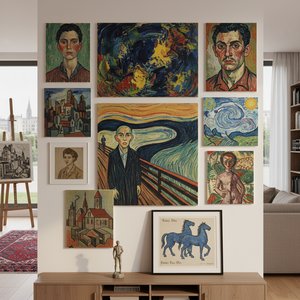
Ekspresionizmo Deimantai: 10 Šedevrai Jūsų Namų Dekorui
Atraskite ekspresionizmo šedevrus! 10 įtakingiausių meno kūrinių, atskleisiančių Muncho, Kirchnerio ir kitų meistrų emocijas. Išmokite apie tapybos stilius bei spalvų paletę. Aukščiausios kokybės dailės reprodukcijos jūsų namams – OriginalUniqueArt.com.

German Expressionism's 10 Defining Masterpieces | Art for Your Home
Explore 10 defining German Expressionism masterpieces – from Munch's 'The Scream' to Kandinsky’s abstracts. Discover the artists, stories & bold colors behind this powerful art movement. Find museum-quality reproductions at OriginalUniqueArt.com.
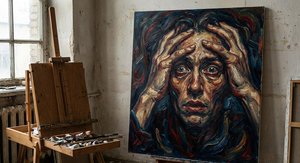
Figurative Expressionism: Emotional Intensity & Subjective Reality in 20th-Century Art
Explore the powerful world of Figurative Expressionism with OriginalUniqueArt. Discover key artists like Kirchner & Beckmann, understand its emotional depth, and learn how to collect this influential 20th-century art movement.
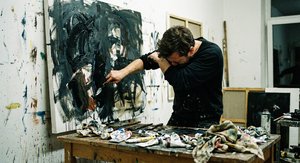
The Raw Emotion of Expressionism: A Deep Dive into its History, Characteristics & Enduring Influence
Explore the raw emotion of Expressionism with OriginalUniqueArt. Discover its history, key artists like Kirchner & Munch, and lasting influence on modern art. Expert insights for collectors & enthusiasts.

Albert Kretschmer: Capturing 19th-Century Costume & the Seeds of Expressionism
Explore the exquisite costume studies of Albert Kretschmer (1825-1891). Discover his detailed illustrations, influence on art history & connection to early Expressionism. Learn about collecting this remarkable artist's work.