

 Peržiūrėti realaus dydžio版
 Siųsti
 Dalintis
 Išsamiau
 Vadovas

 Atsisiųsti
 Panašūs eksponatai
 Rentgeno spindulių nuotrauka
 Diaporama
 Statistika
Untitled (231)

 Rodyti daugiau
Šiame puslapyje rodomas meno kūrinys yra saugomas autorių teisių įstatymais, todėl neturime teisės legaliai kurti ar parduoti jo identiškos reprodukcijos. Ši apsauga užtikrinama remiantis tokiais tarptautiniais susitarimais kaip Bernės konvencija ir pagal nacionalines įstatymų nuostatas, įskaitant tas, kurias nurodo JAV autoriškos teisės įstatymas – 17-asis skyrius.
Kaip pagarbią ir teisėtą alternatyvą, mes siūlome pagal užsakymą rankomis dažytus paveikslus, įkvėptus originalo. Mūsų įgudę ir profesionalūs menininkai kruopščiai tiria originalo stilių, nuotaiką ir meninę esmę, kad sukurtų naują, unikalią kūrinį, kuris sukelia tą paties jausmą – išlikdamas tuo tarciau originaliu, savarankišku kūrybiniu darbu.
Šis metodas visiškai atitinka autorių teises, nes jame nėra kūrinio kopijavimo ar dubliavimo. Tai yra kūrybinė reinterpretacija – naujas paveikslas, kurį įkvėpė originalas, tačiau kuris nėra jo identiškas.
Rankų darbo aliejinės reprodukcijos
Rankiniu būdu tapytas aliejus ant droblio jūsų pageidaujamame dydį ir rėmuose – mūsų menininkų darbas pagal užsakymą. ( Perjungti į spausdinimą Perejti prie skaitmeninių vaizdų)




P118B €10

P118H €10

P118W €10

P438Z €10

P508JH €12

P508YH €12

P805H €10

P805Z €10

P919BZ €10

P919G €10

P919XJ €10

P959ZH €10

P968JZ €12

W106C €8

W218G €10

W218JH €8

W218Y €10

W307PJ €10

W316G €10

W316PJ €8

W316Y €10

W398PJ €8

W4111J €10

W500HY €15

W500JH €15

W692G €12

W849H €8

W940BG €15

W953PJ €8




Pasirinkite iš mūsų nustatytų dydžių, atitinkančių originalaus meno kūrinio proporcijas.

Įveskite jums reikiamą plotį ir aukštį, kad paveikslas atitiktų jūsų rėmą ar sieną. Kadangi šis darbas yra rankinio darbo, siekiant išgauti kitokio formos dydį, paveikslas gali būti šiek tiek didesnis (nuo kraštų bus palikta daugiau erdvės) arba mažesnis – pasirinkite jums patogiausią variantą. Prieš pradedant tapyti, atsiųsime jums skaitmeninį maketą patvirtinimui. Šioje puslapio nuotraukoje matomas vaizdas nėra galutinis rezultatas – jį parodys tik sukurtas maketas.
Gavus užsakymą, OriginalUniqueArt.com komanda susisieks su klientu el. paštu dėl instrukcijų ir pateiks maketo pavyzdį
Pristatymas visame pasaulyje () per 3–4 savaites, o ne įprastai – per 5 savaites. (24 spalis). Kokybė lieka nepakeičiama.

Nemokamas greitasis pristatymas visame pasaulyje

Aukštos kokybės lininis drobė

Pilnas siuntimo draudimas

Muitinės mokesčių grąžinimo garantija

Tikro spalvų atitikimo garantija

100 dienų grąžinimo politika (tik esant įtaigoms)

100% pinigų grąžinimo garantija

Nuolaida dideliems užsakymams
 Stiklo variantas prieinamas tik pasirinkus dydį iki 110 cm

Untitled (231)
Reprodukcijos technika
Reprodukcijos dydis
-


Visų pasirinktų variantų kaina
€ 264
Autoriaus biografija
A Catalan Renaissance Man: The Life and Art of Albert Ràfols-Casamada
Albert Ràfols-Casamada, born in Barcelona in 1923 and passing away in 2009, was more than just a painter; he embodied a true renaissance spirit within the vibrant Catalan art scene. Coming from an artistic lineage – his father, Albert Ràfols i Cullerés, was also a respected painter – young Albert initially pursued a path in architecture at the University of Barcelona beginning in 1942. However, the allure of pure creative expression proved too strong, and by 1948 he had fully dedicated himself to painting. This decision marked not an abandonment of structure, but rather a shift towards constructing worlds through color, form, and texture. His early work resonated with post-expressionist and figurative styles, laying a crucial foundation for the abstract explorations that would define his mature artistic voice. Even in these initial phases, a poetic sensibility was evident, hinting at the deeper emotional currents that would consistently flow beneath the surface of his art. The formation of “Els Vuit” (“The Eight”) in 1946 – a collective uniting poets, sculptors, musicians, and painters – provided an essential platform for Ràfols-Casamada to exhibit alongside kindred spirits and establish himself within Barcelona’s burgeoning artistic community.Parisian Influences and the Path to Abstraction
A pivotal moment in Ràfols-Casamada's development arrived with a scholarship that allowed him to study art in Paris from 1950 to 1954. This period, shared with his future wife Maria Girona and fellow Catalan artists like Josep Guinovart and Antoni Tàpies, proved transformative. Immersed in the European artistic landscape, he absorbed new ideas and techniques, witnessing firsthand the currents shaping modern art. Paris served as a crucible where his nascent talent was refined and directed towards abstraction. The influence of Henri Matisse is palpable in Ràfols-Casamada’s later use of color and composition, while North American abstract expressionism contributed to his exploration of gesture and emotional intensity. Yet, he never fully surrendered to external trends; instead, he synthesized these influences with a distinctly Mediterranean sensibility rooted in the *noucentisme* movement – a Catalan aesthetic that sought to blend classical ideals with modern innovation. This unique fusion resulted in an abstract style characterized by poetic renderings of everyday reality, where seemingly simple forms and colors held layers of meaning and emotional resonance.Beyond the Canvas: Education, Poetry, and Public Art
Ràfols-Casamada’s creative energy extended far beyond the confines of painting. He was a multifaceted artist deeply committed to fostering artistic growth in others. In 1967, he co-founded the EINA school of art and design in Barcelona, modeled on the principles of the Bauhaus – emphasizing interdisciplinary learning and practical application. For seventeen years, he served as its director, shaping generations of Catalan artists and designers. This dedication to education underscores his belief in the power of art to transform individuals and society. Simultaneously, Ràfols-Casamada pursued a parallel career as a poet, beginning to write in 1939 and publishing his first volume, *Com una capsa*, in 1972, followed by the critically acclaimed anthology *Signe d'aire* in 1976. His poetry, primarily written in Catalan, often explored themes of everyday life and artistic expression, mirroring the introspective quality found within his paintings. He also extended his artistic vision into public spaces, creating murals – notably “Les Quatre Estacions” in Barcelona and a significant work in Lyon – demonstrating his ability to integrate art seamlessly into the urban environment.A Lasting Legacy: Recognition and Enduring Influence
Albert Ràfols-Casamada’s contributions to Spanish and Catalan art were widely recognized during his lifetime, culminating in numerous accolades including the National Plastic Arts Prize in 1980 and the Catalonia Visual Arts Prize in 2003. A major retrospective of his work held at the Barcelona Museum of Contemporary Art (MACBA) and the Valencian Institute of Modern Art (IVAM) in 2001 solidified his position as a leading figure in Catalan art history. His works now grace prestigious collections worldwide, including the Guggenheim Museum in New York, the Centre Georges Pompidou in Paris, the British Museum in London, and the Museu Nacional d'Art de Catalunya (MNAC) in Barcelona – testaments to his enduring artistic significance. Even after his death in 2009, his legacy continues to inspire. The generous donation of his personal archive to the Library of Catalonia ensures that future generations will have access to a wealth of materials documenting his creative process and intellectual pursuits. Ràfols-Casamada’s art remains a powerful reminder of the transformative potential of abstraction, the importance of artistic education, and the enduring beauty of poetic expression. He stands as a pivotal figure in 20th-century Catalan art, bridging tradition and innovation with grace and profound sensitivity.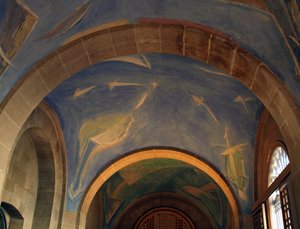
Albert Ràfols-Casamada
1923 - 2009 , Spain
Trumpa informacija apie kūrėją
- Artistic Movement Or Style: Abstract art, Post-expressionism
- Artists Who Influenced This Artist: ['Henri Matisse']
- Date Of Birth: 1923
- Date Of Death: 2009
- Full Name: Albert Ràfols-Casamada
- Nationality: Spanish
- Notable Artworks:
- Rafols Casamadact
- Rafols Casamada
- Untitled (231)
- Place Of Birth: Barcelona, Spain
Susiję straipsniai

Top 10 Abstraktus Ekspresionizmas: Simboliai ir Grožio Paslaptys
Atraskite 10 legendinių abstraktus ekspresionizmo kūrinių! Pažinkite Pollocko, Rothko ir kitų genijų istorijas bei jų spalvingas meno interpretacijas. Puikios meninės reprodukcijos jūsų namams – OriginalUniqueArt.com
Beyond the Lines: Mastering the High-Impact World of Contemporary Abstraction
Master the high-impact world of contemporary abstraction. Discover how bold colors, textures, and modern movements like Abstract Expressionism can transform your space with premium, high-energy art curated for the design-conscious professional.

Kandinsky's Masterpieces: 25 Paintings That Define Abstract Art | OriginalUniqueArt
Journey through Wassily Kandinsky's 25 most iconic abstract paintings. Explore his revolutionary use of color, form & spiritual expressionism. Find museum-quality Kandinsky reproductions and elevate your home decor with OriginalUniqueArt.com. Discover all masterpieces on OriginalUniqueArt.com!

Geometrinės Abstrakcijos Šedevrai: 10 Kūrinių, Pakeitusių Meną | OriginalUniqueArt.com
Atraskite 10 geometrinės abstrakcijos šedevrų – nuo Mondriano iki Malevičiaus! Sužinokite apie Piet Mondrian, Kazimir Malevič ir kitus menininkus. Meno kūriniai jūsų interjerui | OriginalUniqueArt.com

Mark Rothko: 25 Šedevrai, Apibūdinantys Spalvų Ir Jaustmo Gylį | OriginalUniqueArt
Atraskite 25 įspūdingiausius Mark Rothko kūrinius! Gilinkitės į abstraktaus meno spalvų laukus, ekspresionizmą ir jaustmingas tapybas. Meno reprodukcijos aukščiausia kokybe – OriginalUniqueArt.com