

 Peržiūrėti realaus dydžio版
 Siųsti
 Dalintis
 Išsamiau
 Vadovas

 Atsisiųsti
 Panašūs eksponatai
 Rentgeno spindulių nuotrauka
 Diaporama
 Statistika
Portrait of Louis Pasteur


 Rodyti daugiau
Giclée / Meno spausdinimas
Muziejų lygio „giclée“ arba drobos spausdinimas: greita gamyba ir lankstios apdailos parinktys. ( Pirkti rankomis tapytą reprodukciją Perejti prie skaitmeninių vaizdų)




P118B €10

P118H €10

P118W €10

P438Z €10

P508JH €12

P508YH €12

P805H €10

P805Z €10

P919BZ €10

P919G €10

P919XJ €10

P959ZH €10

P968JZ €12

W106C €8

W218G €10

W218JH €8

W218Y €10

W307PJ €10

W316G €10

W316PJ €8

W316Y €10

W398PJ €8

W4111J €10

W500HY €15

W500JH €15

W692G €12

W849H €8

W940BG €15

W953PJ €8




Pasirinkite iš mūsų nustatytų dydžių, atitinkančių originalaus meno kūrinio proporcijas.

Įveskite jums reikiamą plotį ir aukštį, kad atvaizdas derėtų prie jūsų rėmo ar sienos. Spausdiną galima tik sumažinti, bet nepadidinti virš originalaus paveikslėlio dydžio, todėl keičiant proporcijas, dalis vaizdo prarandama. Prieš spausdinimą atsiųsime jums skaitmeninį maketą patvirtinimui. Šioje puslapio nuotraukoje matomas pjūvis nėra tikslus – jį rodo tik maketas.
Pristatymas visame pasaulyje () per 2 weeks, o ne įprastas 4/5 savaičių laikotarpis. (24 spalis)

Nemokamas greitasis pristatymas visame pasaulyje

Aukštos kokybės lininis drobė

Pilnas siuntimo draudimas

Muitinės mokesčių grąžinimo garantija

Tikro spalvų atitikimo garantija

100 dienų grąžinimo politika (tik esant įtaigoms)

100% pinigų grąžinimo garantija

Nuolaida dideliems užsakymams
 Stiklo variantas prieinamas tik pasirinkus dydį iki 110 cm

Portrait of Louis Pasteur
Giclée / Meno spausdinimas
Reprodukcijos dydis
-


Visų pasirinktų variantų kaina
€ 70
A Vision of Scientific Eminence
In the quiet, focused atmosphere of a late nineteenth-century laboratory, Albert Edelfelt captures more than just a man; he captures the very essence of an intellectual revolution. His Portrait of Louis Pasteur is a profound meditation on the dawn of modern microbiology, presenting the legendary French chemist not as a distant icon, but as a figure deeply immersed in the tactile reality of his work. The painting serves as a window into a moment where scientific inquiry meets artistic mastery, inviting the viewer to witness the intense concentration and the heavy weight of discovery that defined Pasteur’s life. Through Edelfelt's lens, we see the pioneer surrounded by the tools of his trade—glassware, vials, and experimental apparatus—each element contributing to a narrative of relentless pursuit and the quiet dignity of scientific labor.
The emotional resonance of the piece lies in its ability to bridge the gap between the observer and the observed. There is an intimate, almost reverent quality to the way Edelfelt renders the laboratory setting, transforming a space of clinical study into a sanctuary of human intellect. For collectors and enthusiasts of historical portraiture, this work offers a rare opportunity to possess a piece that embodies the spirit of the Belle Époque—a period characterized by an unshakeable belief in progress and the power of human reason. The painting does not merely depict a subject; it evokes the atmosphere of an era where every drop of liquid in a test tube held the potential to change the course of medical history.
Mastery of Impressionistic Realism
Technically, Edelfelt achieves a breathtaking balance between Impressionistic vibrancy and Academic precision. Utilizing the rich, luminous qualities of oil on canvas, the artist employs a technique that allows for both meticulous anatomical accuracy and a soft, atmospheric light. One can observe the subtle gradations of color in Pasteur’s skin tones, which catch the ambient light of the lab, creating a lifelike warmth that breathes life into the portrait. The brushstrokes, while grounded in realism, possess a certain fluidity and texture—particularly in the rendering of the laboratory glassware and the fabric of Pasteur's attire—that lends the composition a sense of movement and vitality.
This sophisticated approach to light and shadow, often referred to as chiaroscuro, serves to direct the viewer's eye toward the subject's thoughtful expression. The interplay of light reflecting off the glass bottles on the table creates a rhythmic pattern of highlights that guides us through the depth of the room. For those looking to integrate such a masterpiece into a curated interior, the painting offers a versatile elegance. Its muted, earthy palette and sophisticated textures make it an ideal centerpiece for a study, a library, or a formal gallery space, providing a sense of historical gravity and intellectual sophistication to any environment.
A Legacy Captured in Pigment
Beyond its aesthetic brilliance, the portrait is steeped in profound symbolism. The laboratory environment acts as a metaphor for the human mind's capacity to unravel the mysteries of the natural world. Every bottle and vial serves as a visual testament to Pasteur’s tireless research into germ theory and vaccination. Edelfelt, a Finnish master who found his greatest acclaim in the heart of Paris, understood that to paint Pasteur was to paint the very foundation of modern hygiene and public health. The composition captures a moment of stillness within a life of constant motion, suggesting that true scientific breakthroughs are born from moments of profound, solitary reflection.
Owning a high-quality reproduction of this work is an invitation to celebrate the enduring legacy of human curiosity. It is a piece designed for those who appreciate art that tells a story—a story of courage, dedication, and the transformative power of knowledge. Whether displayed as a tribute to scientific history or as a cornerstone of classical decor, Edelfelt’s Portrait of Louis Pasteur remains an eternal emblem of achievement, reminding us that even in the smallest laboratory, the greatest revolutions begin.
问答 (or more naturally for a website heading): Klausimai ir atsakymai
Kokia yra „Portrait of Louis Pasteur“, autorius – Albertas Edelfeltas švytėjimo intensyvumas?
„Portrait of Louis Pasteur“ spalvos pasižymi Dark šviesos intensyvumu.
Kokia spalva dominuoja „Portrait of Louis Pasteur“, autorius – Albertas Edelfeltas kompozicijoje?
Espresso (#482e20) yra pagrindinė kūrinio „Portrait of Louis Pasteur“, autorius – Albertas Edelfeltas spalva.
Kokią emociją sukelia „Portrait of Louis Pasteur“, autorius – Albertas Edelfeltas?
„Portrait of Louis Pasteur“ kūryboje Elegant nuotaika lydi Calm emociją.
Autoriaus biografija
Ankstyvieji gyvenimo ir kūrybos keliai
Albertas Edelfeltas, gimęs liepos 21 dieną 1854 metais Porvoo mieste Suomijoje, buvo išskirtinis tapytojas, kurio vardas įėjo į Suomijos meno istoriją. Jo tėvai, Karl Albertas Edelfeltas ir Aleksandra Edelfelt (Brandt), kalbėjo švedų kalba, tačiau sūnaus gyvenime stipriai pasireiškė ryšys su gimtosios šalies kultūra. Dar jaunystėje Albertui paaiškėjo aistra menui, todėl 1869 metais jis pradėjo formalų mokymąsi Suomijos meno draugijos piešimo mokykloje. Šis žingsnis buvo pirmasis svarbus etapas jo kūrybiniame kelyje.
Mokslai ir įtaka
Edelfelto meninis ugdymas tęsėsi prestižinėse Europos meno akademijose. Antverpeno karališkojoje meno akademijoje (1873–1874) jis gilino istorinės tapybos žinias, o vėliau, Paryžiaus nacionalinėje aukštojoje meno mokykloje (1874–1878), patyręs prancūzų tapytojo Žano Leono Žeromo įtaką, tobulino savo techniką. Trumpa viešnagė Sankt Peterburge (1881–1882) praplėtė jo meninį horizontą ir suteikė naujų impulsų. Žeromo mokykla padėjo Edelfeltui išlavinti preciziškumą, detalių perteikimą ir kompozicijos subtilybes, tačiau jis niekada neatsisakė savo individualios vizijos.
Atsiskyrimas ir svarbiausi darbai
Edelfelto karjeros proveržiu tapo aukso medalis 1889 metų Paryžiaus visuotinėje parodoje. Tačiau jo meno pasaulyje išskyrė ne tik apdovanojimai, bet ir unikalus stilius bei temų pasirinkimas. Tarp žymiausių darbų – Liudviko Pastero portretas, už kurį jis buvo apdovanotas Garbės legiono ordinu 1886 metais. Šis portretas, perteikiantis mokslininko intelektą ir orumą, tapo vienu iš Edelfelto vizitinių atkortelių. Kiti svarbūs darbai – Jauna moteris savo kabinete, demonstruojantis meistrišką moteriško grožio įvaizdžio perteikimą, ir Po beržais, liūdnokas suomiškų kraštovaizdžių vaizdas.
Palikimas ir įtaka Suomijos menui
Edelfeltas buvo pirmasis suomių dailininkas, pasiekęs tarptautinės šlovės aukštumas. Jo kūryba turėjo didelį poveikį realizmo meno judėjimui Suomijoje. Jis padėjo jauniesiems tapytojams, tokiems kaip Akselis Galen-Kallela ir Gunaras Berndtsonas, įsitvirtinti Paryžiaus meno pasaulyje. Edelfelto darbai yra eksponuojami garsiausiuose muziejuose, įskaitant Atėneumo meno muziejų Helsinkyje. Jo atminimas buvo pagerbtas 2004 metais išleidus 100 eurų nominalo Alberto Edelfelto minėjimo monetą, skirtą jo 150-osioms gimimo metinėms.
Pagrindiniai darbai ir muziejų kolekcijos
Daugiau informacijos:
Albertas Edelfeltas
1854 - 1905 , Suomija
Trumpa informacija apie kūrėją
- Gimimo Data: 1854 liepos 21 d.
- Gimimo Vieta: Porvoo, Suomija
- Menininkų Įtaka: ['Akseli Gallen-Kallela']
- Meninis Stilius: Realizmas
- Mirties Data: 1905 m.
- Pilietybė: Suomis
- Pilnas Vardas: Albert Gustaf Aristides Edelfelt
- Įtakoję Menininkai: ['Jean-Léon Gérôme']
- Žymiausi Darbai:
- Portretas Liui Pasterui
- Jauna moteris boudoire
- Po beržais
Susiję straipsniai

The Precision of Perception: Scientific Illustration as Art & Epistemology
Explore the fascinating history of scientific illustration – where art meets accuracy. Discover key artists like Karl Blossfeldt & Maud H. Purdy, and delve into its profound epistemological roots. OriginalUniqueArt offers museum-quality reproductions.
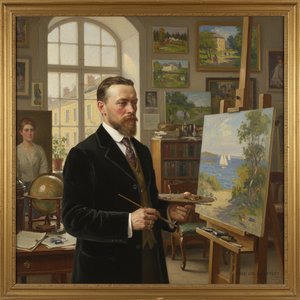
Albert Edelfelt: A Pioneer of Finnish Realism & International Impressionist Circles
Explore the life & work of Albert Edelfelt, a pioneering Finnish Realist painter who bridged Impressionism & national identity. Discover his masterpieces and lasting influence on art history.
The Flourishing Canvas: A Historical & Artistic Exploration of Botanical Illustration
Explore the rich history of botanical illustration! Discover key artists like Havell & Barraband, learn about scientific accuracy & aesthetic beauty. Shop museum-quality reproductions at OriginalUniqueArt.

The Evocative Detail of Nature: A History of Naturalistic Illustration
Explore the rich history of botanical illustration! Discover pioneering artists like Maria Sibylla Merian & Marianne North. Learn about scientific precision, artistic expression, and find museum-quality reproductions at OriginalUniqueArt.
The Art of Precision: Exploring the Beauty and Legacy of Scientific Illustration
Discover the exquisite intersection of science and fine art. Explore the history of scientific illustration, from botanical watercolor masters to nature's intricate geometry, through an expert lens of art history and technical precision.
