

 Peržiūrėti realaus dydžio版
 Siųsti
 Dalintis
 Išsamiau
 Vadovas

 Atsisiųsti
 Panašūs eksponatai
 Rentgeno spindulių nuotrauka
 Diaporama
 Statistika
Louis Pasteur
 Acrylic On Canvas
- WallArt
- Realist Painting
 1885
1885- 19th Century
 154.0 x 126.0 cm
 Orsė muziejus
 Rodyti daugiau
Giclée / Meno spausdinimas
Muziejų lygio „giclée“ arba drobos spausdinimas: greita gamyba ir lankstios apdailos parinktys. ( Pirkti rankomis tapytą reprodukciją Perejti prie skaitmeninių vaizdų)




P118B €10

P118H €10

P118W €10

P438Z €10

P508JH €12

P508YH €12

P805H €10

P805Z €10

P919BZ €10

P919G €10

P919XJ €10

P959ZH €10

P968JZ €12

W106C €8

W218G €10

W218JH €8

W218Y €10

W307PJ €10

W316G €10

W316PJ €8

W316Y €10

W398PJ €8

W4111J €10

W500HY €15

W500JH €15

W692G €12

W849H €8

W940BG €15

W953PJ €8




Pasirinkite iš mūsų nustatytų dydžių, atitinkančių originalaus meno kūrinio proporcijas.

Įveskite jums reikiamą plotį ir aukštį, kad atvaizdas derėtų prie jūsų rėmo ar sienos. Spausdiną galima tik sumažinti, bet nepadidinti virš originalaus paveikslėlio dydžio, todėl keičiant proporcijas, dalis vaizdo prarandama. Prieš spausdinimą atsiųsime jums skaitmeninį maketą patvirtinimui. Šioje puslapio nuotraukoje matomas pjūvis nėra tikslus – jį rodo tik maketas.
Pristatymas visame pasaulyje () per 2 weeks, o ne įprastas 4/5 savaičių laikotarpis. (20 spalis)

Nemokamas greitasis pristatymas visame pasaulyje

Aukštos kokybės lininis drobė

Pilnas siuntimo draudimas

Muitinės mokesčių grąžinimo garantija

Tikro spalvų atitikimo garantija

100 dienų grąžinimo politika (tik esant įtaigoms)

100% pinigų grąžinimo garantija

Nuolaida dideliems užsakymams
 Stiklo variantas prieinamas tik pasirinkus dydį iki 110 cm

Louis Pasteur
Giclée / Meno spausdinimas
Reprodukcijos dydis
-


Visų pasirinktų variantų kaina
€ 70
The Genesis of a Masterpiece
Albert Edelfelt’s “Louis Pasteur,” painted in 1885, isn't merely a portrait; it’s a meticulously crafted distillation of an era – the burgeoning age of scientific discovery and the quiet revolution taking place within the laboratories of France. Commissioned during a period of intense intellectual ferment, this oil-on-canvas work transcends simple representation to embody Pasteur’s unwavering commitment to unraveling the mysteries of life and disease. Edelfelt, a Finnish artist deeply influenced by Northern European realism, chose to capture Pasteur not as a celebrated figure in public acclaim, but as a man profoundly engaged in his craft – a scientist immersed in the focused intensity of his laboratory.
The painting’s genesis lies within the context of Pasteur's groundbreaking work. His pioneering research into germ theory, vaccination against rabies and anthrax, and pasteurization were fundamentally reshaping medicine and public health. Edelfelt, keenly aware of this transformative impact, sought to immortalize not just Pasteur’s physical presence but also the spirit of relentless inquiry that defined his legacy. The choice of setting – a meticulously rendered laboratory filled with scientific instruments – immediately establishes this intellectual atmosphere, suggesting a space dedicated to observation, experimentation, and the pursuit of knowledge.
A Symphony of Detail: Technique and Style
Edelfelt’s masterful technique is evident in every brushstroke. He employs a rich, layered impasto—a thick application of paint—that lends texture and depth to the scene. The careful rendering of light and shadow creates a palpable sense of realism, drawing the viewer into Pasteur's world. Notice particularly the subtle gradations of color applied to the various glass bottles and scientific equipment; each element is rendered with painstaking detail, reflecting Edelfelt’s dedication to accuracy. The composition itself is carefully balanced, guiding the eye through the scene – from Pasteur himself, deeply absorbed in his work, to the surrounding apparatus that speaks volumes about his research.
- Color Palette: A muted palette of browns, greens, and blues dominates, reflecting the laboratory’s atmosphere.
- Brushwork: Edelfelt's brushstrokes are visible and deliberate, contributing to the painting's textured surface.
- Lighting: The use of chiaroscuro (strong contrasts between light and dark) emphasizes Pasteur’s figure and highlights the details of his workspace.
Symbolism and the Portrait of a Mind
Beyond its technical brilliance, “Louis Pasteur” is laden with symbolic meaning. The bottles scattered around the laboratory represent the countless experiments and observations that constitute Pasteur's scientific journey. The focused gaze of Pasteur himself embodies his intellectual rigor and unwavering dedication to his work. He’s not a triumphant hero; he’s a man consumed by curiosity, driven by an insatiable desire to understand the natural world. The inclusion of specific instruments—beakers, flasks, and retorts—are not merely decorative elements but rather visual cues that underscore Pasteur's scientific pursuits.
The painting subtly suggests the transformative power of science – a quiet revolution unfolding within the confines of the laboratory, with profound implications for humanity’s future.A Legacy Preserved: Emotional Resonance and Artistic Significance
“Louis Pasteur” is more than just a portrait; it's a testament to the enduring legacy of scientific innovation. It captures not only the likeness of a brilliant mind but also the spirit of inquiry that defines the modern era. The painting’s emotional resonance lies in its portrayal of focused concentration and unwavering dedication—qualities that continue to inspire scientists, artists, and thinkers today. It serves as a poignant reminder of the transformative power of knowledge and the profound impact one individual can have on the world. Reproductions of this iconic work offer a beautiful way to bring this powerful image into your home or office, celebrating both artistic mastery and scientific achievement.
问答 (or more naturally for a website heading): Klausimai ir atsakymai
Kokio dydžio „Louis Pasteur“ spausdinimas tiktų mano kambariui?
Living Room eria rekomenduojamas „Louis Pasteur“, autorius – Albertas Edelfeltas spausdinimo dydis yra Medium.
Kada buvo sukurta „Louis Pasteur“ ir prie kokio stiliaus priskiriama?
„Louis Pasteur“, autorius – Albertas Edelfeltas sukurta 1885 m. ir priklauso Realist Painting stiliui.
Kur galiu rasti statistiką apie „Louis Pasteur“, autorius – Albertas Edelfeltas?
Eksistuoja Statistika puslapis kūriniui „Louis Pasteur“. Jame pateikiama mėnesio apžiūrų diagrama, apimanti šį kūrinį bei kitus šio kūrybinio veikėjo darbus, su skirstymu pagal šalis ir kalbas.
Autoriaus biografija
Ankstyvieji gyvenimo ir kūrybos keliai
Albertas Edelfeltas, gimęs liepos 21 dieną 1854 metais Porvoo mieste Suomijoje, buvo išskirtinis tapytojas, kurio vardas įėjo į Suomijos meno istoriją. Jo tėvai, Karl Albertas Edelfeltas ir Aleksandra Edelfelt (Brandt), kalbėjo švedų kalba, tačiau sūnaus gyvenime stipriai pasireiškė ryšys su gimtosios šalies kultūra. Dar jaunystėje Albertui paaiškėjo aistra menui, todėl 1869 metais jis pradėjo formalų mokymąsi Suomijos meno draugijos piešimo mokykloje. Šis žingsnis buvo pirmasis svarbus etapas jo kūrybiniame kelyje.
Mokslai ir įtaka
Edelfelto meninis ugdymas tęsėsi prestižinėse Europos meno akademijose. Antverpeno karališkojoje meno akademijoje (1873–1874) jis gilino istorinės tapybos žinias, o vėliau, Paryžiaus nacionalinėje aukštojoje meno mokykloje (1874–1878), patyręs prancūzų tapytojo Žano Leono Žeromo įtaką, tobulino savo techniką. Trumpa viešnagė Sankt Peterburge (1881–1882) praplėtė jo meninį horizontą ir suteikė naujų impulsų. Žeromo mokykla padėjo Edelfeltui išlavinti preciziškumą, detalių perteikimą ir kompozicijos subtilybes, tačiau jis niekada neatsisakė savo individualios vizijos.
Atsiskyrimas ir svarbiausi darbai
Edelfelto karjeros proveržiu tapo aukso medalis 1889 metų Paryžiaus visuotinėje parodoje. Tačiau jo meno pasaulyje išskyrė ne tik apdovanojimai, bet ir unikalus stilius bei temų pasirinkimas. Tarp žymiausių darbų – Liudviko Pastero portretas, už kurį jis buvo apdovanotas Garbės legiono ordinu 1886 metais. Šis portretas, perteikiantis mokslininko intelektą ir orumą, tapo vienu iš Edelfelto vizitinių atkortelių. Kiti svarbūs darbai – Jauna moteris savo kabinete, demonstruojantis meistrišką moteriško grožio įvaizdžio perteikimą, ir Po beržais, liūdnokas suomiškų kraštovaizdžių vaizdas.
Palikimas ir įtaka Suomijos menui
Edelfeltas buvo pirmasis suomių dailininkas, pasiekęs tarptautinės šlovės aukštumas. Jo kūryba turėjo didelį poveikį realizmo meno judėjimui Suomijoje. Jis padėjo jauniesiems tapytojams, tokiems kaip Akselis Galen-Kallela ir Gunaras Berndtsonas, įsitvirtinti Paryžiaus meno pasaulyje. Edelfelto darbai yra eksponuojami garsiausiuose muziejuose, įskaitant Atėneumo meno muziejų Helsinkyje. Jo atminimas buvo pagerbtas 2004 metais išleidus 100 eurų nominalo Alberto Edelfelto minėjimo monetą, skirtą jo 150-osioms gimimo metinėms.
Pagrindiniai darbai ir muziejų kolekcijos
Daugiau informacijos:
Albertas Edelfeltas
1854 - 1905 , Suomija
Trumpa informacija apie kūrėją
- Gimimo Data: 1854 liepos 21 d.
- Gimimo Vieta: Porvoo, Suomija
- Menininkų Įtaka: ['Akseli Gallen-Kallela']
- Meninis Stilius: Realizmas
- Mirties Data: 1905 m.
- Pilietybė: Suomis
- Pilnas Vardas: Albert Gustaf Aristides Edelfelt
- Įtakoję Menininkai: ['Jean-Léon Gérôme']
- Žymiausi Darbai:
- Portretas Liui Pasterui
- Jauna moteris boudoire
- Po beržais
Susiję straipsniai

Anne-Louis Girodet: Bridging Neoclassicism & Romanticism with Emotional Truth
Explore the captivating world of Anne-Louis Girodet, a pivotal figure bridging Neoclassicism & Romanticism. Discover his masterpieces and unique artistic vision with OriginalUniqueArt.

Morris Louis: Pioneering Color Field Painting & Abstract Expressionism's Legacy
Explore the groundbreaking abstract expressionism of Morris Louis, a pioneer of Color Field painting. Discover his innovative techniques, influential series & lasting legacy in post-war American art. Learn more at OriginalUniqueArt.

Albert Charles Lebourg: A Study in Atmospheric Impressionism & Rural France
Explore the serene landscapes of Albert Charles Lebourg, a master of the Rouen School Impressionists. Discover his atmospheric paintings of the Seine and enduring legacy in 19th-century French art.
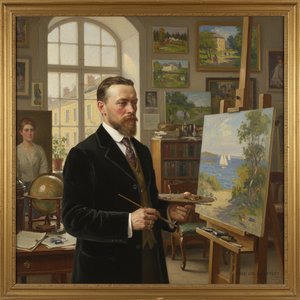
Albert Edelfelt: A Pioneer of Finnish Realism & International Impressionist Circles
Explore the life & work of Albert Edelfelt, a pioneering Finnish Realist painter who bridged Impressionism & national identity. Discover his masterpieces and lasting influence on art history.
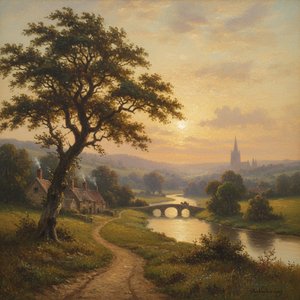
Albert Goodwin: Capturing Victorian Light & Atmosphere – A Study in Landscape Painting
Explore the captivating landscapes of Albert Goodwin (1845-1932), a celebrated Victorian watercolourist influenced by Turner & Ruskin. Discover his techniques, prolific collection, and lasting legacy in British art history.
