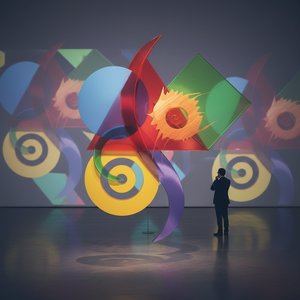
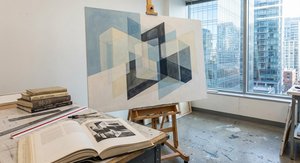
Perjungti į spausdinamus版作品
 Skaityti daugiau







































 Dėl meno kūrinių ar reprodukcijų, kurių bet kuri pusė yra didesnė nei 105 cm (apie 41 inch), rėmas bus siunčiamas kaip išskaidytas surinkimo rinkinys. Šis metodas užtikrina saugų pristatymą ir apsaugo nuo transportavimo metu galimos žalos.


A Symphony of Abstraction: Rediscovering Miroirs
In the vibrant tapestry of mid-century modernism, few works capture the rhythmic pulse of cultural synthesis as elegantly as Ahmed Cherkaoui’s Miroirs. Created in 1963, this masterpiece serves as a window into a pivotal moment in Moroccan art history, where the ancient traditions of North Africa met the avant-garde spirit of Paris. The painting is not merely an arrangement of shapes but a visual dialogue between the geometric precision of abstract motifs and the organic warmth of everyday objects. As one gazes upon the composition, there is an immediate sense of movement; the eye dances across a landscape of colorful vessels—a cup, a bowl, and a vase—that seem to float within a dreamlike, multidimensional space.
The technique employed by Cherkaoui in Miroirs reveals a profound mastery of texture and color. Executed with oil on burlap, the artist utilizes the raw, tactile nature of the substrate to ground his ethereal subject matter. The interplay of light and shadow across the primary hues—reds, yellows, greens, and blues—creates a luminous effect that breathes life into the inanimate objects. This use of bold, saturated pigments is reminiscent of the Fauvist movement, yet it is tempered by a structural discipline that speaks to Cherkaoui’s training in the prestigious schools of Paris and Warsaw. The result is a surface that feels both deeply layered and remarkably airy, inviting the viewer to explore every brushstroke.
Symbolism and the Mirror of Identity
The title Miroirs (Mirrors) suggests a deeper, more introspective layer of meaning. Beyond the literal depiction of domestic forms, the painting acts as a reflective surface for the artist's own identity. Cherkaoui was a pioneer in bridging the gap between Western abstraction and Moroccan heritage; here, we see the influence of traditional Berber motifs distilled into modern, geometric shorthand. The dots and rhythmic placements within the composition echo the patterns found in ancient textiles and pottery, effectively mirroring the soul of Morocco through a contemporary lens. This piece does not just show us objects; it reflects a cultural renaissance, capturing the optimism of a nation finding its voice in the post-independence era.
For the discerning collector or interior designer, Miroirs offers an unparalleled emotional resonance. It possesses a unique ability to anchor a room with its sophisticated color palette while simultaneously providing a sense of lightness and joy. Whether placed in a minimalist contemporary gallery or a richly textured classical study, the painting acts as a focal point of intellectual and aesthetic intrigue. To possess a reproduction of this work is to bring a piece of history into the home—a fragment of a time when art was a bridge between worlds, offering a timeless elegance that transcends the boundaries of era and geography.
Klausimai ir atsakymai
Kaip galiu peržiūrėti „Miroirs“ – Ahmedas Cherkaouis reprodukciją?
„Miroirs“ – Ahmedas Cherkaouis peržiūra galima kūrinio Peržiūra interjere puslapyje.
Ar yra galima peržiūrėti „Miroirs“ – Ahmedas Cherkaouis asmenines nuotraukų rodyklę?
Galima peržiūrėti nuotraukų rodyklę: Slaydšou puslapį kūriniam „Miroirs“ – Ahmedas Cherkaouis.
Kaip kūrinys „Miroirs“ dera su Ahmedas Cherkaouis temomis ir stiliumi?
Ahmedas Cherkaouis kūryboje „Miroirs“ atlieka Modernism stilių, susijęs su paul klee influence, matisse and bissière influence, traditional moroccan art motifs, modernist abstract style, transition to lighter colors temomis.
Daugiau informacijos apie šį paveikslą
 Peržiūrėti realaus dydžio版
 Pasidalinti
 Dalintis
 Išsamiau
 Vadovas

 Atsisiųsti
 Panašūs eksponatai
 Rentgeno spindulių nuotrauka
 Automatinė diorama
 问答
问答 Statistika