

 Peržiūrėti realybėje
 Pasidalinti
 Dalintis
 Išsamiau

 Atsisiųsti
 Panašūs eksponatai
 Rentgeno nuotrauka
 Automatinė diorama
Untitled
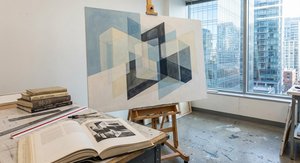
 Geometric Abstraction
 51.0 x 58.0 cm
 Michael C. Carlos Museum
 Skaityti daugiau
Giclée / Meno spausdinimas
Muziejų lygio „giclée“ arba drobos spausdinimas: greita gamyba ir lankstios apdailos parinktys. ( Pirkti rankomis tapytą paveikslą Pirkti vaizdą)




































Pasirinkite iš mūsų nustatytų dydžių, atitinkančių originalaus meno kūrinio proporcijas.

Galite nurodyti savo matmenis, kad vaizdas atitiktų konkretų rėmą ar erdvę. Jei pasirinktas dydis nesutaps su originalaus paveikslėlio proporcijomis, mes arba apkirpsime kūrinį, arba išplėsime vaizdą naudojant veideliu atspindėtą arba vientisą šoną. Skaitmeninis maketas bus išsiųstas jums patvirtinti prieš pradedant gamybą.
Atkreipkite dėmesį, kad ekrane matomas vaizdinys neatspindi tikrojo apkirpimo ar išplėtimo. Tik maketas tiksliai parodytų galutinę kompoziciją.
Nors galima rinktis ir individualius dydžius, rekomenduojame pasirinkti vieną iš išanksti nustatytų matmenų, kad būtų išlaikytos originalios proporcijos.
Pristatymas visame pasaulyje () per 2 weeks, o ne įprastas 4/5 savaičių laikotarpis. (23 rugpjūtis)

Nemokamas greitasis pristatymas visame pasaulyje

Aukštos kokybės lininis drobė

Pilnas siuntimo draudimas

Muitinės mokesčių grąžinimo garantija

Tikro spalvų atitikimo garantija

60 dienų grąžinimo politika (tik esant gamyklinėms defektams)

100% pinigų grąžinimo garantija

Nuolaida už kelias reprodukcijas
 Stiklo variantas prieinamas tik pasirinkus dydį iki 110 cm

Untitled
Giclée / Meno spausdinimas
Reprodukcijos matmenys
-


Galutinė kaina
$ 80
Autoriaus biografija
A Synthesis of European Vision and Yoruba Spirit
Adunni Olorisha, born Susanne Wenger, remains one of the most singular and transformative figures in twentieth-century art. An Austrian-Nigerian artist whose life was a profound bridge between continents, she possessed the rare ability to weave Western aesthetic sensibilities with the deep, rhythmic traditions of Yoruba spirituality. Born in Graz, Austria, on July 4, 1915, her early years were shaped by an innate connection to the natural world and a scholarly fascination with folklore and mythology. This intellectual foundation, nurtured through studies in comparative religion at Graz University, would later serve as the spiritual compass for her creative journey across the Atlantic.
Her relocation to Nigeria in 1952 marked more than a mere change in geography; it was a profound artistic awakening. Arriving in Osogbo alongside her husband, the scholar Ulli Beier, Wenger found herself immersed in a landscape where the boundaries between the physical and the divine were perpetually fluid. This immersion sparked a creative explosion that transcended traditional medium boundaries. As she embraced the identity of a Yoruba priestess, her art evolved from the formal training she received at the College for Arts and Crafts in Graz and the Vienna Academy of Art into a powerful, symbolic language that spoke to the very soul of the Orishas.
The Sacred Art Movement and the Osun Grove
Wenger’s most enduring legacy lies in her role as the driving force behind the Sacred Art Movement. Rather than working in isolation, she sought to foster a collective spirit, establishing an artist cooperative within Osogbo that empowered local masters of clay, cement, and woodcarving. Together with artists such as Kasali Akangbe and Adebisi Akanji, she embarked on the monumental task of revitalizing the Osun-Osogbo Sacred Grove. This was not merely a sculptural endeavor but an act of cultural preservation and spiritual restoration.
Through her leadership, the grove was transformed into a living gallery of monumental structures and sculptures that honored the deities of Yoruba cosmology. Her work in this period was characterized by:
- Architectural Harmony: Creating installations that felt like organic extensions of the forest itself.
- Symbolic Depth: Utilizing geometric abstraction and intricate patterns to evoke the multifaceted nature of the Orishas.
- Collaborative Mastery: Blending her knowledge of ancient fresco techniques with indigenous Nigerian sculptural traditions.
Her tireless advocacy was instrumental in securing governmental recognition for the grove’s preservation in 1965, a mission that eventually led to its designation as a UNESCO World Heritage Site in 1979. This achievement cemented her status as a global champion of cultural heritage, ensuring that the sacred landscape would remain a sanctuary for both nature and spirit.
A Legacy of Cultural Convergence
The artistry of Adunni Olorisha is defined by its refusal to adhere to a single tradition. Whether through her paintings, such as the evocative Palms of Destiny, or her large-scale environmental installations, her work remains a testament to the power of cultural synthesis. Her style—a captivating blend of European geometric abstraction and the earthy, textured vitality of African motifs—serves as a visual dialogue between two worlds. She did not merely observe Yoruba culture; she became an integral part of its living history, contributing to both its visual landscape and its literature.
In recognition of her immense contributions to Nigerian society and the arts, the Nigerian government honored her in 2008 as a Member of the Order of the Federal Republic (MFR). Today, the works of Adunni Olorisha continue to resonate with those who seek art that transcends the gallery walls. Her life remains an inspiring narrative of how an artist can move beyond the boundaries of their birth to find a true home in the spiritual and creative heartbeat of another culture, leaving behind a legacy that is as enduring as the sacred groves she fought so fiercely to protect.

adunni olorisha
1915 - 2009 , Austria
Trumpa informacija
- Artistic Movement Or Style: Yoruba sculpture
- Date Of Birth: July 4, 1915
- Date Of Death: January 12, 2009
- Full Name: Adunni Olorisha (Susanne Wenger)
- Nationality: Austrian-Nigerian
- Notable Artworks:
- Untitled
- Palms of Destiny
- Place Of Birth: Graz, Austria
Susiję straipsniai

Geometrinės Abstrakcijos Šedevrai: 10 Kūrinių, Pakeitusių Meną | OriginalUniqueArt.com
Atraskite 10 geometrinės abstrakcijos šedevrų – nuo Mondriano iki Malevičiaus! Sužinokite apie Piet Mondrian, Kazimir Malevič ir kitus menininkus. Meno kūriniai jūsų interjerui | OriginalUniqueArt.com

Neo-Abstract Art: The High-Impact Evolution of Modern Visual Energy and Geometric Sophistication
Discover the power of Neo-Abstract art. Explore how bold geometric forms and high-impact visual energy are redefining modern design. Learn to curate sophisticated, high-energy spaces with the latest trends in contemporary abstraction and structural color.

Beyond Form & Color: Geometric Abstraction's Evolution in 20th/21st Century Art
Explore the evolution of geometric abstraction from Cubism to contemporary art. Discover key artists like Malevich & Mondrian, investment insights, and expert collecting advice at OriginalUniqueArt.
Beyond Form & Color: Geometric Abstraction's Enduring Legacy in Art History
Explore the captivating world of geometric abstraction! Discover its origins, key artists like Malevich & Mondrian, and why this movement remains highly valued by art collectors today. Expert insights at OriginalUniqueArt.

Kandinsky's Masterpieces: 25 Paintings That Define Abstract Art | OriginalUniqueArt
Journey through Wassily Kandinsky's 25 most iconic abstract paintings. Explore his revolutionary use of color, form & spiritual expressionism. Find museum-quality Kandinsky reproductions and elevate your home decor with OriginalUniqueArt.com. Discover all masterpieces on OriginalUniqueArt.com!

