Perjungti į spausdinamus版作品
 Skaityti daugiau







































 Dėl meno kūrinių ar reprodukcijų, kurių bet kuri pusė yra didesnė nei 105 cm (apie 41 inch), rėmas bus siunčiamas kaip išskaidytas surinkimo rinkinys. Šis metodas užtikrina saugų pristatymą ir apsaugo nuo transportavimo metu galimos žalos.


A Snapshot of Dutch Life: “Merrymakers in an Inn” by Adriaen van Ostade
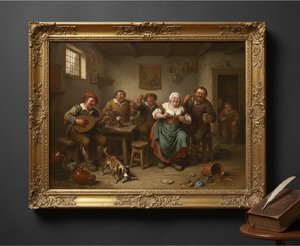
Adriaen van Ostade’s “Merrymakers in an Inn,” painted in 1674, isn't merely a depiction of tavern revelry; it’s a poignant window into the everyday realities and social dynamics of 17th-century Holland. This remarkable work, now residing within the esteemed collection of The Art Institute of Chicago, transcends simple genre painting to offer a remarkably intimate portrait of a community bound by shared experience – laughter, drink, music, and the comforting familiarity of a local gathering place.
Van Ostade’s genius lies in his ability to capture not just the outward appearance of his subjects but also their inner lives. The scene unfolds within a rustic tavern, its interior rendered with meticulous detail—the rough-hewn wooden beams supporting the ceiling, the shelves laden with earthenware jugs and tankards, all bathed in the warm, earthy tones characteristic of the artist’s style. These elements immediately establish a sense of groundedness, anchoring the scene firmly in the realities of peasant life.
The Human Tapestry: Characters and Interactions
At the heart of the composition stands a man in blue, holding a brimming glass of wine – a figure that draws the eye with his confident posture and animated expression. To his right, another man is lost in the intricate melodies of a lute, adding an element of musical delight to the scene. Yet, it’s the smaller, more intimate interactions that truly elevate the painting. A woman in a vibrant red dress engages in conversation with a man sporting a black hat; their exchange suggests a shared moment of connection amidst the general merriment. These individual portraits, interwoven within the larger group, reveal a complex social fabric – friendships, rivalries, and unspoken bonds all subtly conveyed through gesture and expression.
Van Ostade’s skill isn't limited to capturing physical likeness; he masterfully utilizes body language to communicate personality and mood. The postures of the figures—leaning forward in conversation, gesturing with enthusiasm, or simply observing the scene—speak volumes about their characters and relationships. The artist avoids idealization, presenting his subjects as they truly were – flawed, boisterous, and undeniably human.
A Baroque Palette: Technique and Style
Executed in oil on panel, “Merrymakers in an Inn” exemplifies the hallmarks of the Dutch Baroque style. Van Ostade’s technique is characterized by a remarkable attention to detail—the textures of the clothing, the grain of the wood, the glint of light on the wine glasses – all rendered with painstaking precision. However, he avoids excessive ornamentation, favoring instead a directness and realism that was highly valued in Dutch painting during this period.
The color palette is deliberately restrained, dominated by earthy tones—browns, ochres, and greys—creating a warm and inviting atmosphere. The striking contrast between the blue of the central figure’s dress and the red of the woman on the left immediately draws the viewer's eye, while the overall lighting scheme emphasizes the intimacy of the scene. This careful orchestration of color and light contributes significantly to the painting’s emotional impact.
Echoes of a Time Past: Historical Context
“Merrymakers in an Inn” offers a valuable glimpse into the social and cultural landscape of 17th-century Holland. Tavern scenes were incredibly popular subjects for Dutch artists, reflecting the importance of communal gatherings and public spaces in daily life. These paintings weren’t simply celebrations of revelry; they often served as social commentary, subtly critiquing excessive drinking or highlighting the virtues of community spirit. Van Ostade's work, like that of his contemporaries, provides a rich tapestry of insights into the lives of ordinary people during a pivotal era in Dutch history.
The painting’s enduring appeal lies in its ability to transport us back in time, allowing us to connect with the shared human experiences depicted within its frame. Whether viewed as a historical document or simply a captivating work of art, “Merrymakers in an Inn” remains a testament to Adriaen van Ostade's artistic skill and his profound understanding of the human condition.
Klausimai ir atsakymai
Ar „Merrymakers in an Inn“ liko savo kūrėjo tėvynėje?
Ne – kūrinys saugomas užsienyje. Adrijenas Van Ostadė gimtoji šalis yra Nyderlandai, o kūrinio „Merrymakers in an Inn“ originalas saugomas muziejuje, esančiame United States of America.
Kokia spalva labiausiai išsiskiria kūryniame „Merrymakers in an Inn“?
Espresso (#69493f) yra pagrindinė kūrinio „Merrymakers in an Inn“ – Adrijenas Van Ostadė spalva.
Kas parduoda rankų darbo kopijas kūrinio „Merrymakers in an Inn“ – Adrijenas Van Ostadė?
Rankumų reprodukciją kūrinio „Merrymakers in an Inn“ – Adrijenas Van Ostadė galite užsakyti tiesiogiai jo Rankų darbo aliejinis reprodukcija puslapyje: rankomis dažyta aliejaus reprodukcija ant lininio drobos, gaminama pagal užsakymą.
Daugiau informacijos apie šį paveikslą
 Peržiūrėti realaus dydžio版
 Pasidalinti
 Dalintis
 Išsamiau
 Vadovas

 Atsisiųsti
 Panašūs eksponatai
 Rentgeno spindulių nuotrauka
 Automatinė diorama
 问答
问答 Statistika