Original Unique Art
      Meniu
      NEMOKAMA MENO KONSULTACIJA
      Apie mus Susisiekite su mumis
          • Originalūs darbai
            Visi meno kūriniai Išskirtiniai studijos kūriniai Karo aukcionai Peržiūrėti visus kūrybos darbus Skaitmeninė technika ir medžiagos Skirta kambariams ir erštoms
            Dekoravimo pagalbininkas: svetainė Dekoravimo pagalbininkas: Miegamasis kambarys Pasirinkti pagal paskirtį Dovanų pagal progą Kas daro meno kūrinį išskirtiniu
          • Riboto leidimo kūriniai
            Naršyti pagal kolekcijas Autoriaus leidiniai Kas suteikia leidingi vertę
            Autentiškumo sertifikatų paaiškinimas Limituoto tirinio priežiūra
          • Mūsų menininkai
            Visi autoriai Peržiūrėti visus kūrėjus Prisijunkite kaip menininkas
            Menininkų akcentai Kaip renkamės menininkus
          • Užsakyti originalų kūrinį
            Užsakyti paveikslą Užsisakyti meno spausdiną Įmonių užsakymai Nemokama meno konsultacija Gaukite nemokamų meno rekomendacijų
            Mano krepšelis Kūrybos procesas Paveikslų kolekcija Kaip užsisakyti individualaus kūrinio
          • Kolekcionerų kampelis
            Nemokamas meno kūrinių įvertinimas Visi muziejai Visi straipsniai Mano duomenys, Favoritai, Užsakymai Mano kolekcija Kolekcionerių atsiliepimai
            Karo kolekcionavimo pagrindai Menas kaip investicija Kilmė: savininkų istorija Apie mus Susisiekite su mumis Prenumeruokite mūsų naujienlaiškį
          • Pradžia
          • Menininkai
          • Paul Signac
          • Populiariausi tapiniai
          kolekcineris folio

          Paul Signac Populiariausi tapiniai

          Enkystos 25, kurių pagrindą sudaro Paul Signac darbai, yra dažniausiai prašomi mūsų lankytojų; jos pateikiamos pagal populiarumą, kartu su kiekvienos rankų darbo reprodukcijos specifikacija ir kaina.

          Leidimas 2026 · 25 kūriniai Kiekvienas vaizdas painkuostas pagal užsakymą
          Lino drobė · Autentiškumo sertifikatas · Siunčiama visai pasaulyje Paul Signac · 1863 – 1935

          Pušis ties Sent Tropezu

          1909 · Pushkinio Muziejaus Maskvoje, Maskva · originalinė 92 x 72 cm

          Paulio Signako „Pušis ties Sent Tropezu“ – kvapą atimantis neoadimpresionizmo kūrinys, kupinas šviesos ir spalvų! Patirkite Prancūzijos Rivjeros magiją ir įsigykite aukštos kokybės reprodukciją.

          Peržiūrėti populiariausią Paul Signac kūrinį, užimantį 1 vietą: Pušis ties Sent Tropezu
          Art Movement
          Neo-Impressionism
          Technika
          Ranku dažytas aliejus ant lino drobos
          Gaminta
          Užsakyti gali profesionalus dailininkas
          Populiariumas
          1 iš 399 kūrinių autoriaus Paul Signac
          Pristatymas
          Visame pasaulyje, apie 5 weeks
          nuo$20035 × 28 cm Užsisakyti šį kūrinį
          Pusė kaip originalas$39092 × 72 cm Užsakyti originalaus dydžio formatu

          Paul Signac: Pusryčiai (Mėsinė)

          1887 · Kröller-Müller muziejus, Oterlo · originalinė 89 x 115 cm

          Paul Signac's „Pusryčiai (Mėsinė)” – įvyksmingas Neo-Impresionizmo kūrinys, kuriame naudojamas punktinis meistriškumas ir subtilus šviesos bei spalvos derinys. Išsikelti į Belle Époque pasaulį!

          Peržiūrėti populiariausią Paul Signac kūrinį, užimantį 2 vietą: Pusryčiai (Mėsinė)
          Art Movement
          Neo-Impressionism
          Color Palette
          Žemiški tonai
          Technika
          Ranku dažytas aliejus ant lino drobos
          Gaminta
          Užsakyti gali profesionalus dailininkas
          Populiariumas
          2 iš 399 kūrinių autoriaus Paul Signac
          Pristatymas
          Visame pasaulyje, apie 5 weeks
          nuo$25036 × 27 cm Užsisakyti šį kūrinį
          Pusė kaip originalas$561115 × 89 cm Užsakyti originalaus dydžio formatu

          Paul Signac: Boulevard de Clichy 1886

          1886 · Minneapolis Institute of Art, Minneapolis · originalinė 18 x 25 cm

          Žiūrėkite į Paul Signac šildančiąją „Boulevard de Clichy 1886“ impresionistinę drobę! Šis Neo-Impressionistinis kūrinys išsiskiria švelniu šviesos efektu ir ramus žiemos vaizdas Paryžiui. Aukštos kokybės reprodukcija.

          Peržiūrėti populiariausią Paul Signac kūrinį, užimantį 3 vietą: Boulevard de Clichy 1886
          Art Movement
          Neo-Impressionism
          Color Palette
          Neutralios spalvos
          Technika
          Ranku dažytas aliejus ant lino drobos
          Gaminta
          Užsakyti gali profesionalus dailininkas
          Populiariumas
          3 iš 399 kūrinių autoriaus Paul Signac
          Pristatymas
          Visame pasaulyje, apie 5 weeks
          nuo$30037 × 27 cm Užsisakyti šį kūrinį

          Two Cypresses, Mistral, Opus 241 (1893) by Paul Signac

          1893 · Kröller-Müller muziejus, Oterlo

          Experience Paul Signac’s vibrant ‘Two Cypresses, Mistral,’ a cornerstone of Neo-Impressionism featuring Pointillist technique and powerful cypress trees against the Provence wind – discover this iconic artwork.

          Peržiūrėti populiariausią Paul Signac kūrinį, užimantį 4 vietą: Two Cypresses, Mistral, Opus 241
          Art Movement
          Post-Impressionism
          Color Palette
          Pastels
          Technika
          Ranku dažytas aliejus ant lino drobos
          Gaminta
          Užsakyti gali profesionalus dailininkas
          Populiariumas
          4 iš 399 kūrinių autoriaus Paul Signac
          Pristatymas
          Visame pasaulyje, apie 5 weeks
          nuo$20028 × 35 cm Užsisakyti šį kūrinį

          The dining room, Opus 152

          1887 · Kröller-Müller muziejus, Oterlo · originalinė 16 x 89 cm

          Paul Signac's "The Dining Room" (1887) is a pivotal Pointillist masterpiece. Explore its vibrant color contrasts, symbolic figures, and the artist’s critique of bourgeois society through this iconic work.

          Peržiūrėti populiariausią Paul Signac kūrinį, užimantį 5 vietą: The dining room, Opus 152
          Art Movement
          Neo-Impressionism
          Technika
          Ranku dažytas aliejus ant lino drobos
          Gaminta
          Užsakyti gali profesionalus dailininkas
          Populiariumas
          5 iš 399 kūrinių autoriaus Paul Signac
          Pristatymas
          Visame pasaulyje, apie 5 weeks
          nuo$20036 × 28 cm Užsisakyti šį kūrinį
          Pusė kaip originalas$21489 × 16 cm Užsakyti originalaus dydžio formatu

          Capo de Noli, 1898, Paul Signac

          1898 · Wallraf-Richartzas Muziejus, Köln

          Paul Signac’s ‘Capo di Noli,’ a stunning Neo-Impressionist masterpiece from 1898, captures coastal serenity through its revolutionary Pointillism technique. Explore the luminous beauty of this iconic artwork and bring it into your collection.

          Peržiūrėti populiariausią Paul Signac kūrinį, užimantį 6 vietą: Capo de Noli
          Art Movement
          Neo-Impressionism
          Color Palette
          Neutrals
          Technika
          Ranku dažytas aliejus ant lino drobos
          Gaminta
          Užsakyti gali profesionalus dailininkas
          Populiariumas
          6 iš 399 kūrinių autoriaus Paul Signac
          Pristatymas
          Visame pasaulyje, apie 5 weeks
          nuo$20028 × 35 cm Užsisakyti šį kūrinį

          Paul Signac kūrinys „Notre-Dame-de-la-Garde (La Bonne-Mere), Marseilles“, 1906

          1906 · Metropolitano meno muziejus, Niujorkas

          Paul Victor Jules Signac (1863-1935) was a pivotal figure in modern art, deeply involved in the development of Neo-Impressionism. He collaborated with Georges Seurat to pioneer Pointillism, a technique based on applying tiny dots of pure color to create optical mixing and evoke the effects of light and atmosphere.

          Peržiūrėti populiariausią Paul Signac kūrinį, užimantį 7 vietą: Notre-Dame-de-la-Garde (La Bonne-Mere), Marseilles
          Art Movement
          Neo-Impressionism
          Color Palette
          Neutrals
          Technika
          Ranku dažytas aliejus ant lino drobos
          Gaminta
          Užsakyti gali profesionalus dailininkas
          Populiariumas
          7 iš 399 kūrinių autoriaus Paul Signac
          Pristatymas
          Visame pasaulyje, apie 5 weeks
          nuo$20036 × 28 cm Užsisakyti šį kūrinį

          Riverbank, Les Andelys

          1886 · Musée d'Orsay, Paris

          Experience Paul Signac’s ‘Riverbank, Les Andelys,’ a stunning Post-Impressionist landscape brimming with vibrant color and Pointillism. This iconic 1886 artwork captures a serene river scene, perfect for art lovers seeking a timeless masterpiece.

          Peržiūrėti populiariausią Paul Signac kūrinį, užimantį 8 vietą: Riverbank, Les Andelys
          Art Movement
          Post-Impressionist Pointillism
          Color Palette
          Neutrals
          Technika
          Ranku dažytas aliejus ant lino drobos
          Gaminta
          Užsakyti gali profesionalus dailininkas
          Populiariumas
          8 iš 399 kūrinių autoriaus Paul Signac
          Pristatymas
          Visame pasaulyje, apie 5 weeks
          nuo$20036 × 28 cm Užsisakyti šį kūrinį

          Portrait of Felix Feneon, Opus 217

          1890 · MOMA - Moderniosios meno muziejus, New York City

          Paul Signac’s vibrant Portrait of Felix Feneon embodies Neo-Impressionism's revolutionary approach to color and light, capturing a sophisticated gentleman amidst a meticulously detailed scene with symbolic birds and a classic timepiece. Explore this masterpiece and bring Signac’s harmonious vision home.

          Peržiūrėti populiariausią Paul Signac kūrinį, užimantį 9 vietą: Portrait of Felix Feneon, Opus 217
          Art Movement
          Neo-Impressionist Style
          Color Palette
          Earthy
          Technika
          Ranku dažytas aliejus ant lino drobos
          Gaminta
          Užsakyti gali profesionalus dailininkas
          Populiariumas
          9 iš 399 kūrinių autoriaus Paul Signac
          Pristatymas
          Visame pasaulyje, apie 5 weeks
          nuo$20036 × 28 cm Užsisakyti šį kūrinį

          The Papal Palace, Avignon, 1909 (1900) by Paul Signac

          1900 · Musée d'Orsay, Paris · originalinė 74 x 93 cm
          Peržiūrėti populiariausią Paul Signac kūrinį, užimantį 10 vietą: The Papal Palace, Avignon, 1909
          Art Movement
          Neo-Impressionism
          Color Palette
          Neutrals
          Technika
          Ranku dažytas aliejus ant lino drobos
          Gaminta
          Užsakyti gali profesionalus dailininkas
          Populiariumas
          10 iš 399 kūrinių autoriaus Paul Signac
          Pristatymas
          Visame pasaulyje, apie 5 weeks
          nuo$20035 × 28 cm Užsisakyti šį kūrinį
          Pusė kaip originalas$39893 × 74 cm Užsakyti originalaus dydžio formatu

          The Demolisher (1899) by Paul Signac

          1899 · Musée d'Orsay, Paris

          Paul Signac's "The Demolisher" is a vibrant Pointillist masterpiece depicting urban transformation. Explore the artist’s systematic color application and its reflection of late 19th-century France. A captivating study in labor, time, and modern art.

          Peržiūrėti populiariausią Paul Signac kūrinį, užimantį 11 vietą: The Demolisher
          Art Movement
          Neo-Impressionism
          Color Palette
          Neutrals
          Technika
          Ranku dažytas aliejus ant lino drobos
          Gaminta
          Užsakyti gali profesionalus dailininkas
          Populiariumas
          11 iš 399 kūrinių autoriaus Paul Signac
          Pristatymas
          Visame pasaulyje, apie 5 weeks
          nuo$20024 × 42 cm Užsisakyti šį kūrinį

          Paul Signac kūrinys „Woman with Parasol, Opus 243 (also known as Portrait of Berthe Signac)“

          1893 · Musée d'Orsay, Paris

          Inspired by Claude Monet and Georges Seurat, Signac pioneered Pointillism – a technique utilizing tiny dots of pure color to achieve optical blending.

          Peržiūrėti populiariausią Paul Signac kūrinį, užimantį 12 vietą: Woman with Parasol, Opus 243 (also known as Portrait of Berthe Signac)
          Art Movement
          Neo-Impressionism
          Color Palette
          Dark
          Technika
          Ranku dažytas aliejus ant lino drobos
          Gaminta
          Užsakyti gali profesionalus dailininkas
          Populiariumas
          12 iš 399 kūrinių autoriaus Paul Signac
          Pristatymas
          Visame pasaulyje, apie 5 weeks
          nuo$20028 × 35 cm Užsisakyti šį kūrinį

          Evening, Avignon (Château des Papes) (1909) by Paul Signac

          1909 · Musée d'Orsay, Paris

          Experience Paul Signac’s ‘Evening, Avignon’ – a stunning Post-Impressionist oil painting capturing the city's sunset charm with vibrant color and meticulous detail. Discover this iconic work and its scientific approach to art.

          Peržiūrėti populiariausią Paul Signac kūrinį, užimantį 13 vietą: Evening, Avignon (Château des Papes)
          Art Movement
          Post-Impressionist Pointillism
          Color Palette
          Neutrals
          Technika
          Ranku dažytas aliejus ant lino drobos
          Gaminta
          Užsakyti gali profesionalus dailininkas
          Populiariumas
          13 iš 399 kūrinių autoriaus Paul Signac
          Pristatymas
          Visame pasaulyje, apie 5 weeks
          nuo$20036 × 28 cm Užsisakyti šį kūrinį

          Paul Signac kūrinys „The Bonaventure Pine“, 1893

          1893 · Houston meno muziejus, Hjustonas · originalinė 81 x 65 cm

          Paul Signac’s ‘The Bonaventure Pine,’ a vibrant Neo-Impressionist masterpiece from 1893, captures the iconic cypress tree with dazzling pointillist brushstrokes and stunning natural detail, inviting you to own this timeless work.

          Peržiūrėti populiariausią Paul Signac kūrinį, užimantį 14 vietą: The Bonaventure Pine
          Art Movement
          Neo-Impressionist Pointillism
          Color Palette
          Neutrals
          Technika
          Ranku dažytas aliejus ant lino drobos
          Gaminta
          Užsakyti gali profesionalus dailininkas
          Populiariumas
          14 iš 399 kūrinių autoriaus Paul Signac
          Pristatymas
          Visame pasaulyje, apie 5 weeks
          nuo$20035 × 28 cm Užsisakyti šį kūrinį
          Pusė kaip originalas$34481 × 65 cm Užsakyti originalaus dydžio formatu

          The Town Beach, Collioure, Opus 165

          1887 · Metropolitano meno muziejus, Niujorkas

          Experience Signac's 'The Town Beach, Collioure,' a vibrant Neo-Impressionist masterpiece from 1887! Explore Pointillism & coastal beauty – now available as a hand-painted reproduction.

          Peržiūrėti populiariausią Paul Signac kūrinį, užimantį 15 vietą: The Town Beach, Collioure, Opus 165
          Art Movement
          Post-Impressionism
          Color Palette
          Neutrals
          Technika
          Ranku dažytas aliejus ant lino drobos
          Gaminta
          Užsakyti gali profesionalus dailininkas
          Populiariumas
          15 iš 399 kūrinių autoriaus Paul Signac
          Pristatymas
          Visame pasaulyje, apie 5 weeks
          nuo$20035 × 28 cm Užsisakyti šį kūrinį

          Blessing of the Tuna Fleet at Groix, 1923, Paul Signac

          1923 · Minneapolis Institute of Art, Minneapolis

          Paul Signac’s luminous Neo-Impressionist masterpiece captures the vibrant Breton harbor at Groix, utilizing Pointillisme—a revolutionary technique blending pure color dots to evoke breathtaking light and atmosphere. Explore this iconic artwork and bring its serene beauty into your home.

          Peržiūrėti populiariausią Paul Signac kūrinį, užimantį 16 vietą: Blessing of the Tuna Fleet at Groix
          Art Movement
          Neo-Impressionism
          Color Palette
          Neutrals
          Technika
          Ranku dažytas aliejus ant lino drobos
          Gaminta
          Užsakyti gali profesionalus dailininkas
          Populiariumas
          16 iš 399 kūrinių autoriaus Paul Signac
          Pristatymas
          Visame pasaulyje, apie 5 weeks
          nuo$20035 × 29 cm Užsisakyti šį kūrinį

          Paul Signac kūrinys „The Gas Tanks at Clichy“, 1886

          1886 · Nacionalinės Viktorijos galerija, Melbourne

          Experience Paul Signac's 'The Gas Tanks at Clichy'! This Post-Impressionist masterpiece, featuring pointillism and serene village scenes, is now available as a stunning hand-painted reproduction.

          Peržiūrėti populiariausią Paul Signac kūrinį, užimantį 17 vietą: The Gas Tanks at Clichy
          Art Movement
          Neo-Impressionism
          Technika
          Ranku dažytas aliejus ant lino drobos
          Gaminta
          Užsakyti gali profesionalus dailininkas
          Populiariumas
          17 iš 399 kūrinių autoriaus Paul Signac
          Pristatymas
          Visame pasaulyje, apie 5 weeks
          nuo$20036 × 28 cm Užsisakyti šį kūrinį

          Paul Signac kūrinys „Sardine Fishing, Concarneau, Opus 221 (Adagio)“, 1891

          1891 · MOMA - Moderniosios meno muziejus, New York City

          Paul Signac's "Sardine Fishing" captures a serene Breton sunset with Pointillism’s vibrant dots. Witness the beauty of Concarneau’s harbor in this iconic 1891 masterpiece – available as a stunning hand-painted reproduction.

          Peržiūrėti populiariausią Paul Signac kūrinį, užimantį 18 vietą: Sardine Fishing, Concarneau, Opus 221 (Adagio)
          Art Movement
          Post-Impressionism
          Color Palette
          Pastels
          Technika
          Ranku dažytas aliejus ant lino drobos
          Gaminta
          Užsakyti gali profesionalus dailininkas
          Populiariumas
          18 iš 399 kūrinių autoriaus Paul Signac
          Pristatymas
          Visame pasaulyje, apie 5 weeks
          nuo$20035 × 28 cm Užsisakyti šį kūrinį

          Plane Trees, Place des Lices, Saint-Tropez, Opus 242 (1893) by Paul Signac

          1893 · Carnegie meno muziejus, Pittsburgh

          Experience the tranquility of Saint-Tropez with Paul Signac's 'Plane Trees, Place des Lices.' This Post-Impressionist masterpiece captures serene beauty through vibrant brushstrokes and light.

          Peržiūrėti populiariausią Paul Signac kūrinį, užimantį 19 vietą: Plane Trees, Place des Lices, Saint-Tropez, Opus 242
          Art Movement
          Post-Impressionism
          Color Palette
          Earthy
          Technika
          Ranku dažytas aliejus ant lino drobos
          Gaminta
          Užsakyti gali profesionalus dailininkas
          Populiariumas
          19 iš 399 kūrinių autoriaus Paul Signac
          Pristatymas
          Visame pasaulyje, apie 5 weeks
          nuo$20036 × 28 cm Užsisakyti šį kūrinį

          Paul Signac: Sunset, Herblay, Opus 206

          1889 · Kelvingrove meno galerija ir muziejus, Glazgas

          Paul Signac’s ‘Sunset, Herblay,’ Opus 206 (1889) exemplifies Neo-Impressionist technique with meticulous dots of color blending optically to create luminous hues. Executed in Arles, Italy, and Genoa, this painting showcases Signac's mastery of light and color theory.

          Peržiūrėti populiariausią Paul Signac kūrinį, užimantį 20 vietą: Sunset, Herblay, Opus 206
          Art Movement
          Neo-Impressionism
          Color Palette
          Neutrals
          Technika
          Ranku dažytas aliejus ant lino drobos
          Gaminta
          Užsakyti gali profesionalus dailininkas
          Populiariumas
          20 iš 399 kūrinių autoriaus Paul Signac
          Pristatymas
          Visame pasaulyje, apie 5 weeks
          nuo$20040 × 25 cm Užsisakyti šį kūrinį

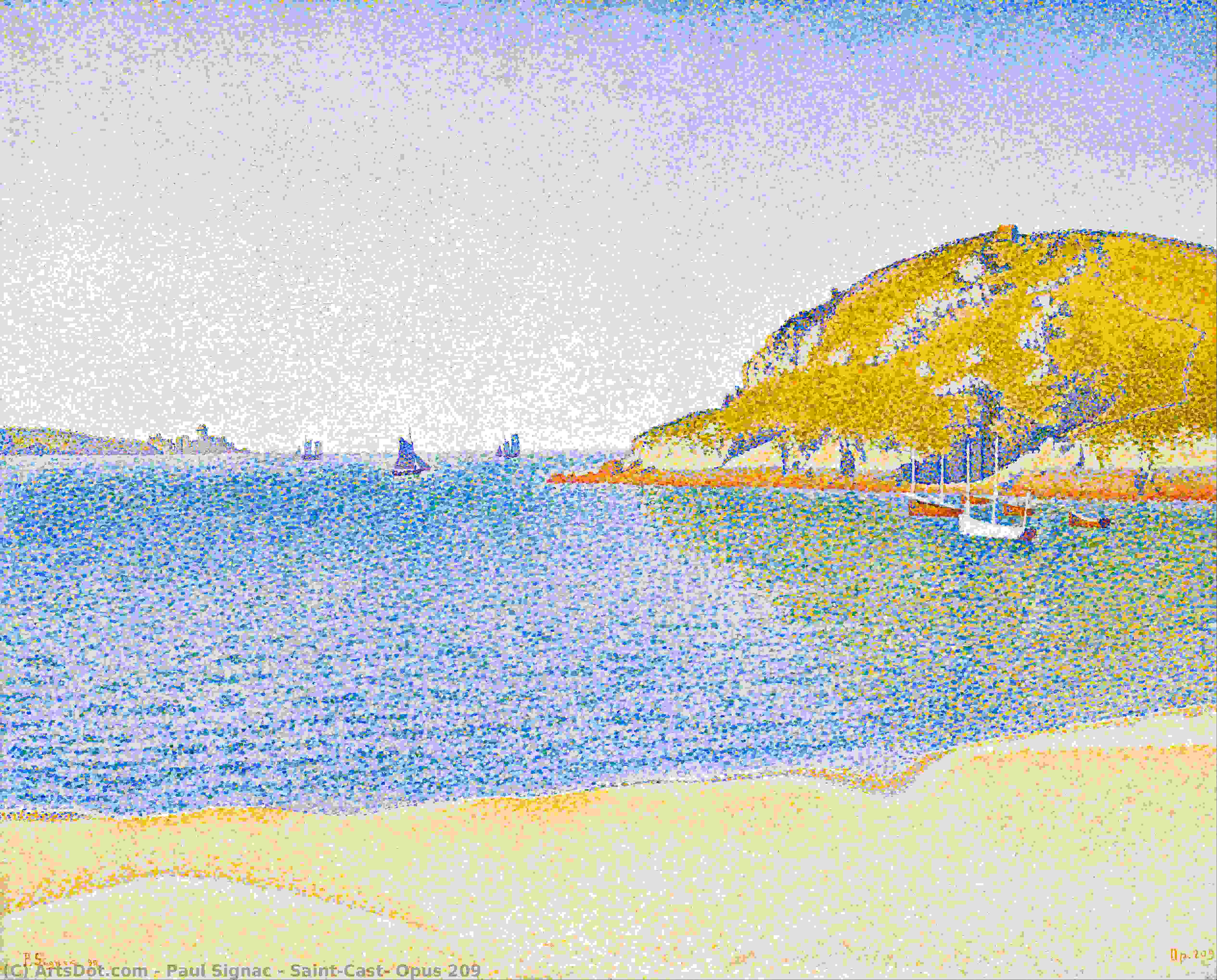
          Port of Saint-Cast (1890)

          1890 · Fine Arts muziejus, Boston · originalinė 82 x 66 cm

          Discover Paul Signac’s ‘Port of Saint-Cast,’ a vibrant Neo-Impressionist masterpiece! Explore Pointillism's beauty & technique in this Brittany coastal scene. #art #signac #neoimpressionism

          Peržiūrėti populiariausią Paul Signac kūrinį, užimantį 21 vietą: Port of Saint-Cast
          Art Movement
          Neo-Impressionism
          Color Palette
          Neutrals
          Technika
          Ranku dažytas aliejus ant lino drobos
          Gaminta
          Užsakyti gali profesionalus dailininkas
          Populiariumas
          21 iš 399 kūrinių autoriaus Paul Signac
          Pristatymas
          Visame pasaulyje, apie 5 weeks
          nuo$20035 × 28 cm Užsisakyti šį kūrinį
          Pusė kaip originalas$34982 × 66 cm Užsakyti originalaus dydžio formatu

          Le Pont des Arts

          Museum Folkwang, Esenas

          Discover Paul Signac’s "Le Pont des Arts," a stunning Pointillist cityscape of Paris. Explore vibrant colors & architectural detail in this iconic 1912 masterpiece.

          Peržiūrėti populiariausią Paul Signac kūrinį, užimantį 22 vietą: Le Pont des Arts
          Art Movement
          Neo-Impressionism
          Color Palette
          Neutrals
          Technika
          Ranku dažytas aliejus ant lino drobos
          Gaminta
          Užsakyti gali profesionalus dailininkas
          Populiariumas
          22 iš 399 kūrinių autoriaus Paul Signac
          Pristatymas
          Visame pasaulyje, apie 5 weeks
          nuo$20035 × 28 cm Užsisakyti šį kūrinį

          Houses in the Port, Saint-Tropez, Opus 237 (1892)

          1892 · originalinė 47 x 55 cm

          Experience the tranquil beauty of Saint-Tropez through Paul Signac’s luminous Neo-Impressionist masterpiece—a vibrant harbor scene rendered in dazzling dots of color and capturing the harmonious vision of Impressionism's groundbreaking artist.

          Peržiūrėti populiariausią Paul Signac kūrinį, užimantį 23 vietą: Houses in the Port, Saint-Tropez, Opus 237
          Art Movement
          Neo-Impressionist Style
          Color Palette
          Pastels
          Technika
          Ranku dažytas aliejus ant lino drobos
          Gaminta
          Užsakyti gali profesionalus dailininkas
          Populiariumas
          23 iš 399 kūrinių autoriaus Paul Signac
          Pristatymas
          Visame pasaulyje, apie 5 weeks
          nuo$20034 × 29 cm Užsisakyti šį kūrinį
          Pusė kaip originalas$25455 × 47 cm Užsakyti originalaus dydžio formatu

          Paul Signac, The River Bank, Petit-Andely (also known as Riverbank, Les Andelys) - Paul Signac (2026)

          2026

          Pasinerkite į Paul Signac’s Neo-Impressionist šedevrą „Upės krantas, Petit-Andely“. Šis nuostabus rankų darbo paveikslas perteikia spalvų ir šviesos gyvybę kruopščiu taškizmu. Rami prancūziška upės pakrantės scena – puiki kolekcininkams. Užsisakykite šiandien!

          Peržiūrėti populiariausią Paul Signac kūrinį, užimantį 24 vietą: The River Bank, Petit-Andely (also known as Riverbank, Les Andelys) - Paul Signac
          Art Movement
          Neo-Impressionism
          Color Palette
          Neutralios spalvos
          Peržiūrėti kūrinį

          Saint-Tropez, Paul Signac

          1901 · Nacionalinis Vakarų meno muziejus, Tokijas

          Experience Paul Signac's iconic 'Saint-Tropez' (1901), a vibrant Post-Impressionist masterpiece capturing the bustling harbor of France. Hand-painted reproductions available now.

          Peržiūrėti populiariausią Paul Signac kūrinį, užimantį 25 vietą: Saint-Tropez
          Art Movement
          Post-Impressionism
          Color Palette
          Neutrals
          Technika
          Ranku dažytas aliejus ant lino drobos
          Gaminta
          Užsakyti gali profesionalus dailininkas
          Populiariumas
          25 iš 399 kūrinių autoriaus Paul Signac
          Pristatymas
          Visame pasaulyje, apie 5 weeks
          nuo$20035 × 28 cm Užsisakyti šį kūrinį
          Autorius

          Paul Signac

          1863 – 1935

          Paul Signac portretas
          Pagrindinė informacija
          • Gift suitabilitymetinės šventė
          • Best occasionsakcentas
          • Emotional toneraminantis
          • Lifespan72 years
          • Born1863, Paryžius, Prancūzija
          • Art periodXIX amžius
          • Museums on APSAlte Nationalgalerie, Musée d'Orsay, Musée d'Art Moderne et Contemporain de Strasbourg, Fine Arts Museums of San Francisco, Nacionalinės Viktorijos galerija
          • Viberaminanti
          Biografija

          The Life and Identity of Paul Signac

          Born in Paris on 11 November 1863, Paul Signac entered a world that was beginning to shift under the weight of new visual ideas. He was the son of Jules Jean-Baptiste Signac and Héloïse Anaïs-Eugénie Deudon, a family that provided the foundation for a life dedicated to the pursuit of light. While his parents once envisioned a different path for him, the pull of the canvas proved stronger than any other calling. He would eventually become a central figure in the Neo-Impressionist movement, a man whose very identity was tied to the way color and light interacted upon a surface.

          His existence was marked by a deep connection to the sea and the shifting colors of the coast. He was a sailor at heart, a man who found his true rhythm amidst the waves and the sun-drenched harbors of the Mediterranean. This love for the water was not merely a hobby but a way of seeing the world, one that he translated into his paintings through a disciplined, almost scientific application of pigment. He sought to find order within the chaos of light, using his brushes to reconstruct the world through a meticulous, rhythmic method.

          By the time he passed away in 1935 at the age of 72, he had left behind a body of work that challenged the traditional boundaries of how we perceive color. His life was a long, steady pursuit of a specific kind of harmony, one that sought to marry the precision of science with the deep feelings of the artist. He lived through a period of immense change, remaining a steadfast advocate for his chosen methods until his final days in Paris.

          Early Life, Family and Training

          Born in Paris, the young Signac grew up in a household shaped by the commerce of the city. His father managed a shop on the Rue Frochot, where he sold luxury horse saddles and harnesses to a discerning clientele. This environment of craftsmanship and material detail provided a backdrop to a childhood that would soon shift toward the artistic heart of the capital. As his family moved into the Montmartre area, the boy found himself immersed in an urban center teeming with creative energy and the evolving spirit of the age.

          His early education was marked by a structured interest in form and construction. He spent his time studying architecture at the Collège Rollin in Montmartre until 1880. This training in the logic of space and structure would linger in his mind long after he turned his attention toward the canvas. By 1882, his path led him to the École des Arts-Décoratifs in Paris, where he sought to refine his technical abilities. It was during these formative years that the pull of the Seine and the light of the outdoors began to compete with the rigid lines of his architectural studies.

          The Development of Neo-Impressionism

          The seeds of Signac's transformation were sown during a visit to an exhibition in 1880, where the works of Claude Monet left a lasting impression upon him. This encounter stirred a curiosity that would eventually lead him away from the fleeting impressions of his youth toward a more structured way of seeing. By 1884, his path crossed with Georges Seurat, a meeting that would alter the course of his life and the history of painting. Together, they sought to move beyond the spontaneous brushwork of their predecessors, looking instead toward a method that combined art with the logic of light.

          This partnership focused on the development of Pointillism, a technique where tiny, distinct dots of pure color were applied to the canvas. They believed that by placing these dots side by side, the eye of the viewer would perform the work of mixing them, creating a luminosity that traditional blending could not achieve. While Seurat provided much of the initial theoretical weight, Signac became the movement's most vital voice. Following the death of his collaborator in 1891, Signac emerged as the principal spokesman for Divisionism, ensuring that their scientific approach to color and light would endure and influence the generations that followed.

          Technique and the Science of Color

          Signac sought to bring a sense of order to the canvas, treating the act of painting as a rigorous investigation into how the human eye perceives light. He moved away from the traditional method of mixing pigments on a palette, which he believed could dull the true intensity of color. Instead, he adopted a technique known as Pointillism, or Divisionism, where he applied tiny, distinct dots of pure color directly onto the surface. By placing complementary colors side by side, he relied on the viewer's own eye to perform the optical blending, creating a shimmering effect that felt more alive than a pre-mixed hue. This was a disciplined, almost mathematical approach to the canvas.

          His commitment to these principles was not merely a matter of habit but a deeply held intellectual conviction. He spent years studying the scientific laws of light and color, seeking to ground his art in the truths of physics. In 1899, he articulated these complex theories in his writing, From Eugène Delacroix to Neo-Impressionism. Through his work, he demonstrated that the artist could achieve a new kind of luminosity by respecting the purity of each pigment. As his career progressed, his application of these dots became more fluid and expressive, yet he never abandoned the fundamental science that governed his vision.

          Artistic Activity in Paris and Asnières

          The streets of Paris in the mid-1880s offered a restless energy that pulled Signac toward new ways of seeing. In 1886, he participated in the 8th Impressionist exhibition, contributing eighteen works that largely focused on city views and seascapes. His style at this time was caught in a transition, blending the loose, rapid brushstrokes of the Impressionists with the emerging, more disciplined application of color that would soon define his reputation. It was during this period of intense experimentation that he encountered Vincent van Gogh. The two men found a shared language in the light of the French landscape, and by 1887, they began to frequent Asnières-sur-Seine together. In the quietude of the riverbanks, they sought to capture the shifting atmosphere of the outskirts of the capital.

          As his ideas matured, Signac moved closer to the radical theories of his contemporaries. He found himself standing alongside figures such as Degas, Pissarro, Gauguin, and Seurat during the IX Impressionist Exhibition. These gatherings were more than mere social meetings; they were the crucibles where the future of modern painting was forged. While his early years were marked by a fascination with the river landscapes of the Seine, his time in Asnières allowed him to refine the rhythmic, mosaic-like application of paint that would eventually move away from the fleeting impressions of the past toward a more structured, scientific harmony.

          Coastal Life and the Mediterranean

          The pull of the sea eventually drew the artist away from the urban landscapes of the north. In 1892, he sailed the Garonne River southeast through France, seeking the light of the Mediterranean Sea. He dropped anchor in Saint-Tropez aboard his yacht, the Olympia, and found there a landscape that would become a major theme across his paintings. The shimmering waters and sun-drenched harbors offered a new rhythm for his brush, far removed from the riverbanks of the Seine.

          He found such deep inspiration in this southern light that he established a home in Saint-Tropez. This coastal retreat became a sanctuary where he could observe the interplay of color and tide. His technique began to change as he moved through these maritime settings; the strict, meticulous dots of his earlier years gradually gave way to a more fluid and expressive application of paint. The movement of the waves and the brightness of the Mediterranean air encouraged a broader palette and a more spontaneous touch.

          • The Red Buoy, Saint-Tropez (1895)
          • The Pine Tree at St. Tropez (1909)

          Key Works of the Artist

          In the early years of his experimentation, Signac sought to capture the pulse of the city through a rigorous, scientific lens. His 1886 work, Boulevard de Clichy, captures a winter scene in Paris, where the snowy boulevard is rendered through the meticulous application of small dots of pure color. This approach allowed him to translate the urban landscape into a rhythmic arrangement of light and shadow. By 1887, his focus shifted toward the quietude of domestic life. In Breakfast (The Dining Room), he applied thousands of tiny, distinct points of color to a scene of Belle Époque elegance, where sunlight streams through a window to illuminate a breakfast table with a vibrating energy.

          As his life moved toward the sea, his brushwork began to change, finding a new freedom in the light of the south. The 1895 painting The Red Buoy, Saint-Tropez demonstrates this evolution, using his mastery of Pointillism to catch the dynamic energy of the Mediterranean coast. The colors in these maritime scenes became more fluid and expressive, moving away from the strict, tiny dots of his earlier years toward a broader, more mosaic-like touch. Even when turning his attention to the people around him, his technique remained precise. His 1890 Portrait of Felix Feneon used this meticulous construction to explore light and color, presenting the subject with a clarity born from his revolutionary method.

          • Boulevard de Clichy, 1886
          • Breakfast (The Dining Room), 1887
          • Portrait of Felix Feneon, 1890
          • The Red Buoy, Saint-Tropez, 1895

          Leadership and the Avant-Garde

          Beyond the quietude of his coastal studies, Signac moved through the social circles of Paris with a firm sense of purpose. He was a well known Anarchist, a conviction that mirrored his desire to break away from the rigid, established structures of the art world. This spirit of rebellion found a practical outlet through his leadership within the Société des Artistes Indépendants. He held the presidency of this influential group from 1908 until his death in 1935, ensuring that the spirit of independence remained a guiding force for those who sought to challenge the status quo.

          His influence extended far beyond his own canvases, as he acted as a patron for those who dared to experiment. He possessed a keen eye for the new, recognizing the potential in the radical shifts of the coming century. By providing a platform for emerging talents, he helped foster the rise of movements that would change the course of modern art. He was among the first to offer his support to the pioneers of Fauvism and Cubism, welcoming their departures from tradition. Through his guidance, artists like Henri Matisse and André Derain found the space necessary to develop their own unique visions.

          Legacy and Influence on Modern Art

          The ripples of Signac’s experiments with light and color reached far beyond the quiet harbors of the Mediterranean. He acted as a bridge between the structured theories of the late nineteenth century and the explosive freedom of the next. By championing the idea that color could be applied with a rhythmic, almost musical intensity, he provided a foundation for those who sought to break away from traditional representation. His presence in the art world was felt not only through his brush but through his intellect, as he became a leading figure who helped define the direction of modern expression.

          This influence was particularly evident in the emergence of Fauvism. Signac’s approach to the canvas inspired artists like Henri Matisse and André Derain, who would later push the boundaries of color even further. He showed that the way an artist handles pigment can change the very way a viewer perceives reality. His commitment to the evolution of new styles ensured that his ideas remained a vital part of the artistic conversation, influencing a whole generation of painters who looked to his work to understand the potential of pure hue and light.

          Where to See the Works Today

          To witness the light that Signac so carefully studied, one must travel to the great halls of Paris. The Musée d'Orsay holds nine of his works, offering a significant gathering of his vision. It is there that the meticulous application of color becomes most apparent to the observer. In the same city, other treasures can be found, though the largest concentration remains in the French capital.

          Across the Atlantic, the Metropolitan Museum of Art in New York preserves five of his paintings, allowing those in the Americas to encounter his specific method of optical mixing. The reach of his influence extends even further, finding its way to the Kröller-Müller Museum in Otterlo, which maintains four of his pieces. These works allow us to see how his style evolved from the strict dots of his early years toward a more fluid touch.

          The presence of his art is truly global, reaching as far as the National Gallery of Victoria in Melbourne, where two of his works reside. These scattered collections ensure that his experiments with light and color remain accessible to those seeking to understand the science of his brushwork. Some of the specific pieces held in these various institutions include:

          • Boulevard de Clichy 1886
          • The Red Buoy, Saint-Tropez (1895)
          • Portrait of Felix Feneon (1890)
          • Breakfast (The Dining Room) (1887)
          • The Jetty, Cassis, Opus 198

          Klausimai ir atsakymai

          Kuriame istoriniame laikotarpyje kūrė Paul Signac?

          Paul Signac kūrė XIX amžius laikotarpiu. Šis laikotarpis leidžia įvertinti kūrybinę veiklą istoriniame kontekste.

          Kur galiu pamatyti Paul Signac kūrybos spalvų profilį?

          Paul Signac darbų spalvų profilis galima rasti puslapyje Paletės genomas.

          Ar galiu ieškoti Paul Signac kūrybos pagal spalvų spektrą?

          Paul Signac kūrybą pagal spalvas galite tyrinėti puslapio Spalvų indeksas svetainėje.

          OriginalUniqueArt.com redakcijos komanda Atnaujinta: 2026 m. spalio 14 d.
          Kolekcinerio quizas
          1. Kurią meninę techniką Paul Signac padėjo kurti kartu su Georges Seurat?

          2. Kuriame mieste gimė Paul Signac?

          3. Ką organizaciją Signac vadovavo kaip prezidentas nuo 1908 iki 1935 metų?

          4. Kuo buvo 1899 m. Signaco publikacija apie spalvų teoriją?

          5. Kokį menininką Signac sutiko Paryzuje 1886 m.?

          Tąsmgiau ieškoti

          Atraskite Paul Signac

          • Biografija ir darbai
          • Visi kūriniai
          • Tematų atlasas
          • Nuotaudų kambarys
          • Paletės genoma
          • 3D muziejus
          • Populiariausi tapai
          • Visi technikos būdai
          • Kūrybos istorija
          • Statistika
          • Raktažodžiais
          • Visi judėjimai
          • Chronika
          • Spektro indeksas
          • Pagrindo pagal spalvų paletes
          viena Pasirinkite dydį

          Standartiniai formatai arba bet kokios kiti dimensijos, atitinkant originalaus proporcijomis.

          du Mes atspalvame ir išsiunčiame peržiūros vaizdą

          Nuotrauka atlikto drobkalio, kurią pateiksime patyrimui prieš siuntimą.

          tryji Pristatoma, sertifikuota

          Sukaustytas, išštęstus į rėmą ar su rėmu, apdraudintas, su autentiškumo sertifikatu.

          Užsisakykite savo Paul Signac

          Kiekvieną Paul Signac kūrinį mūsų kataloge galima užsakyti pagal individualų užsakymą, pritaikinus jį kambariui

          Visi Paul Signac darbai
          Unikalus iš savo esmės◆ Parduota – visam laikui◆ Niekas kitas negali sureikšti to, ką surenkate jūs◆ Praleiskite tai – praleisite visam laikui◆ Menas, kuris priklauso vienam◆ Tiesiog iš studijos◆ Tik jūsų ir nieko kita◆ Išskirtiniai menininkai◆ Vienas kūrinys, vienas savininkas, jokių kopijų◆ Vienas kūrybinis darbas, vienas drobulis, viena istorija◆ Unikalus iš savo esmės◆ Parduota – visam laikui◆ Niekas kitas negali sureikšti to, ką surenkate jūs◆ Praleiskite tai – praleisite visam laikui◆ Menas, kuris priklauso vienam◆ Tiesiog iš studijos◆ Tik jūsų ir nieko kita◆ Išskirtiniai menininkai◆ Vienas kūrinys, vienas savininkas, jokių kopijų◆ Vienas kūrybinis darbas, vienas drobulis, viena istorija◆
          Original Unique Art

          Kai kurią meną turėtų priklausyti tik vienam asmeniui. „OriginalUniqueArt“ kiekvienas kūrinys yra išskirtinių mūsų menininkų originalus darbas — parduodamas tik vieną kartą, niekada nepasikartojantis ir niekur kitur neprieinamas. Pasirinkite tapybą arba spausdiną, papildomai galėdami įsigyti NFT, kuris patvirtintų jūsų išskirtinę teisę į šį kūrinį. Kolekcionieriams ir investuotojams, vertinantiems tikrą retumą, tai vieta, kur gyvena unikumas. Privatizuokite savo vienetinį originalą, kol to nepadarė kažkas kitas.

          El. paštas WhatsApp Telegram Viber
          Facebook Twitter Pinterest Instagram
          Originalūs kūriniai ir leidiniai
          • Išskirtiniai studijos kūriniai
          • Karo aukciai
          • Naršyti pagal kolekcijas
          • Autoriaus rankų darbo leidiniai
          • Visi meno kūriniai
          Kolekcionavimo įžvalgos
          • Nemokamas meno kūrinių įvertinimas
          • Mano kolekcija
          • Kūrybos kolekcionavimo pagrindai
          • Menas kaip investicija
          • Kilmė: savininkų istorija
          • Autentiškumo sertifikatų paaiškinimas
          • Visi straipsniai
          • Muziejai ir kolekcijos
          Paslaugos
          • Užsakyti originalų kūrinį
          • Užsisakyti meno spausdinį
          • Įmonių meno užsakymai
          • Nemokama meno konsultacija
          • Gaukite nemokamų meno rekomendacijų
          • Parduokite unikalią originalią kūrinį
          • Kūrybos procesas
          • Prenumeruokite mūsų naujienlaiškį
          Įmonė
          • Apie mus
          • Dažniajausi klausimai
          • Kolekcionerių atsiliepimai
          • Pasaulinės statistikos duomenys
          • Mano paskyra, Įsimintiniai, Užsakymai
          • Siuntimas ir grąžinimai
          • Naudojimo taisyklės ir sąlygos
          • Privatumo politika
          • Susisiekite su mumis
          Original Unique Art
          Original Unique Art Kiekvienas kūrinys parduodamas tik vienkart. Kopijų egzistavimas neįtvarkiamas.
          © 2026 OriginalUniqueArt.com
          Complete collection index
          O Studijos asistentas Į ligne · atsako per minutę
          Labas! Galėčiau padėti išsirinkti kūrinį, sekti užsakymą arba atsakyti į garantijos klausimus. Kuo galėčiau jums padėti?
          Norėtumėte susisiekti su žmogumi? Rašyti mums el. laišku WhatsApp Viber