Ferdinand Georgas Waldmülleris portretas

Ferdinand Georgas Waldmülleris tapiai: 100 garsiausi πίναšiai, galerijos akimis

Atnaujinta lapkritis 2026 · pagal mūsų populiarumumo koeficientą (paieškos, lankytojai ir užsakymai kiekvienam kūriniui) · 210 Ferdinand Georgas Waldmülleris darbai mūsų kataloge

Trumpai tariant

Galerijos akimais, garsiausias Ferdinand Georgas Waldmülleris tapas yra Portrait of Ludwig van Beethoven (1823), kurio originalas eksponuojamas Kunsthistorisches Museum, Viena. The young boy with the stable-lantern / The Young Stableboy with a Stable Lamp (1824) ir The Actor Maximilian Korn in a Landscape (1828) užbaia trio, kurį atpažįsta kiekvienas ž)/\ Iš 210 Ferdinand Georgas Waldmülleris darbų mūsų kataloge, galerija žemiau pristato 100 garsiausius – kiekvienas yra originalus, su nurodytu metais, muziejumi bei unikaliu aprašymu.

1793 – 1865, Viena Biedermeier Daugiausia darbų: Bavarijos valstybinės paveikslų kolekcijos

10 geriausių galerijos Ferdinand Georgas Waldmülleris paveikslų

1
Portrait of Ludwig van Beethoven (1823) aut. Ferdinand Georgas Waldmülleris

Portrait of Ludwig van Beethoven

1823 · Oil On Canvas · Kunsthistorisches Museum, Viena

A heavy, dark coat absorbs the light, framing a face etched by internal storms. The subject sits in a bust-length pose, his gaze directed toward the right, away from the viewer's immediate line of sight. Shadows pool deeply in the folds of his white neckcloth and the hollows of his cheeks, creating a sharp, three-dimensional presence. His hair, a wild, wavy mass of grey-white, catches the directional light from the…

2
The young boy with the stable-lantern / The Young Stableboy with a Stable Lamp (1824) aut. Ferdinand Georgas Waldmülleris

The young boy with the stable-lantern / The Young Stableboy with a Stable Lamp

1824 · Oil · Hamburger Kunsthalle, Hambargas

The young boy with the stable-lantern / The Young Stableboy with a Stable Lamp is an oil on oak painting by Ferdinand Georg Waldmüller. Created in 1824, the work measures 17.87 x 21.3 in (45.4 x 54.1 cm). It resides within the collection of the Kunsthalle Hamburg, identified by the accession number 1351 and the note Feuchtmüller-WV-Nr.154.

3
The Actor Maximilian Korn in a Landscape (1828) aut. Ferdinand Georgas Waldmülleris

The Actor Maximilian Korn in a Landscape

1828 · Oil On Panel · Art Institute of Chicago, Čikagos

The Actor Maximilian Korn in a Landscape is an oil on panel work created in 1828. The portrait captures a specific presence within a quiet, expansive setting. Ferdinand Georg Waldmüller, an Austrian painter, rendered the figure with a focus on the textures of the era. The subject is Maximilian Korn, a man whose likeness is fixed against the soft light of the natural world.

4
Peasant Lovers (1863) aut. Ferdinand Georgas Waldmülleris

Peasant Lovers

1863 · Wood · Städel Museum, Frankfurtas

In 1863, Ferdinand Georg Waldmüller painted Peasant Lovers (Bäuerliches Liebespaar) in Austria. The work captures a tender moment between two young lovers. They are locked in an embrace amidst the quietude of a rural setting. This genre painting focuses on the intimate realities of peasant life.

5
The Interrupted Pilgrimage (The Sick Pilgrim) (1858) aut. Ferdinand Georgas Waldmülleris

The Interrupted Pilgrimage (The Sick Pilgrim)

1858 · Oil · Leopold Museum, Viena

The Interrupted Pilgrimage (The Sick Pilgrim) is an oil on wood painting by Ferdinand Georg Waldmüller. Created in 1858, the work captures a moment of stillness amidst a rocky landscape. The artist, Ferdinand Georg Waldmüller, was born in Vienna, Austria, in 1793. He lived until 1865, passing away in Hinterbrühl near Mödling.

6
After Confiscation (1859) aut. Ferdinand Georgas Waldmülleris

After Confiscation

1859 · Oil On Canvas · Gemäldegalerie Alte Meister, Drezena

Sunlight streams through an open doorway, cutting a sharp path across a crowded courtyard where life unfolds in a series of hushed, heavy moments. A group of women and children gather in this intimate space, their forms caught in a delicate dance between light and shadow. The air feels thick with the weight of their shared experience, a quiet community huddled together amidst the stone walls and textured fabrics of…

7
The Conscript’s Farewell (1854) aut. Ferdinand Georgas Waldmülleris

The Conscript’s Farewell

1854 · Leopold Museum, Viena

The Conscript’s Farewell is a painting by Ferdinand Georg Waldmüller. Created in 1854, this work captures a heavy moment within a farmhouse parlor. A young man, called up for military service, stands at the center of a domestic storm. He is surrounded by his family, each member caught in the gravity of his departure. The scene is a genre painting, a slice of life frozen in the quiet tension of…

8
Children at the Window (1853) aut. Ferdinand Georgas Waldmülleris

Children at the Window

1853 · Oil · Residenzgalerie, Salzburgas

In this 1853 painting, a group of five children is gathered around a window, which serves as the central focal point of the scene. The arrangement of the figures creates a sense of quiet interaction: one child stands on the left side of the window, while two children are positioned close to each other in the middle. On the right side, another child stands by the window, and a fifth…

9
Children (1834) aut. Ferdinand Georgas Waldmülleris

Children

1834 · Acrylic On Canvas · Ermitažas, Šv. Peterburgas

Ferdinand Georg Waldmüller's "Children," painted in 1834, isn’t merely a portrait; it’s a carefully constructed tableau of quiet dignity and poignant observation. The painting captures two young girls returning home from school along a winding path, bathed in the soft, diffused light characteristic of the Biedermeier style – an artistic movement deeply rooted in the appreciation of nature and the celebration of everyday life. Waldmüller, a pivotal figure within this…

10
Catharina Freifrau von Koudelka (1821) aut. Ferdinand Georgas Waldmülleris

Catharina Freifrau von Koudelka

1821 · Oil On Canvas

Catharina Freifrau von Koudelka is a portrait executed by the Austrian painter Ferdinand Georg Waldmüller. Created about 1821, the work emerged during a period of significant artistic transition in Vienna. The subject is presented with the formal dignity characteristic of the era's social hierarchies.

Ferdinand Georgas Waldmülleris tapiai, rangos nuo 11 iki 100

11Rosina Wieser in her 83rd Year of Life (1820) aut. Ferdinand Georgas WaldmüllerisRosina Wieser in her 83rd Year of Life1820 12Portrait of Archduke Johann of Österreich in Uniform (1818) aut. Ferdinand Georgas WaldmüllerisPortrait of Archduke Johann of Österreich in Uniform1818 13Portrait of Frau Rossini (Isabella Colbran) (1818) aut. Ferdinand Georgas WaldmüllerisPortrait of Frau Rossini (Isabella Colbran)1818 14The court actress Sophie Müller (1822) aut. Ferdinand Georgas WaldmüllerisThe court actress Sophie Müller1822 15Rosina Wieser in Armchair (1822) aut. Ferdinand Georgas WaldmüllerisRosina Wieser in Armchair1822 16Portrait of a knight of the Golden fleece (1818) aut. Ferdinand Georgas WaldmüllerisPortrait of a knight of the Golden fleece1818 17Portrait of the artists mother (1818) aut. Ferdinand Georgas WaldmüllerisPortrait of the artists mother1818 18Peasant woman crosing a creek in a ravine (1818) aut. Ferdinand Georgas WaldmüllerisPeasant woman crosing a creek in a ravine1818 19Portrait of a child (1822) aut. Ferdinand Georgas WaldmüllerisPortrait of a child1822 20man with writing plate (1817) aut. Ferdinand Georgas Waldmüllerisman with writing plate1817 21Girl with flowers (1817) aut. Ferdinand Georgas WaldmüllerisGirl with flowers1817 22maid with snake (1817) aut. Ferdinand Georgas Waldmüllerismaid with snake1817 23Man with book (1817) aut. Ferdinand Georgas WaldmüllerisMan with book1817 24Christ and the Samaritan Woman at the Well (1818) aut. Ferdinand Georgas WaldmüllerisChrist and the Samaritan Woman at the Well1818 25Portrait of a Middle-Aged Lady (1828) aut. Ferdinand Georgas WaldmüllerisPortrait of a Middle-Aged Lady1828 · Bavarijos valstybinės paveikslų kolekcijos 26Lady in White Dress before a Wienerwald Landscape (1829) aut. Ferdinand Georgas WaldmüllerisLady in White Dress before a Wienerwald Landscape1829 27Elisabeth Waldmüller, the Mother of the Artist (1830) aut. Ferdinand Georgas WaldmüllerisElisabeth Waldmüller, the Mother of the Artist1830 28Day Laborer with His Son (1823) aut. Ferdinand Georgas WaldmüllerisDay Laborer with His Son1823 29Mrs. Theresia Rupprecht (1825) aut. Ferdinand Georgas WaldmüllerisMrs. Theresia Rupprecht1825 30Female Portrait in White Ball Toilette (1830) aut. Ferdinand Georgas WaldmüllerisFemale Portrait in White Ball Toilette1830 31Countess Széchenyi (1828) aut. Ferdinand Georgas WaldmüllerisCountess Széchenyi1828 · Cleveland Museum of Art 32Self-portrait (1828) aut. Ferdinand Georgas WaldmüllerisSelf-portrait1828 33Portr. of a gentleman with sabre (1830) aut. Ferdinand Georgas WaldmüllerisPortr. of a gentleman with sabre1830 34Portrait of a lady, half figure (1829) aut. Ferdinand Georgas WaldmüllerisPortrait of a lady, half figure1829 35portrait of a lady (1829) aut. Ferdinand Georgas Waldmüllerisportrait of a lady1829 36Cows in a meadow (1823) aut. Ferdinand Georgas WaldmüllerisCows in a meadow1823 37Little Count Esterhazy in trousers with a rabbit (1827) aut. Ferdinand Georgas WaldmüllerisLittle Count Esterhazy in trousers with a rabbit1827 38Portrait of a Cartographer with his Wife (1824) aut. Ferdinand Georgas WaldmüllerisPortrait of a Cartographer with his Wife1824 · Westfälisches Landesmuseum 39Portrait of a lady (1825) aut. Ferdinand Georgas WaldmüllerisPortrait of a lady1825 40Old soldier with children (1827) aut. Ferdinand Georgas WaldmüllerisOld soldier with children1827 41Portrait of the family Geymüller in a park (1827) aut. Ferdinand Georgas WaldmüllerisPortrait of the family Geymüller in a park1827 42two hunters in the mountains (1829) aut. Ferdinand Georgas Waldmülleristwo hunters in the mountains1829 43Boy with a Stable Lantern (1825) aut. Ferdinand Georgas WaldmüllerisBoy with a Stable Lantern1825 44Portrait of a Woman in Riding Attire, with her Greyhound (1839) aut. Ferdinand Georgas WaldmüllerisPortrait of a Woman in Riding Attire, with her Greyhound1839 45The Engraver François Haury (1834) aut. Ferdinand Georgas WaldmüllerisThe Engraver François Haury1834 46Woman in Green, Salmon-Pink Shimmering Dress (1837) aut. Ferdinand Georgas WaldmüllerisWoman in Green, Salmon-Pink Shimmering Dress1837 47The Wife of the Court Official Josef von Stadler (1835) aut. Ferdinand Georgas WaldmüllerisThe Wife of the Court Official Josef von Stadler1835 48The Roman Ruin in Schönbrunn (1832) aut. Ferdinand Georgas WaldmüllerisThe Roman Ruin in Schönbrunn1832 49Aloisia Eltz in the Armchair (1834) aut. Ferdinand Georgas WaldmüllerisAloisia Eltz in the Armchair1834 50Josephine Schaumburg, née Stahel (1834) aut. Ferdinand Georgas WaldmüllerisJosephine Schaumburg, née Stahel1834 51A Girl Adorns the Mother of God with a Rose (1836) aut. Ferdinand Georgas WaldmüllerisA Girl Adorns the Mother of God with a Rose1836 52Old Woman with White Ribbon Cap (1832) aut. Ferdinand Georgas WaldmüllerisOld Woman with White Ribbon Cap1832 53Heinrich Werner (1830 - 1861), the son of the married couple Johann and Magdalena Werner (1835) aut. Ferdinand Georgas WaldmüllerisHeinrich Werner (1830 - 1861), the son of the married couple Johann and Magdalena Werner1835 54Count Demetrius Apraxin as a Child before a Mountain Landscape (1832) aut. Ferdinand Georgas WaldmüllerisCount Demetrius Apraxin as a Child before a Mountain Landscape1832 55The Imperial and Royal Börsenkammerrat Johann Werner (1788-1879) (1835) aut. Ferdinand Georgas WaldmüllerisThe Imperial and Royal Börsenkammerrat Johann Werner (1788-1879)1835 56Magdalena Werner (1804-1872) (1835) aut. Ferdinand Georgas WaldmüllerisMagdalena Werner (1804-1872)1835 57The Princely Esterházy Counselor Mathias Kerzmann with his second wife Maria Helena, née Mikolischütz, and daughter Maria (1835) aut. Ferdinand Georgas WaldmüllerisThe Princely Esterházy Counselor Mathias Kerzmann with his second wife Maria Helena, née Mikolischütz, and daughter Maria1835 58Lady in Cinnabar Green Dress (1838) aut. Ferdinand Georgas WaldmüllerisLady in Cinnabar Green Dress1838 59Girl's Head with Blue Headscarf (1836) aut. Ferdinand Georgas WaldmüllerisGirl's Head with Blue Headscarf1836 60Countess Dimitri Tatischeff (1838) aut. Ferdinand Georgas WaldmüllerisCountess Dimitri Tatischeff1838 · Städel Museum 61A Greek in a red coat (1839) aut. Ferdinand Georgas WaldmüllerisA Greek in a red coat1839 · Moravian Gallery in Brno 62View of Ischl (1838) aut. Ferdinand Georgas WaldmüllerisView of Ischl1838 · Alte Nationalgalerie 63Am Allerseelentag (1839) aut. Ferdinand Georgas WaldmüllerisAm Allerseelentag1839 · Alte Nationalgalerie 64Portrait of a young lady with a pearl necklace (1835) aut. Ferdinand Georgas WaldmüllerisPortrait of a young lady with a pearl necklace1835 · Bavarijos valstybinės paveikslų kolekcijos 65Portrait of a Woman (1836) aut. Ferdinand Georgas WaldmüllerisPortrait of a Woman1836 · Bavarijos valstybinės paveikslų kolekcijos 66Portrait of a lady from the family of the nobles of Managetta and Lerchenau (Katharina Jackson, née Bonin-Ghibaud?) (1837) aut. Ferdinand Georgas WaldmüllerisPortrait of a lady from the family of the nobles of Managetta and Lerchenau (Katharina Jackson, née Bonin-Ghibaud?)1837 · Bavarijos valstybinės paveikslų kolekcijos 67Portrait of a Noblewoman Managetta von Lerchenau (1837) aut. Ferdinand Georgas WaldmüllerisPortrait of a Noblewoman Managetta von Lerchenau1837 · Bavarijos valstybinės paveikslų kolekcijos 68Julia Comtesse Apraxin (1835) aut. Ferdinand Georgas WaldmüllerisJulia Comtesse Apraxin1835 69Mr. Wohlleben, the brother of the Mayor of Vienna, Stephan Edler von Wohlleben (1836) aut. Ferdinand Georgas WaldmüllerisMr. Wohlleben, the brother of the Mayor of Vienna, Stephan Edler von Wohlleben1836 70Portrait of Emilie Werner (1832 - 1835), daughter of Johann and Magdalena Werner (1835) aut. Ferdinand Georgas WaldmüllerisPortrait of Emilie Werner (1832 - 1835), daughter of Johann and Magdalena Werner1835 71Emperor Ferdinand I of Austria (1839) aut. Ferdinand Georgas WaldmüllerisEmperor Ferdinand I of Austria1839 72portrait of a young lady (1839) aut. Ferdinand Georgas Waldmüllerisportrait of a young lady1839 73Portrait of Friedrich von Guaita Bürgermeister von Frankfurt/Main (1834) aut. Ferdinand Georgas WaldmüllerisPortrait of Friedrich von Guaita Bürgermeister von Frankfurt/Main1834 74Portrait of a girl (1837) aut. Ferdinand Georgas WaldmüllerisPortrait of a girl1837 75Portrait of a young gentleman in uniform (1836) aut. Ferdinand Georgas WaldmüllerisPortrait of a young gentleman in uniform1836 76Portrait of sitting lady (1837) aut. Ferdinand Georgas WaldmüllerisPortrait of sitting lady1837 77Visit of the grand Parents (1835) aut. Ferdinand Georgas WaldmüllerisVisit of the grand Parents1835 78The Beggar (1836) aut. Ferdinand Georgas WaldmüllerisThe Beggar1836 79A traveling family of beggars is rewarded by poor peasants on Christmas Eve (1834) aut. Ferdinand Georgas WaldmüllerisA traveling family of beggars is rewarded by poor peasants on Christmas Eve1834 80Three graces garlanded with roses (1836) aut. Ferdinand Georgas WaldmüllerisThree graces garlanded with roses1836 81Gustav Barth, Choir Master of the Wiener Männergesangsverein (1843) aut. Ferdinand Georgas WaldmüllerisGustav Barth, Choir Master of the Wiener Männergesangsverein1843 82Lower Austrian Peasants' Wedding (1843) aut. Ferdinand Georgas WaldmüllerisLower Austrian Peasants' Wedding1843 83Christmas Morning (1844) aut. Ferdinand Georgas WaldmüllerisChristmas Morning1844 84Gentleman in black skirt with white vest (1841) aut. Ferdinand Georgas WaldmüllerisGentleman in black skirt with white vest1841 85Portrait of a young woman. (1840) aut. Ferdinand Georgas WaldmüllerisPortrait of a young woman.1840 · Nacionalinis muziejus Varšuvoje 86Women Bathing at the Brook (1848) aut. Ferdinand Georgas WaldmüllerisWomen Bathing at the Brook1848 87Lime kiln in the Hinterbrühl (1845) aut. Ferdinand Georgas WaldmüllerisLime kiln in the Hinterbrühl1845 · Liechtenstein Museum 88At the ruins of the fire (1847) aut. Ferdinand Georgas WaldmüllerisAt the ruins of the fire1847 89The bridesmaid / Wreath-Bearing Virgin (1843) aut. Ferdinand Georgas WaldmüllerisThe bridesmaid / Wreath-Bearing Virgin1843 90The Adoption. (1847) aut. Ferdinand Georgas WaldmüllerisThe Adoption.1847 · National Museum in Wrocław 91Portrait of a Lady in a Black Silk Dress Sitting on a Red Fauteuil (1850) aut. Ferdinand Georgas WaldmüllerisPortrait of a Lady in a Black Silk Dress Sitting on a Red Fauteuil1850 92Portrait of Madame Josef Bayer (1854) aut. Ferdinand Georgas WaldmüllerisPortrait of Madame Josef Bayer1854 · Petit Palais 93Palm Sunday (1853) aut. Ferdinand Georgas WaldmüllerisPalm Sunday1853 · Moravian Gallery in Brno 94Brushwood collectors in the Wienerwald (1855) aut. Ferdinand Georgas WaldmüllerisBrushwood collectors in the Wienerwald1855 95Anna Bayer, the artists second wife (1850) aut. Ferdinand Georgas WaldmüllerisAnna Bayer, the artists second wife1850 96Depleted power (1854) aut. Ferdinand Georgas WaldmüllerisDepleted power1854 97Restored to New Life (1852) aut. Ferdinand Georgas WaldmüllerisRestored to New Life1852 98Old woman with children (1854) aut. Ferdinand Georgas WaldmüllerisOld woman with children1854 99Woman with child (1855) aut. Ferdinand Georgas WaldmüllerisWoman with child1855 100Homecoming into the fathers house (1855) aut. Ferdinand Georgas WaldmüllerisHomecoming into the fathers house1855

žymios Ferdinand Georgas Waldmülleris tapiojamos, pagal laikotarpį

Temos, kurios domino Ferdinand Georgas Waldmülleris

Ketverios temos, dažniausiai pasikrausto originaluose, kiekvienos su savo puikiausiu pavyzdžiu.

Muziejai, kuriuose saugomi Ferdinand Georgas Waldmülleris originalūs darbai

8 muziejai, kuriuose saugoma daugiausia šioje pusėje esamų paveikslų.

Muzejaus Miestas Ferdinand Georgas Waldmülleris darbai Šiojo sąrašo paveikslai
Bavarijos valstybinės paveikslų kolekcijos, MiunchasBavarijos valstybinės paveikslų kolekcijos Miunchas 11 Portrait of a Middle-Aged Lady, Portrait of a young lady with a pearl necklace, Portrait of a Woman
Alte Nationalgalerie, BerlinasAlte Nationalgalerie Berlinas 8 View of Ischl, Am Allerseelentag
Moravian Gallery in Brno, BrnoMoravian Gallery in Brno Brno 4 A Greek in a red coat, Palm Sunday
Städel Museum, FrankfurtasStädel Museum Frankfurtas 2 Peasant Lovers, Countess Dimitri Tatischeff
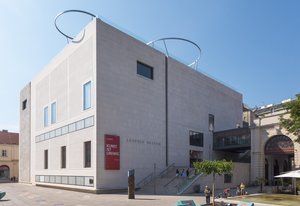
Leopold Museum, VienaLeopold Museum Viena 2 The Interrupted Pilgrimage (The Sick Pilgrim), The Conscript’s Farewell
Kunsthistorisches Museum, VienaKunsthistorisches Museum Viena 2 Portrait of Ludwig van Beethoven
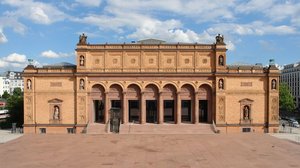
Hamburger Kunsthalle, HambargasHamburger Kunsthalle Hambargas 2 The young boy with the stable-lantern / The Young Stableboy with a Stable Lamp
Cleveland Museum of Art, KlevlandasCleveland Museum of Art Klevlandas 2 Countess Széchenyi

Ferdinand Georgas Waldmülleris, po vieno ikoninio paveikslio kiekvienam dešimtmenės laikotarpiui

Darbai pagal dešimtmečius

Pasirinkite dešimtmetį, kad pamatytėte jį apibrėžusį originalą.

Ferdinand Georgas Waldmülleris tapyiniai: galerijos atsakymai

Kuris Ferdinand Georgas Waldmülleris paveikslas yra pats garsiausias iš visų?Atsakymas

Portrait of Ludwig van Beethoven (1823), Kunsthistorisches Museum, Viena. Toliau seka The young boy with the stable-lantern / The Young Stableboy with a Stable Lamp (1824) ir The Actor Maximilian Korn in a Landscape (1828).

Kiek metų buvo Ferdinand Georgas Waldmülleris, kai sukūrė Portrait of Ludwig van Beethoven?Atsakymas

30 metų amžiaus: Portrait of Ludwig van Beethoven sukurta 1823 m. Nr. Ferdinand Georgas Waldmülleris gimė 1793.

Kuriose yra 10 geriausių Ferdinand Georgas Waldmülleris paveikslų?Atsakymas

Portrait of Ludwig van Beethoven, The young boy with the stable-lantern / The Young Stableboy with a Stable Lamp, The Actor Maximilian Korn in a Landscape, Peasant Lovers, The Interrupted Pilgrimage (The Sick Pilgrim), After Confiscation, The Conscript’s Farewell, Children at the Window, Children ir Catharina Freifrau von Koudelka. Viršuje esančioje reitingo sąraše nurodyta kiekvieno kūrinio metis ir muziejus.

Kiek kūrinių sukūrė Ferdinand Georgas Waldmülleris?Atsakymas

Mūsų kataloge yra 210 Ferdinand Georgas Waldmülleris darbų, skirtų laikotarpiui nuo 1817 iki 1863.

Kur kabinami garsiausi Ferdinand Georgas Waldmülleris originalūs darbai?Atsakymas

Daugiausia – Bavarijos valstybinės paveikslų kolekcijos (Miunchas), Alte Nationalgalerie (Berlinas) ir Moravian Gallery in Brno (Brno). Viršuje esančiame muziejų sąraše yra visi jie.

Kada Ferdinand Georgas Waldmülleris sukūrė savo garsiausias paveikslus?Atsakymas

1830s laikotarpiu: 41 iš 100 šioje pusėje esančių darbų buvo sukurtos tada, iš jų Children.

Kokie yra ankstyviausi ir vėliausi garsieji Ferdinand Georgas Waldmülleris kūriniai?Atsakymas

Šioje pusėje seniausias darbas yra man with writing plate (1817), o naujausias – Peasant Lovers (1863).

Kurią temą Ferdinand Georgas Waldmülleris kūrė dažniausiai?Atsakymas

Woman (53), Man (31) ir Portrait (19) iš 100 šioje pusėje esamų darbų.

Kurią techniką Ferdinand Georgas Waldmülleris naudojo dažniausiai?Atsakymas

Oil, iš 100 šios puslapio darbų – 47.

Su kokiu kierliu siejama Ferdinand Georgas Waldmülleris?Atsakymas

Biedermeier, vadovaujantis šios puslapio originalais kūriniais.

Kurių Ferdinand Georgas Waldmülleris originalų turi Bavarijos valstybinės paveikslų kolekcijos?Atsakymas

Portrait of a Middle-Aged Lady, Portrait of a young lady with a pearl necklace ir Portrait of a Woman: Bavarijos valstybinės paveikslų kolekcijos, Miunchas kolekcijoje yra 5 šioje pusėje esančių darbų.

Ferdinand Georgas Waldmülleris: menininkas

Pradiniai metai ir meninės pradžios

Ferdinand Georgas Waldmüller gimė Vienessä, Austrijoje, 1793 m. sausio 15 d., εποko svarbių visuomeninių pokyčių ir meninio kėlimo. Jo ankstyvoji gyvenimo dalis, deja, buvo palydima sunkumų; anksti miręs tėvas padėjo šeimos sėkmės šešėlį, į įsimintiną jaunam Ferdinandą įsidėmė gyvenimo neapibrėžtumo suvokimą – temą, kuri vėliau giliai atgarsės jo kūryboje. Nepaisant šių iššūkių, Waldmüllerio talento piešti ir dažti buvo akivaizdžiai matomas, o tai paskatino jį 1807 m. įstoti į Vienos dailės akademiją. Tačiau jo mokslas nebuvo nuoseklus, kas galbūt atspindėjo neramų dvasios ar nepatirtį dėl tuo laikmečiu galiojančių griežtų akademinių apribojimų. Pradiniame etape jis linko į portretinę dailę – tai buvo patikimas kelias ambicingam menininkui, ieškančiam rėmėjų, tačiau būtent peizažų ir žanrinės scenų – kasdienio gyvenimo vaizdinimo – traukmė tikroji sužavėjo jo fantaziją ir galiausiai apibrėžė jo meninę paliktį. Šios ankstyvosios ieškos padėjo pagrindus stiliui, pasižymintiam kruopščia stebėjimu ir giliu ryšiu su gamtos pasauliu.

Realizmu ir kontroversijų skulptuota karjera

Waldmūlerio karjera išskleidė dinamišką meninės inovacijos ir institucinio pasipriešinimo sąveiką. Formavimo metais jis papildė savo pajamas dirbdamas scenografu ir toliau tapęs portretistas, dažnai keliaudamas kartu su savo žmona, daininke Katharina Weidner. Šis klajačias gyvenimo būdas leido jam susipažinti su įvairiaomis aplinkomis ir išplėtė menines horizontus. 20-metmečiu decade Waldmülleris pradėjo kurti išskirtinį stilių – atsidavimą realistiškam kasdienio gyvenimo, ypač kaimo aplinkų, vaizdymui. Jis ne Siekė idealizuoti ar romantiškai romanzuoti; priešingai, jis siekė įamžinti pasaulį tokią, kokia jis yra iš tikrųjų, su visomis savo grožiais ir trūkumais. Šis ištikimumas realizmui atnešė jam tiek pripažinimą, tiek kritikos. 1819 m. jis laimėjo profesoriško posto vietą Vienos dailės akademijoje, tačiau jo veikla buvo kupina konfliktų. Waldmülleris aistringai gynė tiesioginį stebėjimą iš gamtos – plein air (plenerio) tapinimo techniką – ir atvirai kritikavo akademijos pabrėžimą formuliniam mokymui bei laikymusi įtvirtintų konvencijų. Jo drąsus pasisakymas lėmė pakartotinus susidūrimus su meninės estrėlės atstovais ir galiausiai prisėmė prie jo priverstinio pensijavimo 1857 m. Nuolatinės kelionės į Italiją, prasidėjusios 1825 m., bei idiliškas Salzkammergut regionas kruopliai paveikė jo peizažų tapimą, tobulindami jo gebėjimą su neįtikėtinu tikslumu įamžinti šviesą, tekstūrą ir atmosferą.

Kaimo gyvenimo temos ir socialinė komentarija

Waldmüllerio kūryba yra neįtikėtinai įvairiapusi, apimanti portretus, peizažus ir žanrinę dailę, tačiau visus šiuos skirtingus temus jungia viena gija: gilus įsipareigojimas XIX a. Austrijos gyvenimo realybėms. Tokie darbai kaip Venecijos vaisių pardavėja (1826 m.), ankstyvasis jo žanrinės dailės pavyzdys, demonstruoja jo meistriškumą įamžinti trumpalaikius kasdienybės akimirkas. Jo 1eksportuojamas autoportretas iš 1828 m. atskleidžia aštrią supratimą apie žmogaus psichologiją ir charakterio niuansus. Louise Mayer (1836 m.) stovi kaip jo portretinės dailės meistriškumo įrodymas, o Ischl vaizdas (1838 m.) parodo evoliuciją jo peizažų kūrimo gebėjuose. Tačiau būtent tokie paveikslai kaip Visiems šventųjų dieną (1839 m.), Meilės laiškas (1849 m.) ir Kūpinėdžios moterys (apie 1848–1849 m.) jį tikrai išskyrė. Šie darbai nebuvo tik vaizdingi kaimo gyvenimo aprašymai; jie buvo įsipūkę socialinės kritikos perspektyva, subtiliai atskleisdami paprastų žmonių išgyvenamus sunkumus – skurba, nuotiekų ir šeimos dinamikos sudėtingumo įtaką. Jis nedraudė vaizduoti mažiau žavios gyvenimo pusės, pasiūlydamas sąžiningesnį ir subtilesnį visuomenės atspindį nei tai, kas paprastai buvo matoma akademinėje dailėje.

Paliktis ir istorinė reikšmė

Ferdinandas Georgas Waldmüller teisybingai laikomas vienu svarbiausių Biedermeier laikotarpio Austrijos dažytojų. Jo neprieklausomas atsidavimas natūraliam stebėjimui ir plein air tapimui iš anksto numatė daug meninių inovacijų, kurios dešimtmečius vėliau taps Impresionizmo pagrindu. Jis iššūkį metė įprastam kaimo gyvenimo vaizdymui, įnešdamas realybės ir socialinės komentacijos dozę žanrui, kuriame dažnai dominavo idealizuoti vaizdiniai. Nepaisant kritikos ir sunkumų visos karjeros metu – įskaitant priverstinį pensijavimą iš Akademijos – Waldmūlerio kūryba galiausiai sulaukė tarptautinio pripažinimo, pasiekdama kulminaciją Parizės pasaulinėje parodoje (1855 m.) ir Buckingo rūmai (1856 m.), kur jis sulaukė pagodės nuo imperatoriaus Napoleono III ir karalienės Viktorijos atitinkamai. Jis buvo pavietintas nedługi prieš savo mirtį 1865 m. rugpjūčio 23 d. Hinterbrühl, kas buvo vėlyvas pripažinimas jo meninių įtakų. Waldmüllerio paliktis išsipina už individualių paveikslų; jis paveikė daugybę menininkų kartų savo detaliniu realizmu, dėmesi į kasdienius temus ir drąsiu ryžtu iššūkį kelti status quo. Jis išlieka svarbiu figūra Austrijos meno istorijoje – tikras pionierius, atvėsinęs kelią naujiems požiūriams į peizažų ir žanrinę dailę.