


1


Atnaujinta spalis 2026 · pagal mūsų populiarumumo koeficientą (paieškos, lankytojai ir užsakymai kiekvienam kūriniui) · 22 Federico Zuccari darbai mūsų kataloge
Trumpai tariant
Galerijos akimais, garsiausias Federico Zuccari tapas yra Սուրբ Ռոման (1550), kurio originalas eksponuojamas Armėnijos nacionalinė galerija, Erevanas. Calumny (1570) ir Barbarossa kisses the Pope's foot (1582) užbaia trio, kurį atpažįsta kiekvienas ž)/\ Iš 22 Federico Zuccari darbų mūsų kataloge, galerija žemiau pristato 22 garsiausius – kiekvienas yra originalus, su nurodytu metais, muziejumi bei unikaliu aprašymu.


To gaze upon Angels and Cherubim Among Clouds is to step across the threshold of earthly concerns and into a realm painted with divine light. This magnificent canvas, dating from 1566, does not merely depict heavenly beings; it invites the viewer into an experience of sublime transcendence. Federico Zuccaro masterfully orchestrates a gathering of angels and cherubim amidst billowing clouds, creating a scene that is at once overwhelmingly grand and…

In the delicate interplay of light and shadow captured within Federico Zuccaro’s 1563 masterpiece, St Mennas, we encounter a profound moment of spiritual introspection. This exquisite pen drawing serves as a window into the soul of the Renaissance, offering a glimpse of a figure caught in a state of quiet contemplation. The subject, depicted in profile, possesses an ethereal presence; with one arm raised and a hand clutching a sacred…


 Assumption of the Virgin (detail)1566 · Museo Diocesano
12
 Assumption of the Virgin (detail)1566 · Museo Diocesano
13
 Christ Comforted by VeronicaSanta Prassede
14
 Self-portraitKapitolijos muziejai
15
 Taddeo Zuccaro Copying the Antique Statues in RomeGalleria degli Uffizi
16
 Drawing
17
 Untitled
18
 Casino Aurora. Ground floor. Vestibule, general viewArchivio Boncompagni Ludovisi
19
 Casino Aurora. Ground floor. Vestibule.Archivio Boncompagni Ludovisi
20
 Casino Aurora. Ground floor. Vestibule.Archivio Boncompagni Ludovisi
21
 Self-PortraitGalleria degli Uffizi
22
 Gate of Virtue1581 · Galleria Nazionale delle Marche
Ketverios temos, dažniausiai pasikrausto originaluose, kiekvienos su savo puikiausiu pavyzdžiu.
8 muziejai, kuriuose saugoma daugiausia šioje pusėje esamų paveikslų.
| Muzejaus | Miestas | Federico Zuccari darbai | Šiojo sąrašo paveikslai |
|---|---|---|---|
 Museo Diocesano |
Kortona | 3 | Assumption of the Virgin, Assumption of the Virgin (detail), Assumption of the Virgin (detail) |
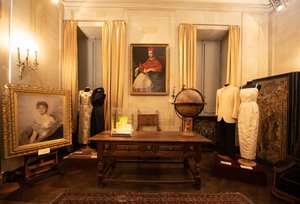 Archivio Boncompagni Ludovisi |
Roma | 3 | Casino Aurora. Ground floor. Vestibule, general view, Casino Aurora. Ground floor. Vestibule., Casino Aurora. Ground floor. Vestibule. |
 Galleria degli Uffizi |
Florencija | 2 | Taddeo Zuccaro Copying the Antique Statues in Rome, Self-Portrait |
 Armėnijos nacionalinė galerija |
Erevanas | 1 | Սուրբ Ռոման |
 Royal Collection |
Londonas | 1 | Calumny |
 Dojų rūmai |
Venecija | 1 | Barbarossa kisses the Pope's foot |
 J. Paul Getty muziejus |
Los Andželis | 1 | Cupid and Pan |
 Ermitažas |
Šv. Peterburgas | 1 | Angels and Cherubim Among Clouds |
Pasirinkite dešimtmetį, kad pamatytėte jį apibrėžusį originalą.
To gaze upon Angels and Cherubim Among Clouds is to step across the threshold of earthly concerns and into a realm painted with divine light. This magnificent canvas, dating from 1566, does not merely depict heavenly beings; it invites the viewer into an experience of sublime transcendence. Federico Zuccaro masterfully orchestrates a gathering of angels and cherubim amidst billowing clouds, creating a scene that is at once overwhelmingly grand and…
Սուրբ Ռոման (1550), Armėnijos nacionalinė galerija, Erevanas. Toliau seka Calumny (1570) ir Barbarossa kisses the Pope's foot (1582).
11 metų amžiaus: Սուրբ Ռոման sukurta 1550 m. Nr. Federico Zuccari gimė 1539.
Սուրբ Ռոման, Calumny, Barbarossa kisses the Pope's foot, Cupid and Pan, Angels and Cherubim Among Clouds, St Mennas, Adoration of the Magi, Portrait of Vincenzo Borghini, Assumption of the Virgin ir Scenes from the Life of the Artist's Family. Viršuje esančioje reitingo sąraše nurodyta kiekvieno kūrinio metis ir muziejus.
Mūsų kataloge yra 22 Federico Zuccari darbų, skirtų laikotarpiui nuo 1550 iki 1600.
Daugiausia – Museo Diocesano (Kortona), Archivio Boncompagni Ludovisi (Roma) ir Galleria degli Uffizi (Florencija). Viršuje esančiame muziejų sąraše yra visi jie.
1560s laikotarpiu: 6 iš 22 šioje pusėje esančių darbų buvo sukurtos tada, iš jų Angels and Cherubim Among Clouds.
Šioje pusėje seniausias darbas yra Սուրբ Ռոման (1550), o naujausias – Cupid and Pan (1600).
Virgin (3), Figures (2) ir Man (2) iš 22 šioje pusėje esamų darbų.
Oil On Canvas, iš 22 šios puslapio darbų – 2.
Mannerism, vadovaujantis šios puslapio originalais kūriniais.
Assumption of the Virgin, Assumption of the Virgin (detail) ir Assumption of the Virgin (detail): Museo Diocesano, Kortona kolekcijoje yra 3 šioje pusėje esančių darbų.
Federico Zuccaro stands as a pivotal figure in the Italian Renaissance, specifically within the burgeoning Roman Mannerist movement. He was far more than a mere painter; he was an architect, a historian, and a champion of artistic innovation—a rare combination of talents that cemented his legacy as one of the era's most influential creators. Born around 1539, Zuccaro’s early life was deeply rooted in the traditions of the masters. He received a robust artistic education from his father, Giovanni Zuccaro, a celebrated sculptor and painter. This familial connection instilled within Federico a profound appreciation for classical ideals, establishing him firmly on a path toward mastering the delicate balance between painting, sculpture, and structural design.
His formative years were spent honing his skills in Florence, where he studied under the legendary Andrea Palladio. From Palladio, Zuccaro absorbed a meticulous attention to proportion and architectural harmony, principles that would later define his grander compositions. He quickly gained recognition for his breathtaking frescoes, particularly those adorning the Palazzo Vecchio, which demonstrated an exceptional ability to convey deep emotion and narrative complexity within a restrained, sophisticated stylistic framework. As his reputation grew, so did his reach, with commissions flowing from wealthy Florentine families and eventually extending into the heart of Rome.
One cannot discuss the brilliance of Federico Zuccaro without acknowledging the profound influence of his brother, Taddeo Zuccaro. Together, the brothers formed an unparalleled creative partnership that pushed the boundaries of Mannerist aesthetics. While Taddeo’s mastery of sculpture provided a structural strength to their shared visions, Federico’s painting prowess brought them to life with ethereal light and movement. Their collaborative spirit yielded masterpieces such as “The Holy Family” in Palazzo Vecchio, a work that serves as a testament to their unified artistic language.
Zuccaro's versatility allowed him to transcend the canvas. As an architect, he undertook ambitious projects throughout Rome and Italy, designing palaces, churches, and villas that reflected his deep understanding of classical space. His architectural achievements were not merely functional but were intended to elevate the very status of the artist. This ambition is perhaps most tangibly felt in Casa Zuccari in Florence, a residence built around 1578. Conceived as an emblem of lineage and creative emancipation, this architectural jewel was inspired by the pioneering spirit of Giorgio Vasari, transforming a private sanctuary into a stage for intellectual and aesthetic triumph.
The true essence of Zuccaro’s work lies in his ability to blend the physical with the divine. In works such as “Angels and Cherubim Among Clouds,” dating from 1566, one can witness a celestial vision painted with sublime transcendence. He masterfully orchestrated gatherings of heavenly beings amidst billowing clouds, creating scenes that were simultaneously grand and intimately peaceful. His technique involved building luminosity through delicate gradations of color and shadow, allowing for a dynamic tension between solid forms and weightless vapor.
Beyond the grandeur of his large-scale frescoes, Zuccaro possessed a remarkable ability to capture quiet, spiritual introspection. His drawings, such as the exquisite “St Mennas,” reveal a master of light and shadow, where figures appear suspended between the earthly realm and the divine. This intellectual rigor and technical versatility allowed him to leave an indelible mark on the history of art, influencing generations of artists across Italy, Spain, France, and England. Through his leadership in founding the Accademia di San Luca, he ensured that the principles of classical beauty and artistic discipline would endure long after his passing in 1609.


