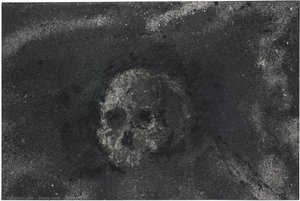
Zhang Huan: A Body of Ritual and Revelation
Born in Anyang, Henan Province, China, in 1965, Zhang Huan’s artistic journey is a compelling narrative of transformation, challenging conventions and pushing the boundaries of performance art. Initially named Dong Ming – a tribute to Chairman Mao – his early life was marked by a brief relocation to rural Tangyin County, an experience that would profoundly shape his later work, imbuing it with themes of displacement, memory, and cultural identity. This formative period instilled in him a deep connection to the land and its traditions, which he would continually revisit throughout his career.
Zhang’s formal education laid the groundwork for his artistic explorations. He earned a BA from Henan University in Kaifeng (1988) and subsequently an MA from the China Central Academy of Fine Arts in Beijing (1993). It was within the vibrant, albeit politically scrutinized, environment of Beijing's East Village that Zhang began to forge his distinctive style – a potent blend of performance, photography, sculpture, and installation. This community, comprised of young artists experimenting with radical forms of expression, became a crucible for innovation, though also a source of official reprimands for their provocative actions.
The Performance of the Body
Zhang Huan’s artistic breakthrough arrived in 1993 with *Angel*, a performance at the National Art Museum of China that immediately garnered attention. This seminal work involved the artist lying naked on the floor, covered in red paint and fragments of a doll – a deliberate reference to China's controversial one-child policy. This act, and many that followed, established a core tenet of his practice: the systematic interrogation of the body as both subject and vehicle for exploring complex social, political, and spiritual themes.
His early performances were characterized by a raw physicality, often involving nudity and elements of masochism – a deliberate confrontation with vulnerability and pain. Works like *12 Square Meters* (1994), where he endured being smeared with honey and fishy liquid while sitting in a prison-like space, became iconic representations of his willingness to push personal limits. These performances weren’t merely displays of endurance; they were carefully constructed rituals designed to provoke reflection on issues ranging from the pressures of modern life to the weight of history.
Sculptural Echoes and Buddhist Influence
Following a period in New York City, Zhang Huan returned to China in 2006, marking a significant shift in his artistic focus. He began to engage with sculpture, drawing inspiration from ancient Buddhist iconography. His early sculptures – colossal copper hands and feet, magnified fragments of broken Buddhist figures unearthed in Tibet – were not simply reproductions but rather reinterpretations imbued with a profound sense of reverence and ritual.
This period saw the emergence of works like *Long Ear Ash Head* (2007), a monumental sculpture constructed entirely from incense ash, reflecting his growing interest in Buddhism and its meditative practices. The use of ash, a symbol of both mortality and rebirth, underscored the cyclical nature of existence – a central tenet of Buddhist philosophy. His later work, including *Sydney Buddha* (2015), further explored these themes, creating immersive installations that invited viewers to contemplate the relationship between the corporeal and the spiritual.
Recognition and Legacy
Zhang Huan’s work has garnered international acclaim, culminating in inclusion in prestigious exhibitions such as the 2002 Whitney Biennial and numerous solo shows at institutions worldwide. His pieces are held in collections including The Guggenheim Museum, MoMA, and the Metropolitan Museum of Art. His willingness to confront uncomfortable truths through his art – exploring themes of identity, spirituality, and social commentary – has cemented his position as a leading figure in contemporary Chinese art.
Beyond his individual achievements, Zhang Huan played a pivotal role in shaping the landscape of performance art in China, paving the way for subsequent generations of artists to challenge established norms and explore new forms of expression. His legacy extends beyond the canvas or stage; it resides in his courageous exploration of the human condition and his unwavering commitment to pushing the boundaries of artistic possibility.
Q&A
Zhang Huan 작가는 어떤 사조의 작품 활동을 했나요?
Zhang Huan 작가의 작품을 예술 사조별로 모아둔 모든 미술 사조 페이지에서 해당 작가가 활동했던 사조를 확인하실 수 있습니다.
Zhang Huan 작가의 국적은 어디인가요?
Zhang Huan은(는) China 출신입니다.
Zhang Huan의 작품은 얼마나 인기가 있나요?
이 사이트에서 Zhang Huan의 작품에 관한 통계를 확인할 수 있는 방문 통계 페이지를 만나보세요.