Early Life and Artistic Training
- Born: Siena, Italy, January 20, 1568
- Died: 1613, Siena, Italy
- Ventura di Archangelo Salimbeni was born into a family with artistic ties. His father, Arcangelo Salimbeni, was a painter in Siena, providing Ventura with his initial training.
- He studied alongside his half-brother, Francesco Vanni, also an artist, under their father's tutelage. This close collaboration significantly shaped Ventura’s early development.
- The artistic environment of Siena, steeped in tradition and patronage from religious orders and noble families, fostered his burgeoning talent.
Roman Period and Early Career
- Around 1588, Salimbeni moved to Rome seeking broader opportunities and exposure to the city's vibrant art scene.
- He participated in fresco painting at the Vatican Library under Pope Sixtus V, gaining valuable experience working on a large-scale project.
- Commissions from Cardinal Bonifacio Bevilacqua Aldobrandini (later Pope Clement VIII) led to works in the Church of the Gesù and Basilica di Santa Maria Maggiore. These commissions demonstrated his rising status.
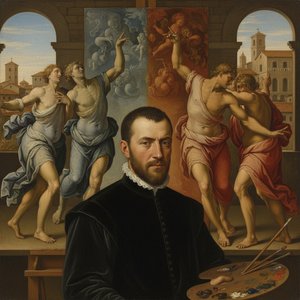
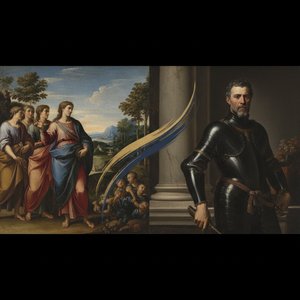
- His Roman style reflected late Mannerism, characterized by complex compositions, dynamic figures, and sophisticated use of light and color. He was influenced by artists like Cavalier d'Arpino.
Return to Siena and Artistic Development
- In 1595, Salimbeni returned to Siena, where he continued his artistic career.
- He embraced a reformist or Counter-Mannerist style, influenced by Federico Barocci. This is evident in works like "Birth of a Virgin" in the San Domenico church in Ferrara (1607–1608).
- Salimbeni produced cycles of paintings for Sienese churches, including the Oratory of Santa Trinità and Santo Spirito.
- He was known for detailed preparatory drawings, now held in the Uffizi Gallery in Florence and the Fine Arts Museum of San Francisco.
Major Works and Commissions
- "Life of St Hyacinth": A series of paintings for the church of Santo Spirito in Siena, showcasing innovative perspective and style.
- Frescoes at Basilica della Santissima Annunziata di Firenze: Lunettes illustrating events in the history of the Servite order (1605–1608).
- Frescoes in Assisi: A fresco of "The Resurrection of Christ" and "The Dying Saint Clare is Visited by the Pope" in the vault of chapel of San Massimo in the basilica of Santa Maria degli Angeli.
- Frescoes for Church of SS Quirico e Giulitta, Siena: Paintings depicting scenes from the church's patron saints’ lives (around 1603).
- "The Ascension of the Virgin": A canvas painted for San Frediano, Pisa (1607).
- "Life of Saint Galganus": Oil paintings for the church of the santuccio in Siena (1612).
- "Marriage of the Virgin": An oil painting for the Seminario diocesano in Foligno (1613), his last known work.
Influences and Legacy
- Federico Barocci: A significant influence on Salimbeni's style, particularly evident in drapery and use of light.
- Domenico Beccafumi: An earlier Sienese master whose work informed Salimbeni’s artistic foundation.
- Lodovico Cigoli: His rich and harmonious palette influenced Salimbeni’s color choices.
- Salimbeni's etchings, created in Rome between 1589 and 1594, are considered among the finest Italian prints of the period.
- He is remembered as a key figure in the transition from late Mannerism to early Baroque art, particularly within the Sienese school.
Q&A
Ventura Salimbeni 작가의 국적은 어디인가요?
Ventura Salimbeni은(는) Italy 출신입니다.
키워드로 Ventura Salimbeni의 작품을 찾아볼 수 있나요?
Ventura Salimbeni의 작품은 아티스트의 키워드별 탐색 페이지에서 키워드별로 찾아보실 수 있습니다. 각 키워드를 통해 관련 작품들을 모아 감상하실 수 있습니다.
주제별로 분류된 Ventura Salimbeni의 작품들은 어디에서 확인할 수 있나요?
Ventura Salimbeni의 작품은 작가의 주제별 작품 모음 페이지에서 주제별로 찾아보실 수 있습니다.
Ventura Salimbeni은(는) 어느 시대의 작품을 남겼나요?
Ventura Salimbeni은(는) Renaissance 시대에 활동했습니다. 이 시기는 역사적 맥락 속에서 작가의 예술적 위치를 보여줍니다.