우타가와 구니요시의 초상화

우타가와 구니요시 회화: 갤러리의 시선으로 선별한 가장 유명한 작품 100선

11월 2026 업데이트 · 인기 점수 기준 순위 (각 작품의 검색, 방문 및 주문 수) · 329점의 우타가와 구니요시 작품 (당사 카탈로그 기준)

요약하자면

갤러리가 선정한 우타가와 구니요시의 대표작은 Musashi on the back of a whale입니다. Shikamatsu Kanroku Yukishige (1847)와 Hatakeyama sitting next to a Go board (1845)가 더해져 누구나 한눈에 알아볼 수 있는 완벽한 트리오를 완성합니다. 우타가와 구니요시의 작품 329점 중, 갤러리는 가장 유명한 100점을 아래와 같이 소개합니다. 각 작품은 제작 연도, 소장 미술관 및 작품의 특징을 포함한 독창적인 원작입니다.

1798 – 1861, 도쿄 Ukiyo-e 최다 소장처: 게이오 대학교 도서관

갤러리 베스트 10 우타가와 구니요시 작품

1
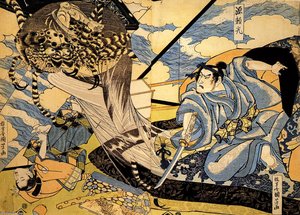
Musashi on the back of a whale 의 우타가와 구니요시

Musashi on the back of a whale

Woodblock Print

This arresting image, a masterful execution of Ukiyo-e by the legendary artist Utagawa Kuniyoshi, transports us to 19th century Japan. Kuniyoshi, born Yoshisaburō in 1798 and tragically passing in 1861, was a pivotal figure at the close of the *ukiyo-e* movement – a vibrant artistic tradition that captured the essence of everyday life during the Edo period. This particular scene, depicting Musashi, the famed swordsman, astride a colossal whale, is…

2
Shikamatsu Kanroku Yukishige (1847) 의 우타가와 구니요시

Shikamatsu Kanroku Yukishige

1847 · Woodblock Print

Utagawa Kuniyoshi’s “Shikamatsu Kanroku Yukishige” (circa 1847) is more than a depiction of a samurai; it’s a potent distillation of Japanese heroism, loyalty, and the fleeting beauty of a moment captured in woodblock form. This iconic image, part of Kuniyoshi's celebrated series “Stories of the True Loyalty of the Faithful Samurai,” transports us to a pivotal scene from the classic tale of Suikoden – a story of betrayal, redemption, and…

3
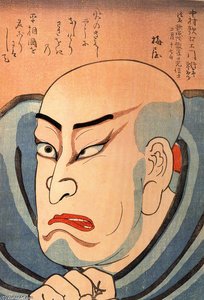
Hatakeyama sitting next to a Go board (1845) 의 우타가와 구니요시

Hatakeyama sitting next to a Go board

1845 · Acrylic On Canvas

Utagawa Kuniyoshi’s “Hatakeyama Sitting Next to a Go Board” is more than just a depiction of a solitary figure; it's a window into the heart of 19th-century Japan. Painted in 1845, during a period of immense social and artistic change, this ukiyo-e masterpiece captures a quiet moment of contemplation – a scene imbued with layers of meaning reflecting the values and aesthetics of the Edo period. Kuniyoshi, one of the…

4
Yukukawa Sanpei Munenori (1848) 의 우타가와 구니요시

Yukukawa Sanpei Munenori

1848 · Acrylic

This exceptional ukiyo-e print, created in 1848 by the master artist Utagawa Kuniyoshi, offers a captivating glimpse into the world of Edo-period Japan. Depicting Yukukawa Sanpei Munenori, a figure likely rooted in historical or legendary lore, the artwork is far more than a simple portrait; it’s a dynamic tableau brimming with action, symbolism, and the raw energy of a warrior's spirit. Kuniyoshi’s skill lies not just in his technical prowess…

5
The Twenty-four Paragons of Filial Piety in China , Script by Tanekazu : Min Ziqian (Bin Shiken) (1852) 의 우타가와 구니요시

The Twenty-four Paragons of Filial Piety in China , Script by Tanekazu : Min Ziqian (Bin Shiken)

1852 · Woodblock Print · 게이오 대학교 도서관, 도쿄

Utagawa Kuniyoshi’s “The Twenty-Four Paragons of Filial Piety,” created circa 1848/50, stands as a pinnacle achievement of *ukiyo-e*, the Japanese woodblock print tradition that flourished during the Edo period. More than just a visually arresting spectacle—a sprawling landscape dominated by towering mountains rendered in subtle shades of azure—this monumental print delves into profound philosophical concepts rooted in Buddhism and Confucianism, offering a timeless meditation on reverence for ancestors and the…

6
Ôtaka Gengo Tadao (1848) 의 우타가와 구니요시

Ôtaka Gengo Tadao

1848 · Woodblock Print

Within the vibrant tapestry of Ukiyo-e prints, few images capture the raw power and stoic determination of a warrior quite like Utagawa Kuniyoshi's "Otaka Gengo Tadao," created in 1848. This remarkable woodblock print isn’t merely a depiction of a samurai; it’s a window into the heart of Edo-period Japan, brimming with tales of loyalty, honor, and the enduring spirit of martial prowess. Kuniyoshi, one of the last masters of this…

7
Oki no Jiro Hiroari killing a monstrous tengu 의 우타가와 구니요시

Oki no Jiro Hiroari killing a monstrous tengu

Woodblock Print

In the vibrant world of Ukiyo-e, few scenes command the eye with as much visceral intensity as Utagawa Kuniyoshi’s masterpiece, Oki no Jiro Hiroari killing a monstrous tengu. This dynamic mythological painting serves as a window into a moment of profound struggle, where the boundaries between the human and the supernatural blur amidst a backdrop of dark, foreboding shadows. The composition is anchored by the figure of Oki no Jiro…

8
Battle of Uji River. Uji kawa kassen no zu 의 우타가와 구니요시

Battle of Uji River. Uji kawa kassen no zu

Acrylic On Canvas · 해머 미술관, 로스앤젤레스

Utagawa Kuniyoshi’s “Battle of Uji River,” painted between 1848 and 1850, stands as a quintessential example of *nishiki-e*, or polychrome woodblock printing, capturing the fervor and grandeur of samurai warfare against a backdrop of breathtaking natural beauty. This monumental print transcends mere depiction; it’s an immersive experience designed to evoke emotion and convey profound themes of courage, resilience, and the ephemeral nature of glory.

11위부터 100위까지의 우타가와 구니요시 작품

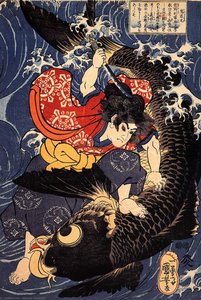
11The Twenty-four Paragons of Filial Piety in China , Script by Tanekazu : Ding Lan (Tei Ran) (1852) 의 우타가와 구니요시The Twenty-four Paragons of Filial Piety in China , Script by Tanekazu : Ding Lan (Tei Ran)1852 · 게이오 대학교 도서관 12Thirty-six Famous Battles (1848) 의 우타가와 구니요시Thirty-six Famous Battles1848 13Kiura Okaemon Sadayuki (1848) 의 우타가와 구니요시Kiura Okaemon Sadayuki1848 14The Heavenly Weaver and the Heardsman (1842) 의 우타가와 구니요시The Heavenly Weaver and the Heardsman1842 · 브리스틀 박물관 - 아트 갤러리 15Yata Gorôemon Suketake (1848) 의 우타가와 구니요시Yata Gorôemon Suketake1848 16Oniwakamaru and the Giant Carp Fighting Underwater (1835) 의 우타가와 구니요시Oniwakamaru and the Giant Carp Fighting Underwater1835 17A Votive Tablet with Masks of Kabuki Actors at Face Value 의 우타가와 구니요시A Votive Tablet with Masks of Kabuki Actors at Face ValueFukuoka City Museum 18The actor (12) 의 우타가와 구니요시The actor (12) 19The Sixth Month (Right) (1849) 의 우타가와 구니요시The Sixth Month (Right)1849 · 대영박물관 20Bon-bon Uta,Children 의 우타가와 구니요시Bon-bon Uta,ChildrenFukuoka City Museum 21Scene from the play “The Life of Onoe Kikugorō III”\n\nScene from the play “The Life of Onoe Kikugorō III” (1847) 의 우타가와 구니요시Scene from the play “The Life of Onoe Kikugorō III”\n\nScene from the play “The Life of Onoe Kikugorō III”1847 · Art Museum Riga Bourse 22Minamoto Yorimitsu also known as Raiko 의 우타가와 구니요시Minamoto Yorimitsu also known as Raiko 23Mount Fuji from the Sumida River embankment (1842) 의 우타가와 구니요시Mount Fuji from the Sumida River embankment1842 24A record of origins of the great country of Japan 의 우타가와 구니요시A record of origins of the great country of Japan 25The actor (16) 의 우타가와 구니요시The actor (16) 26Seaweed Gatherers at Omari (1833) 의 우타가와 구니요시Seaweed Gatherers at Omari1833 27The ghost of Taira Tomomori 의 우타가와 구니요시The ghost of Taira Tomomori 28Thaishun with elephants 의 우타가와 구니요시Thaishun with elephants 29Raiko tormented by the earth spider 의 우타가와 구니요시Raiko tormented by the earth spider 30Benkei holdin a halberd 의 우타가와 구니요시Benkei holdin a halberd 31A samurai overwhelming a giant serpent 의 우타가와 구니요시A samurai overwhelming a giant serpent 32The Famous Unrivalled Hidari Jingoro 의 우타가와 구니요시The Famous Unrivalled Hidari Jingoro 33Samurai and the conquered 의 우타가와 구니요시Samurai and the conquered 34Kamigashihime stabbing a giant spider 의 우타가와 구니요시Kamigashihime stabbing a giant spider 35Vesper bell at Todaiji 의 우타가와 구니요시Vesper bell at Todaiji 36Oniwakamaru about to kill the giant carp 의 우타가와 구니요시Oniwakamaru about to kill the giant carp 37Uneme is exorcising the monstrous serpent from the lake 의 우타가와 구니요시Uneme is exorcising the monstrous serpent from the lake 38Shoki and Demon, Edo period (1850) 의 우타가와 구니요시Shoki and Demon, Edo period1850 · 아서 M. 새클러 갤러리 39Nichiren going into exile on the island of Sado 의 우타가와 구니요시Nichiren going into exile on the island of Sado 40Uchiwakamaru fighting Benkei on Gojo bridge 의 우타가와 구니요시Uchiwakamaru fighting Benkei on Gojo bridge 41The young Benkei holding a pole 의 우타가와 구니요시The young Benkei holding a pole 42New edition of the life of a hundred generals 의 우타가와 구니요시New edition of the life of a hundred generals 43Sharks 의 우타가와 구니요시Sharks 44Koga Saburo, suspendeding a basket, watching a dragon 의 우타가와 구니요시Koga Saburo, suspendeding a basket, watching a dragon 45Kamei Rokuro and the Black Bear in the Snow (1849) 의 우타가와 구니요시Kamei Rokuro and the Black Bear in the Snow1849 46Hattara Sonja with his white tiger 의 우타가와 구니요시Hattara Sonja with his white tiger 47Ishi-jo, wife of Oboshi Yoshio, one of the loyal ronin (1848) 의 우타가와 구니요시Ishi-jo, wife of Oboshi Yoshio, one of the loyal ronin1848 48Untitled (D2X8SB) (801) 의 우타가와 구니요시Untitled (D2X8SB)801 · 메트로폴리탄 미술관 49Yoshida Sadaemon Kanesada (1848) 의 우타가와 구니요시Yoshida Sadaemon Kanesada1848 50Hara Gôemon Mototoki (1848) 의 우타가와 구니요시Hara Gôemon Mototoki1848 51Woodcut (1852) 의 우타가와 구니요시Woodcut1852 · Museum of Far Eastern Antiquities 52Woodcut (1852) 의 우타가와 구니요시Woodcut1852 · Museum of Far Eastern Antiquities 53Island Enoshima. The Fuji can be seen far away 의 우타가와 구니요시Island Enoshima. The Fuji can be seen far away 54Hayano Kanpei Tsuneyo (1848) 의 우타가와 구니요시Hayano Kanpei Tsuneyo1848 · 클리블랜드 미술관 55In the Waves at Kakuda enroute to Sado Island, Edo period (1835) 의 우타가와 구니요시In the Waves at Kakuda enroute to Sado Island, Edo period1835 · 아서 M. 새클러 갤러리 56Woman selling decorative bowls 의 우타가와 구니요시Woman selling decorative bowls 57A fierce depiction of Uesugi Kenshin seated (1844) 의 우타가와 구니요시A fierce depiction of Uesugi Kenshin seated1844 58The Twenty-four Paragons of Filial Piety in China, Script by Tanekazu : Emperor Wen of Han (Kan no Buntei) (1852) 의 우타가와 구니요시The Twenty-four Paragons of Filial Piety in China, Script by Tanekazu : Emperor Wen of Han (Kan no Buntei)1852 · 게이오 대학교 도서관 59The Twenty-four Paragons of Filial Piety in China , Script by Tanekazu : Cai Shun (Sai Jun) (1852) 의 우타가와 구니요시The Twenty-four Paragons of Filial Piety in China , Script by Tanekazu : Cai Shun (Sai Jun)1852 · 게이오 대학교 도서관 60Isoai Jûroemon Masahisa (1848) 의 우타가와 구니요시Isoai Jûroemon Masahisa1848 61Tokuda Sadaemon Yukitaka (1848) 의 우타가와 구니요시Tokuda Sadaemon Yukitaka1848 62Tamakatzura Tamatori attacked by the octopus 의 우타가와 구니요시Tamakatzura Tamatori attacked by the octopus 63Bijin with a dog in the snow (1845) 의 우타가와 구니요시Bijin with a dog in the snow1845 64From Suikoden of Japanese Heroes 의 우타가와 구니요시From Suikoden of Japanese Heroes 65Hatakeyama Shigetada 의 우타가와 구니요시Hatakeyama Shigetada 66The sailor Tokuso and the sea monster 의 우타가와 구니요시The sailor Tokuso and the sea monster 67Tokiwa Gozen in the snow 의 우타가와 구니요시Tokiwa Gozen in the snow 68Mongaku doing penace at the Nachi waterfall 의 우타가와 구니요시Mongaku doing penace at the Nachi waterfall 69Eight Hundred Heroes of Our Country 의 우타가와 구니요시Eight Hundred Heroes of Our Country 70The suicide of morozumi Masakiyo 의 우타가와 구니요시The suicide of morozumi Masakiyo 71Tametomo rescued from the sea monster by tengu 의 우타가와 구니요시Tametomo rescued from the sea monster by tengu 72Miyamoto Musashi killing a giant 의 우타가와 구니요시Miyamoto Musashi killing a giant 73The Twenty-four Paragons of Filial Piety in China , Script by Tanekazu : Tanzi (Enshi) (1852) 의 우타가와 구니요시The Twenty-four Paragons of Filial Piety in China , Script by Tanekazu : Tanzi (Enshi)1852 · 게이오 대학교 도서관 74The Twenty-four Paragons of Filial Piety in China , Script by Tanekazu : Jiang Shi (Kyo Shi) (1852) 의 우타가와 구니요시The Twenty-four Paragons of Filial Piety in China , Script by Tanekazu : Jiang Shi (Kyo Shi)1852 · 게이오 대학교 도서관 75Hawk 의 우타가와 구니요시Hawk 76Tengu 의 우타가와 구니요시Tengu 77Otsu-e Paintings Coming Alive Triptych (1847) 의 우타가와 구니요시Otsu-e Paintings Coming Alive Triptych1847 78Lady-in-Waiting at Edo Castle (1854) 의 우타가와 구니요시Lady-in-Waiting at Edo Castle1854 79Bando Shuka I as the courtesan Shiraito of Hashimoto-ya (1852) 의 우타가와 구니요시Bando Shuka I as the courtesan Shiraito of Hashimoto-ya1852 · 뉴사우스웨일스 주립 미술관 80Self-portrait of the Shunga album 의 우타가와 구니요시Self-portrait of the Shunga album 81Saitogo Kunitake, Japanese actor (1816) 의 우타가와 구니요시Saitogo Kunitake, Japanese actor1816 82Kuroda Ukinaga, Japanese actor (1816) 의 우타가와 구니요시Kuroda Ukinaga, Japanese actor1816 83Sosan returning to his mother (1840) 의 우타가와 구니요시Sosan returning to his mother1840 84Strings for night firing 의 우타가와 구니요시Strings for night firing 85Woman catching firefly by a stream 의 우타가와 구니요시Woman catching firefly by a stream 86Nakamura Kansuke Tadatoki (1848) 의 우타가와 구니요시Nakamura Kansuke Tadatoki1848 87Yazama Shinroku Mitsukaze (1848) 의 우타가와 구니요시Yazama Shinroku Mitsukaze1848 88Oribe Yasubei Taketsune (1848) 의 우타가와 구니요시Oribe Yasubei Taketsune1848 89Katsuta Shin'emon Taketaka (1848) 의 우타가와 구니요시Katsuta Shin'emon Taketaka1848 90Senzaki Yagorô Noriyasu (1848) 의 우타가와 구니요시Senzaki Yagorô Noriyasu1848 91Ôboshi Rikiya Yoshikane (1848) 의 우타가와 구니요시Ôboshi Rikiya Yoshikane1848 92Hayano Wasuke Tsunenari (1848) 의 우타가와 구니요시Hayano Wasuke Tsunenari1848 93Writing a Label for Chrysanthemums (1844) 의 우타가와 구니요시Writing a Label for Chrysanthemums1844 94Shikamatsu Kanroku’s Manservant, Jinzaburô (1848) 의 우타가와 구니요시Shikamatsu Kanroku’s Manservant, Jinzaburô1848 95Tokiwa-Gozen with her three children in the snow (1840) 의 우타가와 구니요시Tokiwa-Gozen with her three children in the snow1840 96Neve, the moon is chilling (1845) 의 우타가와 구니요시Neve, the moon is chilling1845 97Shoriko kaei shooting a wild goose 의 우타가와 구니요시Shoriko kaei shooting a wild goose 98One Hundred and Eight Heroes from the Chinese Tale, The Water Margin- Zhang Shun, alias White Stripe... 의 우타가와 구니요시One Hundred and Eight Heroes from the Chinese Tale, The Water Margin- Zhang Shun, alias White Stripe...도쿄 국립 박물관 99Head of a Courtesan 의 우타가와 구니요시Head of a Courtesan하버드 미술관 100Ishiyakushi 의 우타가와 구니요시Ishiyakushi

우타가와 구니요시의 시대별 명작

우타가와 구니요시의 시선을 사로잡은 주제들

이 오리지널 작품들에서 가장 자주 등장하는 네 가지 주제와 그 정수를 보여주는 대표작들.

우타가와 구니요시의 원작을 소장하고 있는 미술관

이 페이지에 있는 작품을 가장 많이 소장하고 있는 8개의 미술관

소장 미술관 도시 우타가와 구니요시의 작품 이 목록의 작품들
게이오 대학교 도서관, 도쿄게이오 대학교 도서관 도쿄 8 The Twenty-four Paragons of Filial Piety in China , Script by Tanekazu : Min Ziqian (Bin Shiken), The Twenty-four Paragons of Filial Piety in China , Script by Tanekazu : Guo Ju (Kaku Kyo), The Twenty-four Paragons of Filial Piety in China , Script by Tanekazu : Lu Ji (Riku Seki)
Fukuoka City Museum, FukuokaFukuoka City Museum Fukuoka 4 A Votive Tablet with Masks of Kabuki Actors at Face Value, Bon-bon Uta,Children
아서 M. 새클러 갤러리, 워싱턴 D.C.아서 M. 새클러 갤러리 워싱턴 D.C. 2 Shoki and Demon, Edo period, In the Waves at Kakuda enroute to Sado Island, Edo period
Museum of Far Eastern Antiquities, StockholmMuseum of Far Eastern Antiquities Stockholm 2 Woodcut, Woodcut
해머 미술관, 로스앤젤레스해머 미술관 로스앤젤레스 2 Battle of Uji River. Uji kawa kassen no zu
도쿄 국립 박물관, 도쿄도쿄 국립 박물관 도쿄 2 One Hundred and Eight Heroes from the Chinese Tale, The Water Margin- Zhang Shun, alias White Stripe...
브리스틀 박물관 - 아트 갤러리, 브리스톨브리스틀 박물관 - 아트 갤러리 브리스톨 1 The Heavenly Weaver and the Heardsman
대영박물관, 런던대영박물관 런던 1 The Sixth Month (Right)

우타가와 구니요시, 10년마다 탄생한 대표작 한 점

연대별 작품 수

그 시대를 정의하는 오리지널 작품을 만나보려면 연대를 선택하세요.

우타가와 구니요시의 작품: 갤러리의 해답

우타가와 구니요시의 작품 중 가장 유명한 작품은 무엇인가요?정답 확인하기

Musashi on the back of a whale. 다음은 Shikamatsu Kanroku Yukishige (1847)와(과) Hatakeyama sitting next to a Go board (1845)입니다.

우타가와 구니요시의 대표작 10점은 무엇인가요?정답 확인하기

Musashi on the back of a whale, Shikamatsu Kanroku Yukishige, Hatakeyama sitting next to a Go board, Yukukawa Sanpei Munenori, The Twenty-four Paragons of Filial Piety in China , Script by Tanekazu : Min Ziqian (Bin Shiken), Ôtaka Gengo Tadao, Oki no Jiro Hiroari killing a monstrous tengu, Battle of Uji River. Uji kawa kassen no zu, The Twenty-four Paragons of Filial Piety in China , Script by Tanekazu : Guo Ju (Kaku Kyo) 및 The Twenty-four Paragons of Filial Piety in China , Script by Tanekazu : Lu Ji (Riku Seki). 위 순위는 각 작품의 제작 연도와 소장 박물관을 나타냅니다.

우타가와 구니요시의 작품은 몇 점인가요?정답 확인하기

저희 카탈로그에는 1816년부터 1854년 사이의 우타가와 구니요시 작가의 작품 329점이 수록되어 있습니다.

우타가와 구니요시의 가장 유명한 원작들은 어디에 전시되어 있을까요?정답 확인하기

대부분 게이오 대학교 도서관 (도쿄), Fukuoka City Museum (Fukuoka) 및 아서 M. 새클러 갤러리 (워싱턴 D.C.)에 소장되어 있습니다. 위의 박물관 목록에서 전체 목록을 확인하실 수 있습니다.

우타가와 구니요시의 가장 유명한 작품들은 언제 제작되었나요?정답 확인하기

1840s 동안: 이 페이지의 총 100점의 작품 중 33점이 해당 시기에 제작되었으며, 그중 Shikamatsu Kanroku Yukishige점입니다.

우타가와 구니요시의 초기 및 후기 대표작은 무엇인가요?정답 확인하기

이 페이지에서 가장 오래된 작품은 Saitogo Kunitake, Japanese actor (1816)이며, 가장 최근 작품은 Lady-in-Waiting at Edo Castle (1854)입니다.

우타가와 구니요시 작가가 가장 자주 다룬 주제는 무엇인가요?정답 확인하기

이 페이지의 100점의 작품에 걸쳐 있는 Japanese art (15), Warrior (14) 및 Samurai (14)

우타가와 구니요시 작가가 가장 많이 사용한 매체는 무엇인가요?정답 확인하기

이 페이지의 총 100점의 작품 중 56점의 Woodblock Print

우타가와 구니요시은(는) 어떤 미술 사조에 속해 있나요?정답 확인하기

이 페이지의 원작들을 기준으로 볼 때, Ukiyo-e

게이오 대학교 도서관이(가) 소장하고 있는 우타가와 구니요시의 원작은 무엇인가요?정답 확인하기

The Twenty-four Paragons of Filial Piety in China , Script by Tanekazu : Min Ziqian (Bin Shiken), The Twenty-four Paragons of Filial Piety in China , Script by Tanekazu : Guo Ju (Kaku Kyo) 및 The Twenty-four Paragons of Filial Piety in China , Script by Tanekazu : Lu Ji (Riku Seki): 게이오 대학교 도서관, 도쿄은(는) 이 페이지에 있는 작품 중 8점을 소장하고 있습니다.

우타가와 구니요시: 작가

浮世絵의 마지막 거장, 우타가와 쿠니요시

우타가와 쿠니요시(歌川国芳, 1798년 1월 1일 에도 출생)는 에도 시대 일본 문화의 정수를 담아낸 ‘우키요에’ 전통의 마지막을 장식하는 위대한 화가입니다. 그의 삶은 예술가의 세계보다는 실용적인 면모에서 시작되었습니다. 아버지의 견직물 염색 사업장에서 색채와 무늬에 대한 감각을 키웠고, 이는 후대 작품에 독특한 생동감을 불어넣는 기반이 되었습니다. 어린 시절부터 그는 유행하던 영웅과 장인의 이미지가 가득한 우키요에 세계에 매료되었고, 이 강렬한 인상은 평생 그의 예술적 열정을 자극하는 원천이 되었습니다. 1811년, 쿠니요시는 우타가와 토요쿠니 I의 문하에 들어가 엄격한 수련을 시작하며 우타가와 가문의 전통적인 기법을 익혔습니다.

초기 활동과 독창적인 화풍의 탄생

쿠니요시의 초기 경력은 비교적 주목받지 못하는 시기였습니다. 그는 토요쿠니의 스타일을 충실히 따랐지만, 에도 판화 시장에서 자신만의 뚜렷한 목소리를 찾는데 어려움을 겪었습니다. 그러나 이 탐색 과정은 매우 중요했습니다. 다양한 장르와 기법을 실험하며 쿠니요시는 역동적인 구도, 대담한 색채, 그리고 정교해진 서사적 스토리텔링 능력을 점차 발전시켜 나갔습니다. 그의 예술가로서의 전환점은 1827년 중국 소설 ‘수호전’을 기반으로 한 기념비적인 연작 <백팔영웅 수호전(百八英雄伝)>의 발표였습니다. 이 작품은 쿠니요시를 일약 명성 있게 만들었고, 그는 무사 그림, 즉 *무샤에*의 대가로 자리매김했습니다. 단순한 영웅담의 삽화가 아닌, <백팔영웅 수호전>은 쿠니요시의 뛰어난 구성력과 인물 표현 능력을 보여주는 결정적인 작품이었습니다. 그는 영웅들을 단순히 묘사하는 것이 아니라, 강렬한 감정과 섬세한 디테일로 생생하게 부활시켰습니다.

전통과 서양 기법의 조화

쿠니요시를 다른 화가들과 차별화시키는 가장 큰 특징은 혁신을 두려워하지 않으면서도 일본 전통 예술에 대한 깊은 이해를 바탕으로 했다는 점입니다. 에도 시대 막바지에 접어들면서 일본은 서양과의 교류가 증가했고, 쿠니요시는 우키요에 화가 중 최초로 서양의 원근법과 명암 기법을 작품에 도입했습니다. 그러나 이는 단순한 모방이 아니었습니다. 그는 이러한 기법들을 능숙하게 통합하여 깊이감, 사실감, 그리고 극적인 효과를 향상시켰습니다. 특히 그의 풍경화는 대기 효과와 공간 관계에 대한 탁월한 이해를 보여주며, 웅장함과 경외감을 불러일으키는 독특한 분위기를 자아냅니다. 쿠니요시는 전통적인 소재인 미녀나 가부키 배우 외에도 역사적 사건, 신화 속 생물, 그리고 동시대 사회에 대한 풍자적인 표현을 시도하며 우키요에의 영역을 확장했습니다. 1843년에 발표한 삼폭판화 <미나모토 저택에서 거미 괴물이 나타나다(源氏物語)>는 정치적 비판을 환상적인 이야기 속에 교묘하게 숨긴 대담한 작품입니다.

예술적 유산과 역사적 의의

쿠니요시의 영향력은 후대 예술가들에게 지대한 영향을 미쳤습니다. 그는 5,000점이 넘는 방대한 양의 작품을 남겼으며, 그의 혁신적인 일본 전통 미학과의 조화는 새로운 예술적 가능성을 열었습니다. 그는 수많은 제자를 양성했으며, 그중에는 메이지 시대까지 그의 유산을 이어간 요시토시도 있었습니다.
  • 주요 연작: *백팔영웅 수호전*은 무사 그림의 기념비적인 업적으로 평가받습니다.
  • 뛰어난 구성력: 역동적이고 시각적으로 강렬한 장면을 창조하는 그의 능력은 타의 추종을 불허합니다.
  • 혁신적인 기법: 서양의 원근법과 명암 기법을 우키요에 풍경화에 통합하여 새로운 지평을 열었습니다.
  • 확장된 소재: 우키요에의 범위를 넓혀 역사, 신화, 사회 비판 등 다양한 주제를 탐구했습니다.
쿠니요시의 예술은 아름다운 이미지를 넘어, 격동적인 시대를 반영하고 예술적 혁신의 힘을 보여주는 창입니다. 그는 일본 정신을 기리는 동시에 새로운 가능성을 모색한 선각자였습니다. 1861년 4월 14일, 쿠니요시는 세상을 떠났지만 그의 유산은 오늘날까지도 전 세계 관객들에게 감동과 영감을 주고 있습니다. 그는 우키요에 역사의 마지막 거장으로서 확고한 위치를 차지하고 있습니다.