The Architect and Theorist
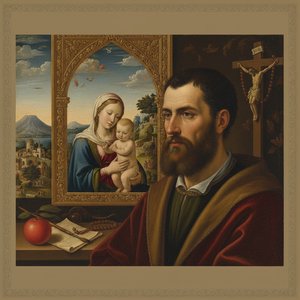
Sebastiano Serlio was an Italian Mannerist architect, painter, writer, designer, and civil engineer. Born in Bologna, he worked in the atelier of Baldassare Peruzzi in Rome and later lived in Venice. His career was significantly shaped by an invitation from François I to France, where he advised on the construction and decoration of the Château of Fontainebleau. While he took several private commissions, the Château d'Ancy-le-Franc is the only one of his works that has survived in a recognizable way. He also designed fortifications as a civil engineer.
Architectural Treatises and Publications
Serlio is known for his practical treatise, Tutte l'opere d'architettura et prospetiva, also referred to as I sette libri dell'architettura. This work is composed of eight books, though only the first five were published during his lifetime. His publications include:
Q&A
Sebastiano Serlio 작가의 다른 활동명이나 알려진 이름이 있나요?
Sebastiano Serlio은(는) Sebastiano Serlio de Bologne, Sebastian Serly, Sebastien Serlio, Sebastián Serlio, Sebastian Serli Bolognese(으)로도 알려져 있습니다.
Sebastiano Serlio 작품의 연도별 타임라인이 있나요?
Sebastiano Serlio의 작품 연표를 확인해 보세요: 작품 연대기 페이지에서 작품들을 제작 날짜순으로 보실 수 있습니다.
Sebastiano Serlio 작가의 작품 관련 통계 정보는 어디에서 확인할 수 있나요?
Sebastiano Serlio 작가의 작품 통계 정보는 방문 통계 페이지에서 확인하실 수 있습니다.