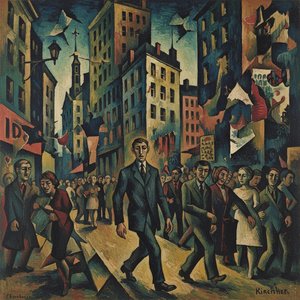
The Life and Artistic Evolution of Rudolf Schlichter
Born in Calw, Württemberg, Rudolf Schlichter was a German painter, engraver, and writer. His early training began with an apprenticeship as an enamel painter in Pforzheim, followed by studies at the State Academy of Fine Arts Stuttgart and the Academy of Fine Arts, Karlsruhe. During his formative years, Schlichter developed an identity rooted in bohemian ideals and a rebellion against traditional bourgeois values. His experiences in Berlin, navigating its light and dark districts, provided him with a connection to the underworld, including encounters with criminals and various social outcasts.
Schlichter was a prominent figure in the New Objectivity movement, specifically representing the critical-realistic style of verism. His career was marked by significant political involvement; he was a member of the Communist Party (KPD) from 1919 to 1927 and participated in the First International Dada Fair. His work during the 1920s included provocative contributions to the Berlin Dadaists and the founding of the group Rih. His artistic output during this era included the watercolor Dada Roof Studio and the realistic Portrait of Margot.
Later Years and Stylistic Shifts
Schlichter's life underwent significant shifts in the 1930s. After moving to Rottenburg, he moved away from communism and toward Roman Catholicism. His relationship with the National Socialist regime was complex; while he initially expressed sympathy for the national revolution, he was later excluded from the Reich Chamber of Literature and the Reich Association of German Writers. In 1937, seventeen of his works were confiscated as part of the Nazi action against so-called Degenerate Art. Following the destruction of his studio by Allied bombs in 1942, he continued to work, eventually participating in the first General German Art Exhibition in Dresden in 1946.
In the post-war period, Schlichter's work evolved toward creating fantastical allegories and historical paintings. His later style featured surreal and apocalyptical landscapes. He was also a writer, publishing several confessional and autobiographical works, including Zwischenwelten, Das widerspenstige Fleisch, and Tönerne Füße.
Q&A
Rudolf Schlichter의 모든 작품은 어디에서 볼 수 있나요?
이 사이트에 등록된 Rudolf Schlichter의 모든 작품은 작가의 전체 작품 보기 페이지에서 만나보실 수 있습니다.
Rudolf Schlichter의 출생지와 출생 연도는 어떻게 되나요?
Rudolf Schlichter은(는) 1890년 Calw에서 태어났습니다.
Rudolf Schlichter의 작품을 분위기별로 모아둔 곳은 어디인가요?
아티스트의 무드 룸 페이지에서는 Rudolf Schlichter의 작품들을 분위기에 따라 큐레이션된 형태로 만나보실 수 있습니다.