The Academy and the Old Masters
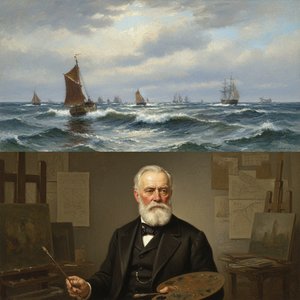
Amsterdam, 1811. Petrus Franciscus Greive enters a world where the shadows of the Dutch Golden Age still dictate the language of light and form. He begins his training at the Rijksakademie, absorbing the technical rigor of his mentors, Jean Augustin Daiwaille, Jan Willem Pieneman, and Christiaan Julius Lodewijk Portman. His hands learn the precision required by the tradition, a discipline that would define his later years as both a painter and a lithographer.
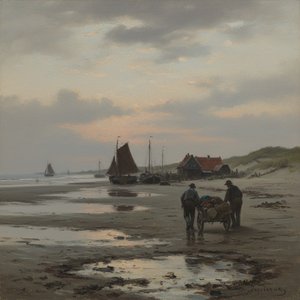
His brushwork does not seek to reinvent the wheel but to honor the lineage of the old Dutch Masters. He finds his footing in this reverence, developing a style that looks backward to move forward. This commitment to tradition is not merely aesthetic; it is a structural foundation that supports his dual identity as a creator of images and a guardian of technique.
The Burden of Instruction
The scene shifts from the student's desk to the instructor's podium. Greive becomes a fixture at the Rijksakademie, a man deeply embedded in the institutional life of Amsterdam's art scene. He joins the ranks of Arti et Amicitiae, a mark of professional standing. Yet, a tension emerges in his life: the more he pours into his students, the less remains for his own canvas. The act of teaching becomes a consuming force, a devotion that pulls his focus away from his personal output.
His legacy is perhaps most visible not in his own finished works, but in the hands of those he shaped. He leaves behind a lineage of notable practitioners, including:
- August Allebé
- Meijer de Haan
- Jan Jacob Lodewijk ten Kate
- Hein Kever
- Betsy Repelius
- Hendrik Jacobus Scholten
- Johan Conrad Greive
A Final Chapter in Amsterdam
By the time 1872 arrives, Greive has become a pillar of the Dutch artistic establishment, even if his own portfolio remains secondary to his pedagogical influence. He dies in Amsterdam, leaving behind a void in the classroom and a collection of works that reflect the disciplined, classical sensibilities of his training. He remains a figure defined by the balance between the preservation of the past and the cultivation of the next generation.
Q&A
Petrus Franciscus Greive의 작품 전체 목록을 볼 수 있는 곳이 있나요?
이 사이트에 등록된 Petrus Franciscus Greive의 모든 작품은 작가의 전체 작품 보기 페이지에서 만나보실 수 있습니다.
Petrus Franciscus Greive의 작품을 사조별로 둘러볼 수 있나요?
Petrus Franciscus Greive 작가의 작품을 예술 사조별로 모아둔 모든 미술 사조 페이지에서 해당 작가가 활동했던 사조를 확인하실 수 있습니다.
주제별로 분류된 Petrus Franciscus Greive의 작품들은 어디에서 확인할 수 있나요?
주제별 작품 모음 페이지에서는 Petrus Franciscus Greive의 작품들을 주제별로 확인하실 수 있습니다.