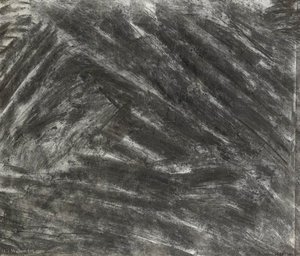
Michelangelo Pistoletto: A Life in Reflection
Early Life and Artistic Beginnings
- Born: 1933, Turin, Italy.
- Pistoletto’s early exposure to art came through his family's restoration workshop in Turin, where he worked from 1947 to 1958. This experience instilled a deep understanding of artistic techniques and materials.
- In the 1950s, he began creating figurative works and self-portraits, laying the foundation for his later explorations of identity and representation.
- He participated in the Biennale di San Marino in 1959 and held his first solo exhibition at Galleria Galatea in Turin in 1960.
The Development of a Unique Style
- In the early 1960s, Pistoletto began painting on monochrome metallic backgrounds, creating striking contrasts and exploring the relationship between image and surface.
- He innovatively combined painting with photography using collage techniques on reflective surfaces. This led to his signature Mirror Paintings, where he printed photorealistic images onto polished steel, blurring the boundaries between art and reality.
- The use of screen-printing allowed for a seamless integration of the viewer into the artwork, challenging traditional notions of artistic perspective.
Arte Povera and International Recognition
- Pistoletto became a leading figure in the Arte Povera movement, which emerged in Italy during the late 1960s. This movement emphasized the use of everyday materials and challenged conventional artistic values.
- His series Oggetti in meno (Minus Objects), created in 1965/66, marked his early foray into sculpture.
- He gained international recognition with a solo exhibition at the Walker Art Center in Minneapolis in 1966 and won first prize at the Biennale de São Paulo in 1967.
Performance, Action Art, and Social Engagement
- In the late 1960s, Pistoletto expanded his artistic practice to include performance, video art, and theatre.
- He founded the Zoo Group, an action art collective that staged performances in public spaces, aiming to unify art with everyday life.
- His work during this period reflected a growing social consciousness and a desire to engage directly with audiences.
- Notably, he withdrew from the Venice Biennale in 1968 as a protest against the political climate and societal norms.
Later Career and Progetto Arte
- In the 1970s, Pistoletto briefly stepped away from the art world to work as a ski instructor, seeking a different perspective on life.
- He continued to create sculptures and performance pieces throughout the following decades.
- In 1994, he launched Progetto Arte, an ambitious program aimed at integrating art into all aspects of human existence – from economics and politics to education and spirituality.
- He founded Cittadelarte – Fondazione Pistoletto in 1996, a multidisciplinary center dedicated to fostering creativity and innovation.
Legacy and Historical Significance
- Michelangelo Pistoletto’s work has had a profound impact on contemporary art, challenging traditional notions of representation, authorship, and the role of the artist.
- His Mirror Paintings remain iconic examples of Arte Povera, inviting viewers to reflect on their own place within the artwork and the world around them.
- Pistoletto’s commitment to social engagement and his vision for a more integrated society continue to inspire artists and thinkers today. He is considered one of Italy's most important living artists.
Q&A
Michelangelo Pistoletto의 활동 시기는 어떻게 구분되어 있나요?
Michelangelo Pistoletto의 예술적 여정은 연대기 페이지에서 시기별로 펼쳐집니다. 이곳에서는 작가의 활동 시기를 장(chapter)으로 나누어 작품들을 연대순 타임라인 형태로 한눈에 확인할 수 있습니다.
Michelangelo Pistoletto은(는) 어느 시대의 작품을 남겼나요?
Michelangelo Pistoletto은(는) Modern 시대에 활동했습니다. 이 시기는 역사적 맥락 속에서 작가의 예술적 위치를 보여줍니다.
Michelangelo Pistoletto의 작품은 얼마나 인기가 있나요?
Michelangelo Pistoletto의 방문 통계 페이지에서는 이 사이트에 등록된 작가의 작품들을 바탕으로 산출된 통계 정보를 제공합니다.
주제별로 분류된 Michelangelo Pistoletto의 작품들은 어디에서 확인할 수 있나요?
Michelangelo Pistoletto의 작품은 작가의 주제별 작품 모음 페이지에서 주제별로 찾아보실 수 있습니다.