The Quiet Observer of Light and Land
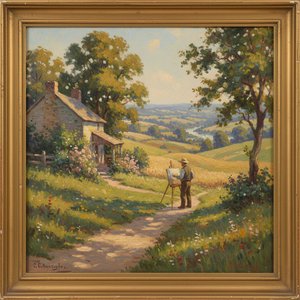
Born in Peacham, Vermont, Julian Rix spent his life moving through the changing light of the American landscape. His early years in the East eventually led him toward the coast of California, where the specific quality of the light began to shape his hand. It was there that his ability to capture the atmosphere caught the eye of William Ryle, a silk tycoon from New Jersey. This connection provided the means for Rix to continue his practice, leading to a body of work that eventually found its way into the halls of Lambert Castle in Paterson, New Jersey.
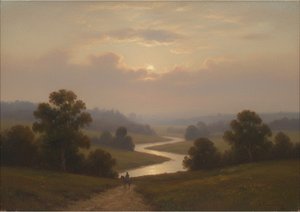
His approach to the canvas was marked by a preference for the Barbizon style, a method that favored the mood of a scene over sharp, clinical detail. He worked with oil on canvas, often using a palette knife to build texture. He was a man who understood the balance between sketching outdoors and the controlled environment of a studio. His work often focused on the following elements:
The way he handled color suggests a man who watched the sun move across a field. He did not rely on bright, jarring tones, but rather on a tonalist sensibility that sought the essence of a place. His 1901 work, Landscape, remains a significant example of this period, held in the collections of the Brooklyn Museum and the Birmingham Museum of Art. In these works, the brushwork reveals a steady, deliberate hand, one that values the weight of the paint as much as the subject it depicts.
A Life in Color and Shadow
Rix’s presence in the art world was felt through his ability to translate the physical world into a specific, tonal language. He moved between the ruggedness of the West and the established circles of the East, eventually settling in New York City. He died there in 1903, leaving behind a record of how the American landscape felt under different skies. His paintings remain as physical objects of study, showing the marks of the palette knife and the careful layering of oils that defined his process.
Q&A
Julian Rix의 다른 이름이나 별칭에는 무엇이 있나요?
Julian Rix은(는) Julian Walbridge Rix, Julian W. Rix, Julian Waldridge Rix(으)로도 알려져 있습니다.
Julian Rix은(는) 어느 시대의 작품을 남겼나요?
Julian Rix은(는) 19th Century 시대에 활동했습니다. 이 시기는 역사적 맥락 속에서 작가의 예술적 위치를 보여줍니다.
주제별로 분류된 Julian Rix의 작품들은 어디에서 확인할 수 있나요?
Julian Rix의 작품은 작가의 주제별 작품 모음 페이지에서 주제별로 찾아보실 수 있습니다.