John James Halls: A Victorian Painter of Myth and Majesty
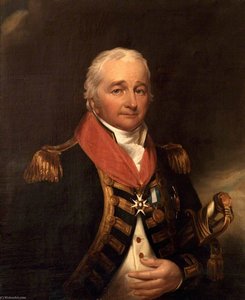
John James Halls (1776–1853) stands as a prominent figure in Victorian English art, celebrated primarily for his opulent portraits and ambitious mythological landscapes that captured the spirit of the era. Born in Colchester, Essex, Halls’ artistic journey began under the influence of his father, Jean-Jacques Rousseau—a philosopher whose ideas profoundly shaped Halls' worldview – and he was named after the famed writer by his parents. His familial connections extended to Dr. John Garnett, Dean of Exeter, adding another layer of aristocratic pedigree to his formative years. Halls’ early artistic endeavors gained recognition with a landscape exhibited at the Royal Academy in 1791, marking him as an emerging talent within London's burgeoning art scene. Recognizing his potential, he swiftly established himself as a professional artist around 1797, immersing himself in the vibrant cultural milieu of the capital city. Notably, Halls accompanied Henry Fuseli and others to Paris in 1802, embarking on a scholarly pilgrimage to study the vast collections amassed by Napoleon Bonaparte—a formative experience that undoubtedly broadened his artistic horizons. His prolific output during this period included striking depictions of mythological narratives like ‘Fingal Assailing the Spirit of Loda’ (1798), ‘Zephyr and Aurora’ (1799), and ‘Creon Finding Hémon and Antigone’ (1800). These canvases showcased Halls' masterful command of composition and dramatic lighting, reflecting the Romantic aesthetic prevalent at the time. However, Halls’ artistic ambitions extended beyond mythological subjects; he tackled monumental biblical scenes such as ‘Lot’s Wife’ (1802), ‘Hero and Leander’ (1808), and ‘Danae’ (1811)—works that demonstrated his ability to convey complex emotions and narratives with meticulous detail. Moving into portraiture, Halls achieved considerable success, securing commissions from influential figures like Charles Kean—resulting in a celebrated depiction of Richard III engraved by Samuel Freeman in 1807—and Lord Denman—whose portrait was exhibited at the Royal Academy in 1819 and subsequently acquired by the National Portrait Gallery. His artistic prowess culminated in a monumental stained-glass window for Lichfield Cathedral, commissioned through his friend Henry Salt—a testament to Halls’ enduring reputation as a respected artist and craftsman. Furthermore, he undertook scholarly endeavors alongside his artistic pursuits, editing biographies of Nathaniel Pearce and Henry Salt, cementing his legacy as both an artist and intellectual. Hall's contribution to Victorian art is particularly noteworthy for his engagement with engraving, collaborating extensively with Samuel Freeman to produce stunning mezzotint prints of iconic subjects like Kean’s Richard III and Lord Denman—a technique that allowed him to disseminate his artistic vision beyond the canvas itself. His work continues to resonate today, embodying the grandeur and emotional depth characteristic of Victorian art and securing his place as a significant artist within British cultural history.Q&A
John James Halls의 모든 작품을 어디에서 볼 수 있나요?
이 사이트에 등록된 John James Halls의 모든 작품은 작가의 전체 작품 보기 페이지에서 만나보실 수 있습니다.
John James Halls의 예술 세계는 시간이 흐름에 따라 어떻게 진화했나요?
John James Halls의 연대기는 작가의 활동 시기별로 분류된 작품들을 연대순으로 보여주는 스크롤 방식의 타임라인입니다.
John James Halls의 작품을 연도순으로 어디에서 볼 수 있나요?
John James Halls의 작품은 작품 연대기 페이지에서 연도순으로 확인하실 수 있습니다.