The Architect of Experience: The Life and Vision of Hélio Oiticica
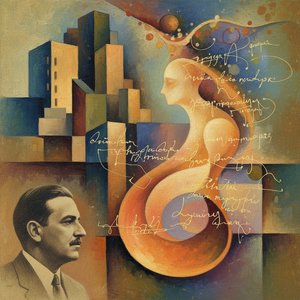
To encounter the work of Hélio Oiticica is not merely to view an object, but to enter a living, breathing world. Born in 1937 in the vibrant, culturally dense landscape of Rio de Janeiro, Oiticica emerged from an intellectual lineage that prepared him to dismantle the very boundaries of the canvas. The son of a photographer and entomologist, and the grandson of a prominent anarchist leader, he grew up immersed in a spirit of inquiry and social transformation. His early artistic training under Ivan Serpa at the Museum of Modern Art in Rio provided him with a foundation in geometric abstraction, yet Oiticica’s destiny was never to remain within the confines of two-dimensional tradition. He sought instead a way to bridge the gap between the sterile perfection of European Constructivism and the raw, rhythmic pulse of Brazilian life.
As a central figure in the Neo-Concrete movement, Oiticica participated in a radical rebellion against the rigid, mathematical constraints of previous avant-garde movements. Alongside peers like Lygia Clark, he helped forge an aesthetic that prioritized poetry, subjectivity, and the physical presence of the viewer. He moved away from the idea of art as a window to be looked through, proposing instead that art should be an environment to be inhabited. This shift was deeply informed by his fascination with the batuques—the ritualistic Afro-Brazilian dances of Bahia—and the sensory richness of the streets of Rio. For Oiticica, color was not just a pigment on a surface; it was a spatial force, a weight, and a texture that could envelop the human body.
From Metaesquemas to the Immersive Tropicália
The evolution of Oiticica’s technique is a journey from the controlled to the chaotic, from the grid to the groove. His early Metaesquemas (1957–1958) showcased a mastery of color and form, utilizing gouaches where hues were broken into irregular shapes within a structured grid. However, this formalist precision soon gave way to much more daring explorations. He began to develop his Penetráveis (Penetrables), large-scale installations that invited the audience to physically walk through, touch, and inhabit the artwork. These structures transformed the viewer from a passive observer into an active participant, a concept he termed "supersensoriality."
Perhaps his most enduring legacy is the concept of Tropicália, a term he coined in 1967 to describe an artwork that captured the kaleidoscopic, often contradictory essence of Brazilian identity. This movement was not just an aesthetic style but a cultural manifesto, blending high modernism with the popular, the kitsch, and the visceral. His Parangolés—vibrant, wearable sculptures made from fabric, plastic, and found materials—demanded that the wearer dance to activate the art. In these works, the distinction between the creator and the consumer dissolved; the art only truly existed in the moment of movement, rhythm, and human interaction.
A Legacy of Freedom and Participation
Oiticica’s career was marked by a relentless pursuit of freedom, both artistic and political. During his period of exile in New York following Brazil’s military dictatorship, he continued to push the limits of medium and message. His Cosmococa series, created in collaboration with Neville D’Almeida, utilized slide projections, music, and interactive objects to create a sensory collage that challenged the boundaries of memory and perception. Even as his work became more complex and multimedia-driven, the fundamental constant remained: an unwavering commitment to the physical nature of color and its ability to trigger profound emotional responses.
Though his life was tragically cut short in 1980, Oiticica’s impact on contemporary art remains immeasurable. He paved the way for installation art, performance art, and relational aesthetics, teaching generations of artists that the most powerful medium is the human experience itself. His work stands as a testament to the idea that art should not be a static monument to the past, but a dynamic, participatory force capable of reshaping our perception of space, society, and ourselves.
질의응답
Hélio Oiticica가 그린 모든 주제를 한눈에 볼 수 있는 개요가 있나요?
Hélio Oiticica의 작품은 작가의 주제별 아틀라스 페이지에서 주제별로 찾아보실 수 있습니다.
Hélio Oiticica 작가 작품의 컬러 프로필은 어디에서 확인할 수 있나요?
Hélio Oiticica의 팔레트 지놈는 작가의 작품 세계를 구성하는 컬러 프로필을 보여주는 페이지입니다.
Hélio Oiticica의 작품을 매체별로 찾아볼 수 있나요?
모든 매체 페이지에서는 Hélio Oiticica의 작품을 기법별로 모아볼 수 있습니다.