Girolamo da Carpi: Bridging Renaissance and Mannerism in Ferrara
Girolamo da Carpi (c. 1501 – 1556) stands as a pivotal figure within the burgeoning artistic landscape of Renaissance Italy, specifically celebrated for his contributions to the Este court in Ferrara. Born Ferrera, he embarked on an artistic journey marked by apprenticeship under Benvenuto Tisi (il Garofalo), establishing a foundational connection with the stylistic currents shaping Bolognese painting during that era. By his early twenties, Da Carpi had relocated to Bologna, where he solidified his reputation as a proponent of the local Renaissance school, absorbing influences from luminaries like Lorenzo Costa and Raphael – artists whose mastery profoundly impacted his artistic sensibilities.- Early Training & Influences: His formative years witnessed immersion in the studio of a Bolognese painter deeply rooted in Florentine Mannerism, mirroring the stylistic innovations championed by Giulio Romano. This exposure cultivated an aesthetic that deftly blended traditional Renaissance ideals with the expressive distortions and psychological depth characteristic of Mannerist art.
- Roman Pilgrimage & Artistic Exploration: A significant turning point arrived during his travels to Rome and Bologna in the mid-1520s, where Da Carpi encountered the vibrant energy of Mannerist experimentation. This journey served as a catalyst for artistic growth, propelling him toward stylistic explorations that transcended simple categorization.
- Ferrara & Court Patronage: Returning to Ferrara, he secured prestigious commissions from the Este family, collaborating closely with Dosso Dossi and Garofalo on monumental projects reflecting the grandeur of the ducal court. His involvement in these ambitious undertakings cemented his position as a leading artist within Ferrara’s artistic milieu.
Notable Works & Artistic Style
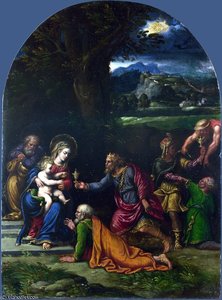
Da Carpi's oeuvre encompasses a diverse range of subjects, demonstrating versatility and stylistic adaptability. Among his most celebrated paintings are “The Descent of the Holy Spirit” in St Francis Church at Rovigo—a masterful depiction of religious iconography imbued with luminous color palettes and dynamic composition—and “St Catherine at Bologna,” showcasing meticulous detail and refined artistic technique. Furthermore, “St George & St Jerome” exemplifies Da Carpi’s commitment to portraying saints with dignity and solemnity. His stylistic hallmark resides in a harmonious blend of Renaissance clarity and Mannerist dynamism, characterized by subtle distortions of form and heightened emotional expression—a testament to his ability to synthesize disparate influences into a cohesive artistic vision.- "The Adoration of the Shepherds" – This Baroque masterpiece showcases Raphael-inspired style & religious symbolism.
- "Medici and Monsignor Mario Bracci" - A Renaissance portrait highlighting Medici power & religious status.
- "The Rape of Ganymede" - Demonstrates Da Carpi’s stylistic adaptability.
Legacy & Artistic Pupils
Girolamo da Carpi's influence extended beyond his own artistic output, shaping the careers of several talented pupils who carried forward his stylistic innovations. Bartolomeo Faccini and Ippolito Costa emerged as prominent artists under Da Carpi’s tutelage, perpetuating his distinctive aesthetic within Bologna’s artistic community. His enduring legacy resides in his contribution to the evolution of Renaissance painting—specifically bridging the gap between Florentine Mannerism and Bolognese tradition—leaving an indelible mark on the artistic heritage of Italy.Q&A
Girolamo da Carpi의 모든 작품은 어디에서 볼 수 있나요?
이 사이트에 등록된 Girolamo da Carpi의 모든 작품은 작가의 전체 작품 보기 페이지에서 만나보실 수 있습니다.
Girolamo da Carpi은(는) 어느 시대의 작품을 남겼나요?
Girolamo da Carpi은(는) Renaissance 시대에 활동했습니다. 이 시기는 역사적 맥락 속에서 작가의 예술적 위치를 보여줍니다.
Girolamo da Carpi 작가의 작품을 감상할 수 있는 3D 가상 투어가 있나요?
가상 방문이 가능합니다: Girolamo da Carpi의 3D 갤러리 페이지에서 3D 갤러리를 통해 작가의 작품들을 만나보실 수 있습니다.