A Life Immersed in Victorian Echoes: George Sheridan Knowles
George Sheridan Knowles, born in Manchester in 1863 and passing away in London in 1931, occupies a fascinating space within the British Academic painting tradition. He wasn’t a revolutionary figure shattering conventions, but rather a skilled interpreter of them, blending rigorous training with an emerging Impressionistic sensibility to create evocative genre scenes and portraits that capture the essence of Victorian life and its lingering nostalgia. While biographical details remain somewhat sparse, the narrative of his artistic journey can be pieced together through surviving accounts of his career and, most powerfully, through the compelling imagery he left behind. Knowles’s story is one of a painter deeply rooted in tradition yet subtly attuned to the changing currents of his time.Early Training and Family Influences
Knowles received his formal artistic education at the Manchester School of Art, a respected institution that provided a solid foundation in drawing and painting techniques. He then continued his studies at the prestigious Royal Academy Schools in London, immersing himself in the classical ideals and academic standards that dominated the British art world during the late 19th century. Interestingly, Knowles wasn’t working in isolation; he was part of a vibrant artistic family. His brothers, Frederick J. Knowles – a landscape and figurative painter – and his sister Juliet Knowles, specializing in still-life compositions, also exhibited their work around the same time. This familial context likely fostered a spirit of collaboration and mutual encouragement during his formative years. His debut at the Royal Academy in 1885 marked an early public recognition of his talent, signaling the beginning of a career dedicated to capturing the nuances of Victorian society.The Allure of Genre Painting and Evocative Storytelling
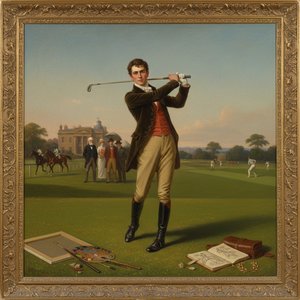
Knowles quickly established himself as a painter of genre scenes – those intimate depictions of everyday life that were immensely popular with Victorian audiences. However, he wasn’t simply documenting reality; his paintings are imbued with a romantic sensibility, often portraying nostalgic scenes from earlier centuries. These weren't historical recreations in the strictest sense but rather idealized visions of the past, populated by costumed figures and steeped in melancholic emotion. “A Love Song”, for example, beautifully exemplifies this approach. The painting isn’t merely a portrait; it’s an exploration of music, emotion, and the delicate interplay between subjects. Knowles masterfully uses academic techniques to render rich details and create a captivating atmosphere, drawing viewers into the intimate world he depicts. Similarly, “Signing The Marriage Contract” offers a glimpse into upper-class society, showcasing his ability to capture both the formality and romantic undertones of Victorian courtship rituals.Blending Tradition with Impressionistic Color
What sets Knowles apart from many of his contemporaries is his subtle integration of Impressionistic elements into his Academic style. While he remained committed to precise draftsmanship and realistic representation, he embraced the vibrancy of color and loose brushwork that characterized the Impressionist movement. This fusion isn’t jarring or overt; rather, it adds a layer of depth and emotional resonance to his paintings. The impasto technique, evident in many of his works, creates a tactile quality and enhances the play of light and shadow. He wasn't abandoning tradition but enriching it with contemporary stylistic developments, creating a unique visual language that appealed to a broad audience.Historical Significance and Lasting Appeal
George Sheridan Knowles’s work provides valuable insight into Victorian tastes and sensibilities. His paintings offer a window into the social customs, domestic interiors, and emotional landscapes of the era. While he may not be as widely recognized as some of his more avant-garde contemporaries, his contribution to British art is significant. He successfully bridged the gap between Academic tradition and Impressionistic innovation, creating evocative genre scenes that continue to captivate viewers today. His ability to blend technical skill with emotional depth ensures his place as a compelling interpreter of Victorian life. His paintings are not simply historical documents; they are enduring works of art that speak to universal themes of love, loss, and the passage of time.Q&A
George Sheridan Knowles 작가의 국적은 어디인가요?
George Sheridan Knowles은(는) United Kingdom 출신입니다.
George Sheridan Knowles의 작품 중 조회수가 가장 높은 것은 무엇인가요?
George Sheridan Knowles의 방문 통계 페이지에서는 이 사이트에 등록된 작가의 작품들을 바탕으로 산출된 통계 정보를 제공합니다.
George Sheridan Knowles의 작품을 색상별로 찾아볼 수 있나요?
컬러 인덱스 페이지에서는 George Sheridan Knowles의 작품들을 색상별로 모아 보실 수 있습니다.
George Sheridan Knowles의 작품 중 몇 점을 둘러보실 수 있나요?
전체 작품 보기 페이지에서 George Sheridan Knowles의 작품 작품 25점점을 만나보실 수 있습니다.