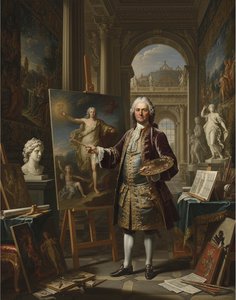
Claude Buck: A Visionary of the Camargue
Claude Buck (1890-1974) wasn’t merely a painter; he was an immersion in the soul of southern France, specifically the wild and captivating landscape of the Camargue. Born in New York City amidst the burgeoning artistic energy of the early 20th century, Buck's journey led him to establish himself as a pivotal figure in French art, deeply rooted in regional traditions yet infused with a distinctly modern sensibility. His work, characterized by luminous color palettes and an almost hallucinatory intensity, captures not just the physical beauty of the Camargue – its vast plains, shimmering lagoons, and formidable white horses – but also the emotional resonance of its unique atmosphere.
Buck’s early artistic training laid a crucial foundation. He began drawing at age four, encouraged by his father, a commercial artist, and quickly demonstrated an exceptional talent. He honed his skills at the National Academy of Design in New York City, absorbing influences from masters like Emil Carlsen and Francis Jones, but it was his subsequent studies in Munich that truly shaped his artistic vision. This immersion in European art, particularly German Symbolism, exposed him to a world of dreamlike imagery, psychological depth, and an exploration of the subjective experience – elements he would later integrate into his own distinctive style.
The move to Chicago in 1919 marked a significant turning point. He became a key member of the Introspectives group, a collective of avant-garde artists who sought to express profound emotions through symbolic and allegorical imagery. This period saw Buck experimenting with surrealist techniques, drawing inspiration from writers like Edgar Allan Poe and the operatic works of Richard Wagner – influences that would continue to permeate his work throughout his career. His paintings during this time were often characterized by a heightened sense of drama, employing rich colors and evocative compositions to convey complex psychological states.
The Camargue: A Source of Endless Inspiration
Buck’s relocation to France in the early 1920s solidified his connection to the Camargue. This vast wetland region, located in southeastern France, proved to be an inexhaustible source of inspiration for him. The Camargue is a place of stark contrasts – sun-drenched plains juxtaposed with dark, brooding lagoons; wild horses roaming freely alongside flocks of flamingos painting the sky pink. Buck’s paintings are not simply depictions of this landscape; they are attempts to capture its essence, its spirit, and the profound sense of timelessness that pervades it.
His subjects frequently revolved around the Camargue's iconic white horses – *falcões* – a breed unique to the region. These magnificent animals, with their flowing manes and powerful presence, became central figures in many of his paintings. Buck didn’t merely portray them realistically; he imbued them with symbolic weight, representing themes of freedom, wildness, and the untamed spirit of nature. He often depicted them in dramatic settings, bathed in the golden light of the setting sun or galloping across the vast plains under a stormy sky.
Technique and Style: A Master of Light and Color
Buck’s artistic technique was characterized by a remarkable mastery of color and light. He employed a vibrant palette, utilizing rich reds, yellows, and blues to create luminous effects that seemed to radiate from the canvas. His brushwork was often loose and expressive, conveying a sense of movement and energy. He was particularly adept at creating an illusion of depth and atmosphere, using layering techniques and glazing to build up complex surfaces.
Buck’s style can be described as a blend of Impressionism, Symbolism, and early Modernism. He retained the Impressionists' focus on capturing fleeting moments of light and color, while incorporating the Symbolist’s interest in exploring psychological themes and using symbolic imagery. His work also anticipates some of the techniques of later Modernist painters, such as the use of flattened perspectives and simplified forms.
Legacy and Historical Significance
Despite facing periods of critical skepticism during his lifetime, Claude Buck is now recognized as a significant figure in French art. His paintings offer a unique and compelling vision of the Camargue – a region that he captured with an unparalleled sensitivity to its beauty and spirit. Buck’s work continues to be exhibited in museums and private collections around the world, testament to the enduring power of his artistic vision.
His influence can also be seen in later generations of artists who were inspired by the Camargue's landscape and culture. Buck’s legacy lies not only in his individual paintings but also in his ability to evoke a profound emotional response in viewers, transporting them to the heart of this extraordinary region.
질의응답
Claude Buck의 작품들은 어떤 분위기를 담고 있나요?
아티스트의 무드 룸 페이지에서는 Claude Buck의 작품들을 분위기에 따라 큐레이션된 형태로 만나보실 수 있습니다.
Claude Buck 작품의 연도별 타임라인이 있나요?
Claude Buck의 작품 연표를 확인해 보세요: 작품 연대기 페이지에서 작품들을 제작 날짜순으로 보실 수 있습니다.
Claude Buck의 작품을 컬러 팔레트별로 둘러볼 수 있나요?
특정 색상 팔레트의 Claude Buck 작품을 찾으시려면, 작가의 컬러 팔레트별 페이지를 이용해 보세요.