
 미리보기
미리보기
 공유하기
공유하기 공유하기
공유하기
 상세 정보
상세 정보 가이드 보기

 다운로드
다운로드
 유사 작품 더 보기
 X-레이
X-레이 슬라이드 쇼 보기
 질의응답
질의응답 통계 정보
통계 정보Black and White Structure

- 158.0 x 222.0 cm


 더 보기
더 보기
이 페이지에 표시된 작품은 저작권법의 보호를 받으며, 이에 따라 동일한 복제품을 제작하거나 판매하는 것은 법으로 금지되어 있습니다. 이러한 권리 보호는 다음과 같은 국제 협약에 따라 시행됩니다. 베른 협약 또한 다음에서 명시하는 법률을 포함한 국내법에 의해 보호됩니다. 미국 저작권법 제17조.
이 방식은 저작권 보호를 받는 예술 작품을 복제하거나 그대로 재현하는 것이 아니기에 저작권 규정을 완벽히 준수합니다. 대신, 이는 창의적인 재해석의 과정을 거칩니다. 즉, 원작에서 영감을 받되 원작과 동일하지 않은 새로운 회화 작품을 의미합니다.
지클레 / 아트 프린트
빠른 제작과 다양한 마감 옵션을 제공하는 박물관 수준의 지클레이 및 캔버스 프린트. ( 수작업 채색 복제본 주문하기 디지털 이미지로 전환)




































작품의 원본 비율을 그대로 유지하는 프리셋 사이즈 중에서 선택해 보세요.

액자나 벽면 크기에 맞춰 필요한 가로와 세로 길이를 입력해 주세요. 프린트는 원본 이미지보다 크게 제작할 수 없으며 오직 자르는 것만 가능하므로, 비율이 다른 사이즈를 선택할 경우 이미지의 일부가 잘려 나갈 수 있습니다. 인쇄 작업에 들어가기 전, 최종 확인을 위해 디지털 목업을 보내드립니다. 이 페이지에 표시된 이미지는 실제 잘리는 영역을 나타내지 않으며, 오직 목업을 통해서만 정확한 확인이 가능합니다.


 유리 옵션은 110cm 미만 크기에서만 선택 가능합니다.

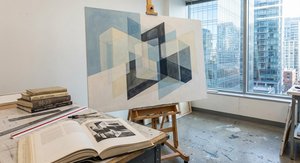
Black and White Structure
지클레 / 아트 프린트
복제본 크기
-


최종 결제 금액
₩ 108677
질의응답
"Black and White Structure"은(는) 몇 년도에, 어떤 사조의 작품인가요?
"Black and White Structure"은(는) 1965년 Geometric Abstraction 사조의 흐름 속에서 제작되었습니다.
Zdeněk Sýkora의 "Black and White Structure"은(는) 어떤 미술 사조에 속하나요?
Zdeněk Sýkora의 "Black and White Structure"과(와) 관련된 미술 사조는 Geometric Abstraction입니다. 이러한 분류를 통해 해당 작품을 관련 작가 및 예술 작품들과 함께 파악할 수 있습니다.
Zdeněk Sýkora의 "Black and White Structure"은(는) 언제 제작되었나요?
Zdeněk Sýkora의 "Black and White Structure"은(는) 1965년에 제작되었습니다.
작가 정보
The Architect of Lines: The Life and Legacy of Zdeněk Sýkora
In the vast landscape of twentieth-century modernism, few figures command as much intellectual curiosity as Zdeněk Sýkora. Born in 1920 in Louny, Czechoslovakia, Sýkora’s journey was one of profound transformation, moving from the tangible beauty of the natural world to the mathematical precision of the digital frontier. His early years were marked by a traditional approach to the canvas, where his late 1940s works captured the essence of landscapes through a more representational lens. However, as the political and cultural tides of Central Europe shifted, so too did Sýkora’s vision. He began to shed the weight of the physical world, gravitating instead toward the rigorous, cerebral beauty of geometric abstraction.
The evolution of his style was not merely a personal choice but a response to the burgeoning technological era. Influenced by the structural complexities of Cubism and the dreamlike logic of Surrealism, Sýkora sought a way to bridge the gap between human intuition and algorithmic precision. By the 1960s, he emerged as a true pioneer, becoming one of the first artists to integrate computer technology into the creative process. This was a revolutionary leap; through the use of computers, he could manipulate geometric structures with a level of complexity that surpassed the capabilities of the human hand alone. His work began to pulse with a new kind of energy, where mathematical logic met artistic spontaneity.
A Symphony of Geometry and Chance
As his career progressed, Sýkora’s aesthetic underwent another mesmerizing metamorphosis. The rigid, strict systems of his early geometric structures gradually gave way to a more fluid, rhythmic language. He developed a signature style characterized by intricate line paintings, where vibrant streaks of color traversed expansive canvases in seemingly random yet deeply calculated directions. This period of his work felt less like a mathematical proof and more like a visual symphony, capturing the tension between order and chaos. His membership in the Křižovatka (Crossroad) group further solidified his place within the vanguard of Czech modernism, as he explored the intersections of different artistic movements.
This creative spirit was often a collaborative one. In 1985, Sýkora began a profound artistic partnership with his wife, Lenka Sýkora. Together, they expanded the boundaries of abstraction, applying their shared vision to large-scale architectural projects. Their work moved beyond the confines of the gallery wall and into the very fabric of the built environment, such as the striking flight operation building in Jeneč near Prague. This integration of fine art and architecture allowed Sýlam’s geometric explorations to inhabit three-dimensional space, influencing how viewers interact with modern structures.
Recognition and Eternal Influence
Despite the challenges posed by the Soviet occupation and the resulting limitations on international exhibition opportunities, Sýkora’s brilliance could not be contained. His resilience led to a global recognition that honored his immense contributions to the evolution of abstract art. The prestige of his career is reflected in the numerous accolades he received, including:
- The Vladimír Boudnik Award (2008)
- L'Ordre des Arts et des Lettres from France
- The Herbert-Boeckl-Preis from Austria
Today, the legacy of Zdeněk Sýkora lives on in the permanent collections of the world’s most esteemed institutions. From the Centre Georges Pompidou in Paris to the MUMOK in Vienna, his works serve as a testament to the power of innovation. He remains a monumental figure for anyone studying the intersection of technology and fine art, reminding us that even within the strictest mathematical lines, there is room for the infinite soul of creativity.

Zdeněk Sýkora
1920 - 2011 , Czech Republic
작가 정보 요약
- Full Name: Zdeněk Sýkora
- Nationality: Czech
- Date Of Birth: 1920
- Date Of Death: 2011
- Place Of Birth: Louny, Czech Republic
- Notable Artworks:
- Black & White Structure
- Lines No 24
- Artistic Movement Or Style: Geometric abstraction
- Artists Who Influenced This Artist:
- Cubism
- Surrealism
- Artists Or Movements Influenced By This Artist:
- Op Art
- Křižovatka group
관련 콘텐츠
Beyond Form & Color: Geometric Abstraction's Enduring Legacy in Art History
Explore the captivating world of geometric abstraction! Discover its origins, key artists like Malevich & Mondrian, and why this movement remains highly valued by art collectors today. Expert insights at OriginalUniqueArt.

Beyond Form & Color: Geometric Abstraction's Evolution in 20th/21st Century Art
Explore the evolution of geometric abstraction from Cubism to contemporary art. Discover key artists like Malevich & Mondrian, investment insights, and expert collecting advice at OriginalUniqueArt.

Mastering Abstraction: The 25 Most Iconic Works by Wassily Kandinsky
Explore 25 iconic Kandinsky masterpieces and the birth of abstraction. Discover the full collection online at OriginalUniqueArt.com.

기하학적 추상 미술을 정의한 명작 10가지 | OriginalUniqueArt.com
몬드리안, 말레비치 등 거장들의 기하학적 추상 미술 명작 10선을 만나보세요. 각 작품의 예술사적 의미와 색채, 구성을 탐구하고 OriginalUniqueArt.com에서 고품질 아트 프린트를 소장하세요. 지금 바로 온라인 컬렉션을 확인하세요!

Neo-Abstract Art: The High-Impact Evolution of Modern Visual Energy and Geometric Sophistication
Discover the power of Neo-Abstract art. Explore how bold geometric forms and high-impact visual energy are redefining modern design. Learn to curate sophisticated, high-energy spaces with the latest trends in contemporary abstraction and structural color.