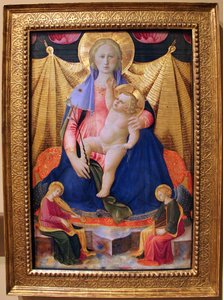
Initial B with David in Prayer
Oil On Canvas
WallArt
Early Renaissance
1450
Renaissance
140.0 x 135.0 cm
메트로폴리탄 미술관
P118B $10
P118H $10
P118W $10
P438Z $10
P508JH $12
P508YH $12
P805H $10
P805Z $10
P919BZ $10
P919G $10
P919XJ $10
P959ZH $10
P968JZ $12
W106C $8
W218G $10
W218JH $8
W218Y $10
W307PJ $10
W316G $10
W316PJ $8
W316Y $10
W398PJ $8
W4111J $10
W500HY $15
W500JH $15
W692G $12
W849H $8
W940BG $15
W953PJ $8
작품의 원본 비율을 유지하는 미리 설정된 크기 중에서 선택하세요.
특정 프레임이나 공간에 맞도록 직접 크기를 입력할 수 있습니다. 선택하신 크기가 원본 이미지의 비율과 일치하지 않는 경우, 작품을 자르거나 추가적인 손으로 그린 요소를 사용하여 그림을 확장합니다. 제작 시작 전 승인을 위해 디지털 목업을 보내드립니다.
화면 미리 보기는 실제 자르기 또는 확장을 반영하지 않습니다. 최종 구성은 목업을 통해서만 정확하게 확인하실 수 있습니다.
맞춤 크기 제작도 가능하지만, 원본 비율을 유지하기 위해 사전 정의된 목록에서 크기를 선택하시는 것을 권장합니다.
주문 후 OriginalUniqueArt.com 팀에서 상세 안내를 위해 고객님께 이메일을 보내드리며, 미리보기 시안을 제공해 드립니다.
Initial B with David in Prayer
재현 기법
복제본 크기
-
최종 결제 금액
-
작품 상세 설명
A Moment of Profound Devotion: Zanobi Strozzi's Spiritual Narrative
To gaze upon this depiction, Initial B with David in Prayer, is to step directly into the charged atmosphere of the Florentine Renaissance. The scene captures a moment suspended between earthly devotion and divine grace. At its heart kneels a figure, perhaps representing David or another devout soul, whose posture speaks volumes without uttering a single word. His clasped hands and bowed head create an immediate focal point, drawing the viewer into the quiet intensity of personal communion with the sacred. The very act of kneeling suggests humility before something infinitely greater than oneself, a universal human experience rendered with exquisite piety.
Mastery in Early Renaissance Technique
Painted around 1450 by Zanobi Strozzi, this work stands as a testament to his burgeoning genius during the height of Florence's artistic awakening. While the subject matter is deeply spiritual, Strozzi’s handling of paint reveals a sophisticated technical command characteristic of the period. Observe the drapery; it falls with a natural weight, suggesting both the richness of the fabric and the emotional burden or peace carried by the figure. The background elements, including the secondary figures positioned subtly on either side, are not mere decoration but integral parts of the narrative tapestry. Strozzi masterfully balances the intense focus on the central prayer with the necessary context provided by these surrounding lives.
Symbolism and the Human Spirit
The inclusion of the initial letter 'B' alongside the devotional scene suggests a dedication or an inscription, grounding this piece within a specific patronage or textual tradition. Symbolically, the composition speaks to the interplay between individual piety and communal faith. The kneeling figure embodies introspection—the necessary withdrawal from the clamor of daily life to find spiritual clarity. For the modern collector or designer, this artwork offers more than mere decoration; it is an artifact of contemplation. It invites a pause, encouraging the viewer to consider their own moments of quiet reflection amidst the grandeur of life.
Bringing Renaissance Spirituality Home
Reproducing such a significant piece allows one to integrate the profound artistry and spiritual resonance of the Quattrocento into contemporary living spaces. The muted yet rich tones, characteristic of Strozzi’s palette, lend themselves beautifully to various interior décors, adding an immediate layer of cultured depth. Owning a reproduction of this work is not simply acquiring art; it is curating an atmosphere steeped in history, devotion, and the enduring beauty of human aspiration. It serves as a silent, eloquent reminder of timeless faith.
작가 약력
The Florentine Visionary: The Life and Legacy of Zanobi Strozzi
In the golden era of the Florentine Renaissance, where light and shadow began to dance with newfound humanistic depth, the name Zanobi Strozzi emerged as a vital thread in the city's artistic tapestry. Born in 1412 into the illustrious Strozzi family, Zanobi’s early life was shaped by the profound political shifts of Florence. Though his lineage connected him to nobility, the untimely death of his father when Zanobi was only fifteen years old thrust him toward a different kind of destiny. This period of personal loss led him into the transformative embrace of an apprenticeship under Battista di Biagio Sanguigni, a mentorship that would eventually refine his hand and instill in him the technical precision required to master the delicate art of manuscript illumination and panel painting.
Strozzi’s artistic evolution was deeply intertwined with the spiritual and aesthetic currents of his time. His most significant connection, however, was his association with the revered Fra Angelico. As a pupil within this influential circle, Strozzi did not merely mimic the master; he absorbed a profound sense of devotion and a luminous approach to color that would become hallmarks of his own style. This relationship allowed for a beautiful stylistic convergence, where the ethereal, divine light characteristic of Fra Angelico met Strozzi’s meticulous attention to detail. His work often bridged the gap between the intimate, miniature worlds of illuminated manuscripts and the grand, emotive presence of religious altarpieces.
Mastery of Detail and Devotional Beauty
The breadth of Strozzi’s talent is most evident in his ability to navigate diverse mediums with equal grace. He was a master of tempera on panel, a medium that demanded immense patience and a steady hand to achieve the vibrant, jewel-like tones seen in his religious works. His repertoire included several significant altarpieces and poignant depictions of the Virgin and Child, pieces designed to evoke deep spiritual reflection in the viewer. In these works, Strozzi utilized the Florentine Early Renaissance style to weave narratives of faith, using soft transitions and intricate patterns to breathe life into sacred figures.
Beyond the larger panels, Strozzi achieved legendary status through his contributions to manuscript illumination. His ability to command small spaces allowed him to create miniature worlds of breathtaking complexity. Some of his most notable artistic achievements include:
- Sts Cosmas and Damian Saved from Drowning: A 1435 masterpiece that captures a poignant moment of divine intervention, showcasing his skill in depicting communal faith and dramatic movement.
- St Agnes: Created in 1448, this work exemplifies his ability to render serene, profile portraits set against swirling, decorative patterns that highlight the elegance of the period.
- Book of Hours for the Use of Rome: A testament to his prowess as an illuminator, where every folio serves as a window into the meticulous craftsmanship of the Florentine scriptorium.
A Lasting Impression on the Renaissance
The historical significance of Zanobi Strozzi lies in his role as a bridge between the medieval tradition of decorative illumination and the burgeoning Renaissance focus on human emotion and naturalism. While much of his work was destined for private devotion within the grand residences of Florence, his influence rippled through the workshops of the city. He helped disseminate a specific brand of Florentine beauty—one that was both intellectually rigorous and emotionally accessible. Through his hands, the sacred stories of the saints and the Virgin were rendered with a clarity and vibrancy that captured the very essence of the Quattrocento spirit.
Though he passed away in 1468, leaving behind a legacy etched in gold leaf and tempera, Strozzi remains a symbol of the artist's ability to find profound meaning within the minute. His life, marked by the transition from a noble orphan to a celebrated master, mirrors the very transformation of Florence itself: a journey from the structured traditions of the past toward the luminous, human-centered brilliance of the Renaissance.
Zanobi Strozzi
1412 - 1468 , Italy
주요 정보
- Artistic Movement Or Style: Early Renaissance
- Artists Or Movements Influenced By This Artist: ['Byzantine']
- Artists Who Influenced This Artist: ['Fra Angelico']
- Date Of Birth: November 17, 1412
- Date Of Death: December 6, 1468
- Full Name: Zanobi di Benedetto di Caroccio degli Strozzi
- Nationality: Italian Renaissance
- Notable Artworks:
- St Agnes
- Book of Hours for the Use of Rome
- The Annunciation
- Place Of Birth: Florence, Italy

유리 옵션은 110cm 미만 크기에서만 선택 가능합니다.