

 실제 크기로 보기
 보내기
보내기 공유하기
공유하기
 상세 보기
상세 보기 가이드 보기

 이미지 다운로드
 유사 작품 더 보기
 X-레이
X-레이 슬라이드 쇼 보기
 통계 정보
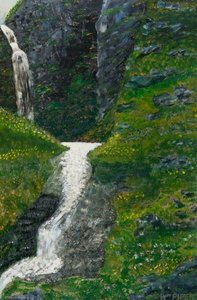
통계 정보Granny's Mutch, Passed on a Pleasant Walk through Colzium Estate, Kilsyth
 1950
1950 45.0 x 65.0 cm
 Kilsyth Medical Centre
 상세 보기
상세 보기
지클레 / 아트 프린트
빠른 제작과 다양한 마감 옵션을 선택할 수 있는 박물관 수준의 지클레이 및 캔버스 프린트. ( 수작업 채색 복제본 주문하기 디지털 이미지 판매 채널로 전환)




































작품의 원본 비율을 그대로 유지하는 프리셋 사이즈 중에서 선택해 보세요.

특정 프레임이나 공간에 맞춰 직접 치수를 입력하실 수 있습니다. 선택하신 사이즈가 원본 이미지의 비율과 일치하지 않을 경우, 작품을 크롭(자르기)하거나 이미지를 대칭 또는 단색 채우기로 확장하여 제작합니다. 제작 시작 전, 최종 확인을 위해 디지털 목업이 전송됩니다.
화면상의 미리보기는 실제 크롭이나 확장 상태를 반영하지 않으므로, 최종 구도는 오직 목업을 통해서만 정확하게 확인하실 수 있습니다.
맞춤 사이즈 제작도 가능하지만, 원본 비율을 유지하기 위해서는 사전 정의된 목록에서 치수를 선택하시는 것을 권장합니다.


 유리 옵션은 110cm 미만 크기에서만 선택 가능합니다.

Granny's Mutch, Passed on a Pleasant Walk through Colzium Estate, Kilsyth
지클레 / 아트 프린트
복제본 규격
-


총 결제 금액
$ 80
작가 소개
The Soul of the Scottish Landscape: The Life and Art of William Piper
To wander through the canvases of William Piper is to embark on a quiet, profound journey through the heart of rural Scotland. Born in Edinburgh in 1774, Piper emerged as a singular voice in British landscape painting, a master who eschewed the grand, sweeping vistas favored by his contemporaries in favor of something far more intimate and enduring. While others sought to idealize nature or capture the dramatic sublime, Piper turned his gaze toward the subtle, often overlooked nuances of the land—specifically the rolling landscapes of Kilsyth, where he spent much of his life. His work serves as a tender, meticulous record of a world defined by its atmosphere, its light, and its deep-rooted connection to the local soil.
The foundation of Piper’s artistic precision can be traced back to his early formal education at Eton College and Oxford University, yet it was his apprenticeship under John Ramsay, Scotland’s preeminent portrait painter, that truly forged his technical identity. From Ramsay, Piper inherited a disciplined devotion to accuracy and the delicate mastery of tonal gradation. This training instilled in him a commitment to realism that would become the hallmark of his career; he did not merely paint what he saw, but sought to capture the very essence of the subject through a scientific curiosity paired with an artist's empathy. His method was one of patience, often spending hours sketching from life to ensure that every interplay of shadow and every flicker of light was recorded with absolute fidelity.
Technique, Light, and the Art of Observation
Piper’s preferred medium, watercolor, allowed him to achieve a luminous quality that few of his peers could replicate. He utilized the transparency of the medium to layer subtle washes of color, creating atmospheric effects that suggest the dampness of a Scottish morning or the soft glow of a fading afternoon. His landscapes are far more than mere topographical records; they are living, breathing environments populated by remarkably detailed flora and fauna. This meticulous attention to detail suggests an artist who viewed the natural world as a complex tapestry of interconnected lives, where even the smallest leaf or stone held significance within the larger composition.
His stylistic evolution is marked by a transition from pure observation to a more evocative, almost nostalgic, storytelling. In his later works and those inspired by his legacy, one can see a profound ability to balance stillness with motion. Whether capturing the quiet dignity of a village street or the rhythmic pulse of local commerce, Piper’s compositions guide the viewer's eye through a carefully orchestrated landscape of light and shadow. His work possesses a unique ability to strip away the distractions of the modern world, forcing a confrontation with the raw, atmospheric essence of a moment in time.
Legacy and Historical Significance
The historical significance of William Piper lies in his role as a chronicler of a vanishing era. Through his eyes, we witness the transition of the Scottish landscape from a purely pastoral existence to one touched by the creeping influence of industry and change. His paintings act as temporal portals, preserving the textures, architectures, and social rhythms of 19th-century Scotland for future generations. His ability to imbue local scenes with a sense of universal emotion ensures that his work remains relevant far beyond the borders of Kilsyth.
Today, Piper is remembered not just as a skilled technician, but as an artist who possessed the rare gift of seeing the extraordinary within the ordinary. His legacy continues to inspire those who find beauty in the quiet corners of the world, reminding us that true artistic mastery lies in the ability to capture the soul of a place.
Key Highlights of William Piper's Career:
- Mastery of Atmosphere: Renowned for using watercolor to achieve unparalleled luminous and atmospheric effects.
- Commitment to Realism: Developed a disciplined, precise style under the mentorship of portraitist John Ramsay.
- Local Chronicler: Dedicated much of his life to documenting the subtle beauty and changing landscape of Kilsyth and rural Scotland.
- Scientific Precision: Blended artistic talent with a meticulous, almost scientific observation of flora and fauna.
william piper
1774 - 1852
작가 정보 요약
- Artistic Movement Or Style: Scottish Landscape Art
- Artists Or Movements Influenced By This Artist: ['Romanticism']
- Artists Who Influenced This Artist:
- George Caleb Bingham
- Hudson River School
- Date Of Birth: 1774
- Date Of Death: 1852
- Full Name: William Piper
- Nationality: British
- Notable Artworks:
- Kilsyth Landscapes
- Rural Scottish Scenes
- Place Of Birth: Scotland