Arts and Crafts · 1881
Design for (윌리엄 모리스, 1881)
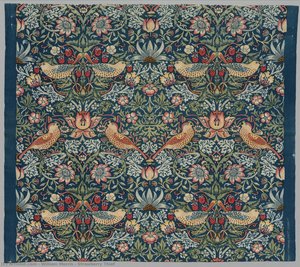
윌리엄 모리스 (1834–1896) 작가의 Design for 1881년에 제작되었습니다. Arts and Crafts 운동에 속합니다. Textile(으)로 제작되었습니다. 월섬스토, 영국에 위치한 William Morris Gallery에 소장되어 있습니다. 크기는 66 × 69 cm입니다.
- 1881
- Textile
- 66 × 69 cm
- William Morris Gallery, 월섬스토

 수작업 유화 작품
 공유하기
 공유하기
 학습용 요약본


 다운로드
 유사 작품 더 보기
 슬라이드 쇼 보기
 질의응답

 통계 정보
Design for 요약
- 제목
- Design for
- 작가
- 윌리엄 모리스 (1834–1896)
- 작가 출생지
- 월섬스토우, 영국
- 제작 연도
- 1881
- 매체
- Textile
- 크기
- 66 × 69 cm
- 전시 장소
- William Morris Gallery, 월섬스토, 영국
- 제작 시기
- 19th Century
- 주제
- floral design, william morris, textile art, medieval motifs, nature, pattern
Design for 은(는) 무엇을 묘사하고 있나요?
The Genesis of a Vision: William Morris and the Dawn of Arts & Crafts
Before he was a revolutionary socialist, a poet of immense talent, or simply one of the most celebrated textile designers in history, William Morris was a young man captivated by the remnants of a lost world. Born in Walthamstow, Essex, in 1834, his childhood was steeped in the romanticism of medieval chivalry and the beauty of the English countryside—a landscape he would relentlessly strive to capture within his designs. This early fascination wasn’t merely nostalgic; it represented a profound belief that nature and its traditions held an inherent moral and aesthetic superiority over the burgeoning industrial age. Morris, alongside figures like Dante Gabriel Rossetti and Edward Burne-Jones, rejected the mass production and soullessness of Victorian society, seeking instead to revive traditional craftsmanship and imbue everyday objects with beauty and meaning. “Design for,” a pencil sketch from 1881, stands as a potent embodiment of this ethos – a quiet declaration of rebellion against the prevailing trends and a fervent yearning for a more harmonious relationship between humanity and nature.
- Historical Context: The late Victorian era was marked by rapid industrialization, social unrest, and a growing critique of mass-produced goods. Morris’s work emerged as a direct response to this environment, advocating for a return to handcraftsmanship and celebrating the beauty of natural materials.
- The Arts & Crafts Movement: “Design for” is inextricably linked to the Arts & Crafts movement, which championed quality, individuality, and the rejection of factory production.
A Symphony of Flora and Form: Deconstructing the Design
This particular pencil design, destined for a carpet (as evidenced by its reference to the William Morris Gallery N17), is remarkably detailed, revealing a meticulous approach to composition. The central focus is undeniably a bird – likely a robin or thrush – rendered with delicate precision and imbued with an air of quiet dignity. Surrounding this focal point are intricate arrangements of other birds, creating a complex tapestry of avian life that suggests both abundance and careful observation. Scattered amongst the feathered subjects are smaller, more stylized elements: blossoms, leaves, and vines intertwine in a swirling pattern, echoing the organic forms of the natural world. The lines are fluid and graceful, avoiding sharp angles or rigid symmetry – a hallmark of Morris’s aesthetic philosophy. The use of shading and hatching creates a sense of depth and texture, bringing the design to life on paper.
Technique Note: Pencil Sketch: The work is executed entirely in pencil, showcasing Morris's exceptional skill in rendering detail and capturing subtle tonal variations. This technique lends a raw, immediate quality to the design, emphasizing its conceptual origins as a preliminary study.Decoding the Symbolism: Nature’s Language
Beyond its purely decorative qualities, “Design for” is rich with symbolic meaning. The prevalence of birds – often associated with freedom, hope, and spirituality – suggests a longing for transcendence and escape from the constraints of industrial society. The abundant flora speaks to Morris's deep connection with nature and his belief in its restorative power. The intertwining vines and blossoms can be interpreted as symbols of interconnectedness and harmony—a visual representation of his ideal world. The careful arrangement of the birds, rather than a chaotic jumble, suggests an underlying order and balance, reflecting Morris’s desire for a more harmonious society.
- The Bird: Represents freedom, hope, and connection to the spiritual realm.
- Floral Motifs: Symbolize nature's beauty, abundance, and restorative qualities.
- Intertwined Forms: Suggest interconnectedness, harmony, and a rejection of rigid social structures.
A Legacy Enduring: The Spirit of “Design for” Today
“Design for” is more than just a pencil sketch; it’s a window into the mind of a visionary artist and activist. It encapsulates Morris's belief that art should not merely be beautiful but also morally uplifting, promoting a return to traditional values and celebrating the inherent dignity of human labor. Reproductions of this design continue to resonate today, offering a glimpse into a world where craftsmanship, nature, and social responsibility are valued above all else. Its intricate detail and evocative symbolism make it a timeless masterpiece—a testament to William Morris’s enduring legacy as one of the most influential figures in the history of art and design.
Design for 은(는) 어느 미술관에 소장되어 있나요?
William Morris Gallery
월섬스토, 영국
공예와 사상의 안식처: 윌리엄 모리스 갤러리를 탐험하다 런던의 활기찬 월섬스토(Walthamstow) 구에 자리 잡은 윌리엄 모리스 갤러리는 단순히 아름다운 물건들을 모아둔 저장소 그 이상의 의미를 지닙니다. 이곳은 영국에서 가장 다재다능한 인물 중 한 명인 윌리로 모리스의 삶과 유산을 마주하는 몰입형 여정입니다. 이 놀라운 공간은 방문객들을 과거로 초대하여, 단순히 예술을서 *보는* 것에 그치지 않고 노동의 존엄성, 일상의 아름다움, 그리고 디자인이 가진 변혁적 힘을 열정적으로 믿었던 한 남자의 정신을 진정으로 *느끼게* 합니다.


Design for 의 고해상도 이미지

윌리엄 모리스, Design for (1881), William Morris Gallery. 퍼블릭 도메인
Design for 에 관한 질문과 답변
"Design for"의 원작은 어느 박물관에 소장되어 있나요?
윌리엄 모리스의 "Design for"은(는) William Morris Gallery, 월섬스토, 영국에 전시되어 있습니다. 박물관 목록은 복제품이 아닌 원작을 기준으로 합니다.
윌리엄 모리스의 "Design for"은(는) 언제 제작되었나요?
윌리엄 모리스의 "Design for"은(는) 1881년에 제작되었습니다.
윌리엄 모리스의 "Design for"의 기법은 무엇인가요?
윌리엄 모리스은(는) "Design for" 작품에 Textile 기법을 사용했습니다. 이 기법은 원작의 재료적 특성을 잘 보여줍니다.
원작 "Design for"의 크기는 어떻게 되나요?
윌리엄 모리스의 "Design for"의 원작 크기는 66 x 69 cm입니다. 복제화는 동일한 비율을 유지하면서 다른 크기로도 주문 가능합니다.
윌리엄 모리스의 "Design for"에는 어떤 모습이 담겨 있나요?
윌리엄 모리스의 "Design for"에 나타난 주제로는 floral design, william morris, textile art, medieval motifs, nature, pattern, craftsmanship, victorian 등이 있습니다. 이들은 모여 작품의 소재를 요약해 보여줍니다.
"Design for"은(는) 저작권으로부터 자유로운가요?
윌리엄 모리스의 "Design for"의 저작권 정보: 해당 작품은 퍼블릭 도메인 - 저작권 보호 기간이 만료되었습니다 상태입니다. 이는 이미지 복제 가능 여부를 결정하는 기준이 됩니다.
"Design for"은(는) 어느 작가의 작품인가요?
"Design for"은(는) 윌리엄 모리스의 작품입니다. 이 페이지의 정보는 윌리엄 모리스의 원작에 대해 설명합니다.
윌리엄 모리스의 "Design for"은(는) 어떤 미술 사조에 속하나요?
"Design for"은(는) Arts and Crafts 양식의 작품입니다. 이 사조는 해당 작품이 속한 예술적 전통을 나타냅니다.
"Design for"은(는) 윌리엄 모리스의 예술적 발전 단계 중 어느 시기를 나타냅니까?
"Design for"은(는) 윌리엄 모리스의 Late Period를 잘 보여주는 작품입니다.
아티스트 윌리엄 모리스 소개

1834–1896, 영국
윌리엄 모리스
자연과 낭만에 뿌리내린 삶 윌리엄 모리스는 1834년 3월 24일 에식스주 월섬스토우에서 태어났으며, 비교적 풍요로운 중산층 배경 속에서 성장했습니다. 이러한 환경은 그에게 직업보다는 열정을 추구할 자유를 안겨주었습니다. 그의 아버지가 금융계에서 성공한 것은 단순한 경제적 안정뿐만 아니라 미적 감수성이 꽃필 수 있는 토양을 제공했습니다. 모리스의 어린 시절은 집 주변의 영국 시골 풍경과 중세 기사도 이야기에 대한 매혹적인 관심에 깊이 영향을 받았으며, 이는 자연의 아름다움과 낭만적인 서사에 평생 바치는 헌신의 기초를 다졌습니다.
윌리엄 모리스의 다른 작품들
 Strawberry Thief1936
 The Little Tree (Hammersmith Rug)1895
 Snakeshead1900
 Fruit1862

Design for 관련 에세이
 Wings of Art: Tracing Avian Beauty from Ornithological Precision to Impressionist LightExplore the evolution of avian art from scientific plates to Impressionist light. Trace this feathered history with our expert guide.
 10 Iconic Textile Masterpieces That Redefined the World of ArtJourney through history with 10 legendary textile masterpieces that redefined art. Explore the stories, intricate techniques, and timeless …
 Wings of Meaning: Decoding the Powerful Symbolism of Birds in Art HistoryExplore the profound history of avian symbolism from Renaissance icons to Winslow Homer. Decode the secrets behind every wing today.