 프린트 판매로 전환
 상세 보기
상세 보기







































 가로 또는 세로 중 어느 한 면이라도 105cm(약 41인치)를 초과하는 작품이나 복제화의 경우, 프레임은 분해된 키트 형태로 배송됩니다. 이는 안전한 배송을 보장하고 운송 중 발생할 수 있는 손상을 방지하기 위함입니다.


A Satirical Mirror to Enlightenment Excess
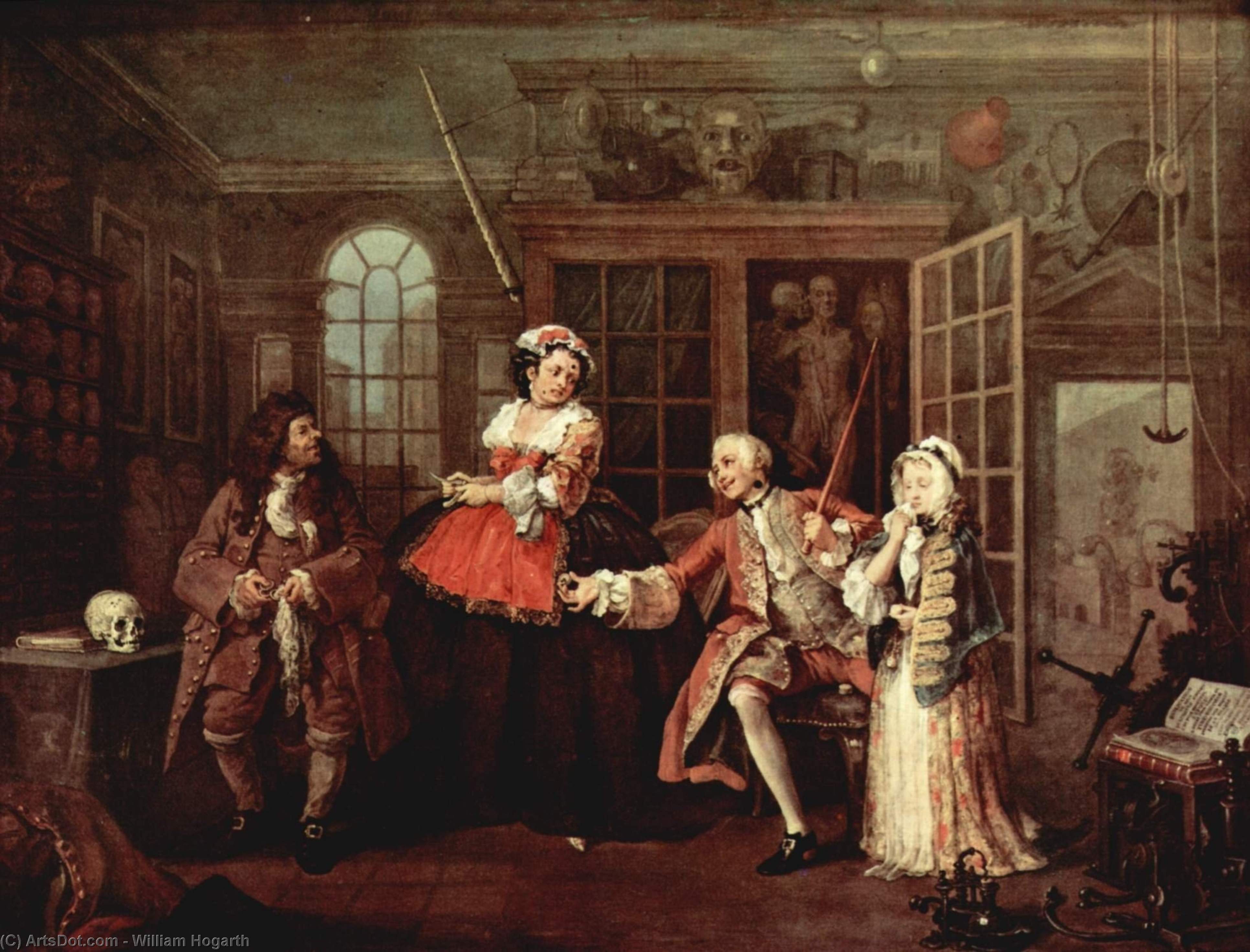
In the vibrant yet biting world of 18th-century London, William Hogarth’s “Visit with the Quack Doctor” emerges as a profound theatrical performance captured in paint. Painted around 1745, this masterpiece of the Rococo era serves as much more than a mere medical consultation; it is a searing indictment of the intellectual pretensions and societal hypocrisies that defined Georgian England. The scene unfolds within a room brimming with life, where a physician examines a patient amidst a crowd of observers whose detached curiosity adds a layer of dramatic tension to the composition. Hogarth meticulously arranges his figures with a sense of stagecraft, inviting the viewer to step into a narrative that is as much about the folly of human nature as it is about the dubious medical practices of the age.
The atmosphere of the painting is thick with a palpable sense of unease and disillusionment. As one gazes upon the gathered individuals, there is an unmistakable feeling of being a witness to a charlatanism in progress. Hogarth’s ability to capture the psychological depth of his subjects—conveying suspicion, vanity, and even fear—transforms the canvas into a window through which we glimpse the anxieties of a society caught between burgeoning scientific inquiry and a lingering belief in superstition. For the discerning collector or interior designer, this piece offers a captivating intellectual depth, providing a conversation piece that challenges the viewer to look beneath the surface of social decorum.
Mastery of Line and Symbolic Depth
Technically, “Visit with the Quack Doctor” showcases Hogarth’s extraordinary command over texture and light. Drawing from his roots as an engraver, the artist utilizes a precise linework and tonal shading that lends a remarkable realism to the scene. One can almost feel the weight of the worn fabric on the patient’s clothing and the smooth, polished surface of the dining table. This meticulous attention to detail creates an immersive experience, pulling the viewer into the very heart of the room. The use of light and shadow is particularly effective, creating dramatic contrasts that emphasize the characters' expressions and heighten the sense of potential deception inherent in the quack’s visit.
Beyond its visual realism, the painting is a rich tapestry of symbolic meaning. Hogarth embeds subtle warnings within the composition to provoke contemplation. A skull positioned prominently in the lower left corner serves as a stark memento mori, a chilling reminder of mortality that stands in sharp contrast to the surrounding ostentation and frivolity. Furthermore, the presence of clocks throughout the room acts as a visual metaphor for the relentless march of time, suggesting the futility of pursuing ephemeral pleasures and the vanity of unchecked ambition. It is this seamless blend of technical brilliance and profound symbolism that makes Hogarth’s work an enduring emblem of artistic vision, offering timeless insights into the complexities of the human condition.
질의응답
윌리엄 호가스의 "Visit with the Quack Doctor"의 느껴지는 밝기는 어느 정도인가요?
윌리엄 호가스의 "Visit with the Quack Doctor"의 느껴지는 밝기는 deep_shadow입니다. 이는 의도한 공간의 조명과 조화를 이룰 수 있습니다.
Visit with the Quack Doctor의 제작 연도인 1745년은 윌리엄 호가스의 예술적 경력 중 어느 시기에 해당하나요?
1745년에 제작된 "Visit with the Quack Doctor"은 윌리엄 호가스의 예술적 발전 과정 중 Mature Period에 해당합니다.
"Visit with the Quack Doctor"은(는) 윌리엄 호가스의 다른 작품들과 어떤 공통점을 지니고 있나요?
"Visit with the Quack Doctor"은(는) 윌리엄 호가스의 Rococo 시기 작품으로, 이 작가의 주요 주제로는 moral critique, social satire, observation, human behavior, genre painting 등이 있습니다.
More about this painting
 실제 크기로 보기
 보내기
보내기 공유하기
공유하기
 상세 보기
상세 보기 가이드 보기

 이미지 다운로드
 유사 작품 더 보기
 X-레이
X-레이 슬라이드 쇼 보기
 Q&A
Q&A 통계 정보
통계 정보