프린트 판매로 전환
 더 보기
더 보기







































 가로 또는 세로 중 어느 한 면이라도 105cm(약 41인치)를 초과하는 작품이나 복제화의 경우, 프레임은 분해된 키트 형태로 배송됩니다. 이는 안전한 배송을 보장하고 운송 중 발생할 수 있는 손상을 방지하기 위함입니다.


A Fragmented Portrait of Inner Turmoil
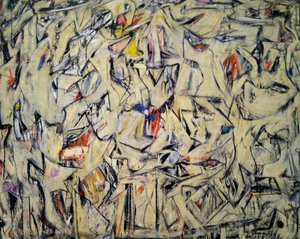
Willem de Kooning’s “The Glazier,” painted in 1940, isn't a straightforward portrait; it’s an arresting glimpse into the artist’s evolving psyche and a potent reflection of the anxieties simmering beneath the surface of mid-20th century America. This work, part of a series exploring male figures, immediately captivates with its unsettling blend of figuration and abstraction – a hallmark of De Kooning's distinctive style that foreshadowed his later, more radical explorations within Abstract Expressionism. The painting presents a woman seated before what appears to be a workbench or studio space, yet the scene feels fundamentally off-kilter, imbued with an atmosphere of quiet contemplation tinged with unease. It’s a deliberate departure from traditional portraiture, opting instead for a fractured representation that prioritizes emotional resonance over realistic depiction.
Earth Tones and Echoes of Italy
The color palette of “The Glazier” is dominated by a rich tapestry of earthy tones – ochres, browns, muted greens, and the occasional flash of teal-blue. These somber hues are strikingly reminiscent of the frescoes found in Boscoreale, Italy, which De Kooning had frequently visited and deeply admired. This connection to Italian Renaissance art subtly informs the painting’s mood, suggesting a yearning for classical beauty juxtaposed with the complexities of modern life. The visible brushstrokes, thick and deliberate, contribute significantly to the texture of the work, creating a tactile surface that draws the viewer in. Notice how the red garment worn by the figure provides a vital point of visual contrast against the predominantly muted background – a small but significant element that anchors the composition.
Deconstructing Form and Spatial Illusion
Technically, “The Glazier” is a masterful demonstration of De Kooning’s evolving approach. The artist employs loose, gestural lines and simplified shapes to deconstruct traditional forms. The woman's figure isn’t rendered with precise anatomical detail but rather through abstracted planes and suggestive curves, creating a sense of ambiguity about her identity and emotional state. Behind her, geometric shapes – squares and rectangles – interlock with organic forms, generating a fragmented spatial arrangement that defies easy interpretation. There is no clear horizon line or depth perspective; instead, the painting operates within a flattened plane, contributing to its overall feeling of disorientation and psychological intensity. This deliberate distortion challenges the viewer’s expectations of representation, forcing them to engage with the work on an emotional rather than purely visual level.
Symbolism and the Artist's Inner World
The symbolism within “The Glazier” remains open to interpretation, reflecting the artist’s own complex inner world. The woman herself could be seen as a representation of the modern individual grappling with uncertainty and alienation. The abstract background elements – hinting at tools, architectural fragments, or perhaps even internal landscapes – suggest a preoccupation with the complexities of contemporary life and the challenges of self-expression. The pensive expression on her face invites speculation about her thoughts and feelings, adding another layer of intrigue to this enigmatic portrait. Ultimately, “The Glazier” serves as a powerful meditation on the nature of identity, perception, and the emotional landscape of a rapidly changing world.
질의응답
윌렘 드 쿠닝의 "The Glazier"의 색감은 선명한가요, 아니면 차분한가요?
윌렘 드 쿠닝의 "The Glazier"의 색채는 Subtle Color의 채도와 Monochromatic의 강도를 보여줍니다.
윌렘 드 쿠닝의 "The Glazier"의 이미지를 자유롭게 복제할 수 있나요?
윌렘 드 쿠닝의 "The Glazier"은(는) 저작권 보호 대상입니다 상태입니다. 이 상태에 따라 해당 작품 이미지의 복제 가능 여부가 결정됩니다.
"The Glazier"의 유화 복제본을 주문할 수 있을까요?
윌렘 드 쿠닝의 "The Glazier"의 수작업 복제화는 이 사이트의 수작업 유화 복제화 페이지를 통해 리넨 캔버스에 손으로 직접 그린 유화 복제화에서 구매하실 수 있습니다.
이 작품에 대해 더 알아보기
 미리보기
미리보기
 공유하기
공유하기 공유하기
공유하기
 상세 정보
상세 정보 가이드 보기

 다운로드
다운로드
 유사 작품 더 보기
 X-레이
X-레이 슬라이드 쇼 보기
 질의응답
질의응답 통계 정보
통계 정보