
 미리보기
미리보기
 공유하기
공유하기 공유하기
공유하기
 상세 정보
상세 정보

 다운로드
다운로드
 유사 작품
유사 작품 X-레이
X-레이 슬라이드 쇼
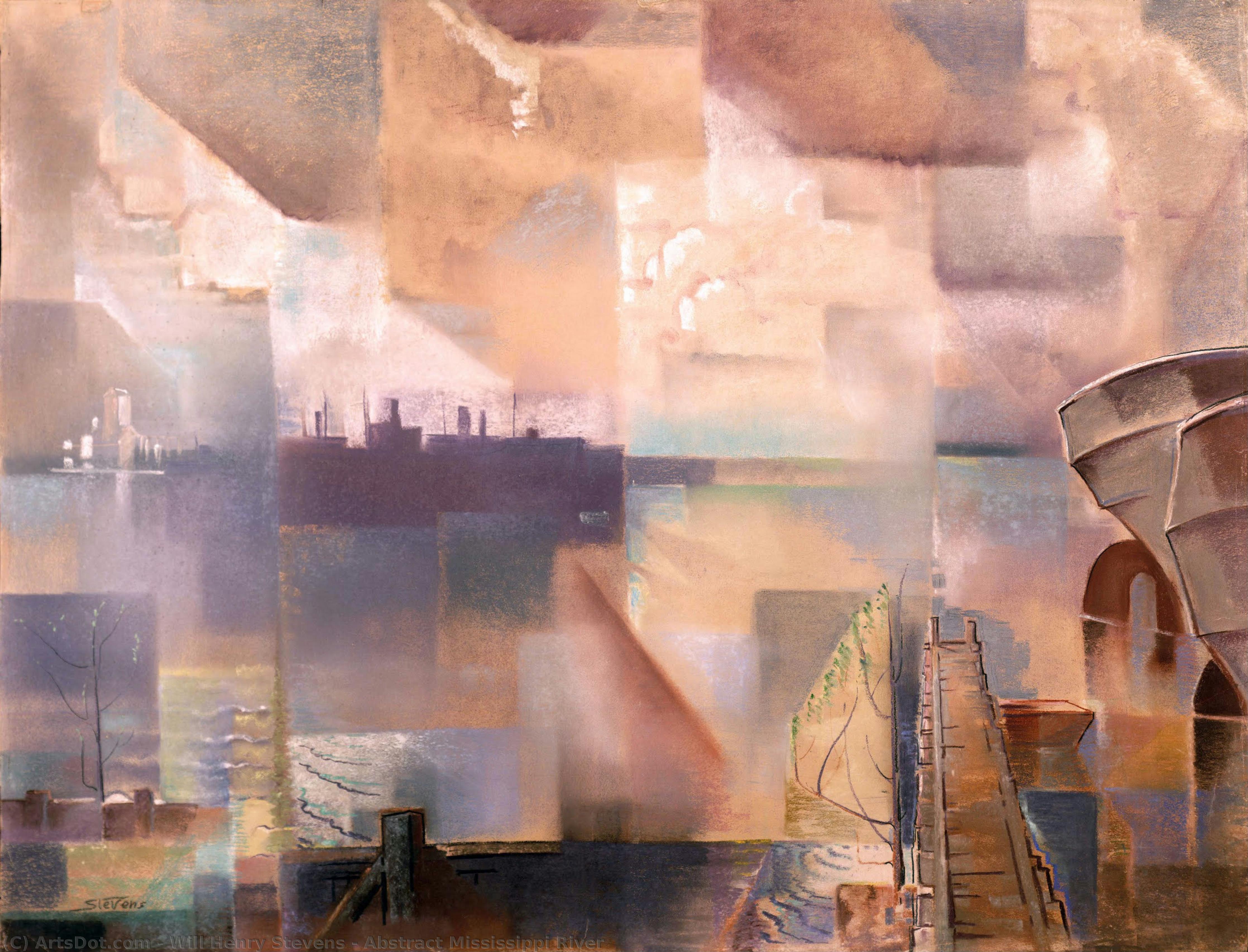
Abstract Mississippi River


 더 보기
더 보기
지클레 / 아트 프린트
빠른 제작과 다양한 마감 옵션을 제공하는 박물관 품질의 지클레이 또는 캔버스 프린트. ( 손으로 그린 그림 구매 이미지 구매)




































작품의 원본 비율을 유지하는 미리 설정된 크기 중에서 선택하세요.

특정 프레임이나 공간에 맞춰 직접 치수를 입력하실 수 있습니다. 선택하신 사이즈가 원본 이미지의 비율과 일치하지 않을 경우, 작품을 크롭(자르기)하거나 이미지를 대칭 또는 단색 채우기로 확장하여 제작합니다. 제작 시작 전, 최종 확인을 위해 디지털 목업이 전송됩니다.
화면상의 미리보기는 실제 크롭이나 확장 상태를 반영하지 않으므로, 최종 구도는 오직 목업을 통해서만 정확하게 확인하실 수 있습니다.
맞춤 사이즈 제작도 가능하지만, 원본 비율을 유지하기 위해서는 사전 정의된 목록에서 치수를 선택하시는 것을 권장합니다.


 유리 옵션은 110cm 미만 크기에서만 선택 가능합니다.

Abstract Mississippi River
지클레 / 아트 프린트
복제본 크기
-


최종 결제 금액
$ 80
작품 상세 설명
작가 약력
The Alchemist of Southern Light
Will Henry Stevens stands as a singular figure in American modernist painting, celebrated for his evocative depictions of the rural South and his pioneering exploration of tonal pastel mediums. Born November 28, 1881, in Vevay, Indiana—a town nestled along the banks of the Ohio River—Stevens’ artistic journey unfolded against the backdrop of a burgeoning interest in naturalism and a profound connection to the landscapes of his formative years. His father, an apothecary, instilled in him a meticulous attention to detail and a foundational understanding of chemistry, skills that would later prove invaluable in his experimental approach to pigment formulations.
Stevens’ formal artistic education began at the Cincinnati Art Academy, where he honed his drawing skills before embarking on a career path marked by serendipitous encounters and intellectual stimulation. Notably, he befriended Jonas Lie, Van Dearing Perrine, and Albert Pinkham Ryder—artists who championed the principles of naturalism and encouraged Stevens to prioritize observation over idealized representation. These formative relationships profoundly shaped his artistic vision, fostering an appreciation for the philosophical explorations of nature found in the works of Emerson, Thoreau, and Whitman. The influence of Whistler and Twachtman further solidified his commitment to tonal painting—a technique prioritizing subtle gradations of color and emphasizing the expressive qualities of light and shadow over conventional, heavy brushstrokes.
Innovation Through Chemistry and Color
What truly distinguished Stevens from many of his contemporaries was his scientific approach to the medium itself. He did not merely use art supplies; he created them. Drawing upon the chemical knowledge inherited from his father, Stevens developed a unique pastel medium, meticulously crafted through the careful grinding and mixing of raw pigments. This innovative approach liberated him from the constraints of traditional oil painting, allowing for an unparalleled freedom in capturing the fleeting, ephemeral moments of Southern light and atmosphere. His ability to manipulate texture and tone allowed him to bridge the gap between representational landscape and pure abstraction.
His career was a beautiful duality of styles. While he is often categorized as a modernist, his work remained deeply rooted in a love for the natural world. He moved seamlessly between two distinct modes:
- The Representational: Detailed, realistic landscapes that captured the soul of the Southern terrain, particularly during his summers in the mountains of Western North Carolina and Eastern Tennessee.
- The Abstract: Non-objective works and abstractions of nature that explored the underlying rhythms, shapes, and energies of the environment.
A Legacy Etched in the American Landscape
As Stevens transitioned into his later years, he became a fixture of the Southern art scene, notably serving on the faculty of Newcomb College of Art in New Orleans. This period marked a significant evolution toward modernism, as he successfully integrated the nationalistic spirit of the American Regionalists with the groundbreaking philosophies of the European avant-garde. Even as his work moved toward more abstract forms, it never lost its connection to the earth and the light that defines it.
Today, the historical significance of Will Henry Stevens is preserved in some of the most prestigious institutions in the United States. His ability to capture the "spirit" of a place through the lens of modern technique has earned him a permanent place in the canon of American art. His works can be found in the collections of:
- The Smithsonian American Art Museum
- The Museum of Fine Arts, Boston
- The Los Angeles County Museum of Art (LACMA)
- The North Carolina Museum of Art
- The Ogden Museum of Southern Art
Through his mastery of the pastel medium and his unwavering devotion to the nuances of nature, Stevens left behind a body of work that serves as both a scientific achievement in pigmentary innovation and a poetic tribute to the enduring beauty of the American landscape.

Will Henry Stevens
1881 - 1949 , United States of America
주요 정보
- Artistic Movement Or Style: Naturalism & Modernism
- Artists Or Movements Influenced By This Artist: ['James McNeill Whistler']
- Artists Who Influenced This Artist:
- Ralph Waldo Emerson
- Henry David Thoreau
- Walt Whitman
- Date Of Birth: November 28, 1881
- Date Of Death: August 25, 1949
- Full Name: Will Henry Stevens
- Nationality: American
- Notable Artworks: ['Abstract Mississippi River']
- Place Of Birth: Vevay, United States
관련 기사 더 보기

Kandinsky's Masterpieces: 25 Paintings That Define Abstract Art | OriginalUniqueArt
Journey through Wassily Kandinsky's 25 most iconic abstract paintings. Explore his revolutionary use of color, form & spiritual expressionism. Find museum-quality Kandinsky reproductions and elevate your home decor with OriginalUniqueArt.com. Discover all masterpieces on OriginalUniqueArt.com!

추상표현주의를 정의한 10대 걸작: 예술과 인테리어의 새로운 영감
추상표현주의의 심장을 뛰게 한 10대 걸작을 만나보세요. 폴록, 로스코 등 거장의 작품 비하인드 스토리와 예술적 영감을 OriginalUniqueArt에서! 지금 바로 미술품 컬렉션을 탐험하고, 당신의 공간에 특별한 예술적 감성을 더하세요. OriginalUniqueArt.com

기하학적 추상 미술을 정의한 명작 10가지 | OriginalUniqueArt.com
몬드리안, 말레비치 등 거장들의 기하학적 추상 미술 명작 10선을 만나보세요. 각 작품의 예술사적 의미와 색채, 구성을 탐구하고 OriginalUniqueArt.com에서 고품질 아트 프린트를 소장하세요. 지금 바로 온라인 컬렉션을 확인하세요!
카지미르 말레비치 최고작 25선: 추상 미술의 혁신과 영감을 만나다 | OriginalUniqueArt
카지미르 말레비치의 최고작 25선을 만나보세요. 추상 미술의 혁신적인 세계, 슈프레마티즘의 정수를 담은 작품들의 이야기와 영감을 OriginalUniqueArt에서 경험하세요. 고품질 아트 프린트와 인테리어 데코 아이디어를 지금 바로 확인하세요! OriginalUniqueArt.com

폴 클레 최고작 25선: 색채와 형식이 빚어낸 예술의 정수 | OriginalUniqueArt
폴 클레 최고작 25선을 만나보세요. 추상 미술의 거장 폴 클레의 색채와 감성이 담긴 명화들을 감상하고, 작품 속 숨겨진 이야기와 화풍을 탐구하세요. OriginalUniqueArt에서 고품질 아트 프린트와 인테리어 아이디어를 찾아보세요! 지금 바로 컬렉션을 둘러보세요.

