- 홈

- 유화 복제화
- vladimír janoušek
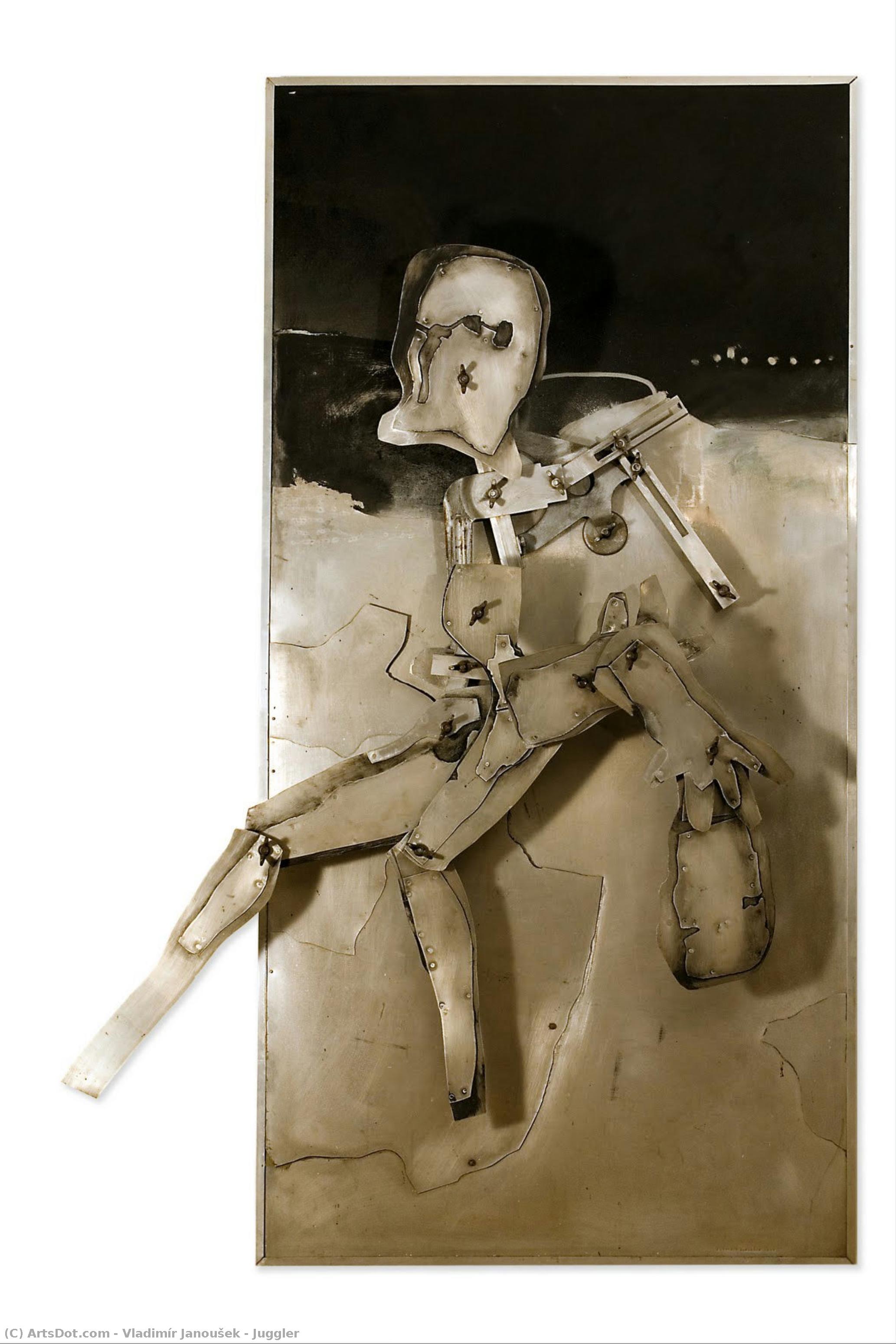
- Juggler
 Preview
 프린트 구매하기
 공유하기
공유하기 공유하기
공유하기
 상세 정보
상세 정보

 다운로드
다운로드
 유사 작품
유사 작품 X-레이
X-레이 슬라이드 쇼
Juggler
 Sculpture
- Sculpture
 1977
1977- Modern
 110.0 x 200.0 cm
 Museum Kampa
 더 보기
더 보기




































작품의 원본 비율을 유지하는 미리 설정된 크기 중에서 선택하세요.

특정 프레임이나 공간에 맞도록 직접 크기를 입력할 수 있습니다. 선택하신 크기가 원본 이미지의 비율과 일치하지 않는 경우, 작품을 자르거나 추가적인 손으로 그린 요소를 사용하여 그림을 확장합니다. 제작 시작 전 승인을 위해 디지털 목업을 보내드립니다.
화면 미리 보기는 실제 자르기 또는 확장을 반영하지 않습니다. 최종 구성은 목업을 통해서만 정확하게 확인하실 수 있습니다.
맞춤 크기 제작도 가능하지만, 원본 비율을 유지하기 위해 사전 정의된 목록에서 크기를 선택하시는 것을 권장합니다.
주문 후 OriginalUniqueArt.com 팀에서 상세 안내를 위해 고객님께 이메일을 보내드리며, 미리보기 시안을 제공해 드립니다.


 유리 옵션은 110cm 미만 크기에서만 선택 가능합니다.

Juggler
재현 기법
복제본 크기
-


최종 결제 금액
-
작가 약력
Early Life and Education
- Born: Zdirnice, Czech Republic (1922)
- Died: 1986
- Vladimir Janoušek's early life was significantly impacted by historical events, including World War II.
- He began his secondary school studies at the gymnasium in Trutnov and finished them in Úpice.
- In 1940-1941, he worked as an apprentice at a construction firm in Hostinné, initially considering architecture.
- His artistic journey truly began after attending lectures on theatre organized by the Central Union of Theatre Amateurs.
- He studied at the School of Arts and Crafts in Brno and later in Prague under Prof. Karel Dvořák.
- His studies were interrupted by forced labor deployment in Nazi Germany.
- After the war, he initially struggled to gain entry into the Academy but was eventually accepted to the studio of Prof. Josef Wagner.
Artistic Style and Influences
- Janoušek's sculptural style was heavily influenced by the late work of Otto Gutfreund.
- He also drew inspiration from exhibitions of Western European art, including works by Baltasar Lobo, Picasso, and Henry Moore.
- The reflections of Bohumil Kubišta and lectures by Prof. Václav Nebeský further shaped his artistic vision.
- His sculptures are characterized by moving parts, representing a radicalization of form that breaks away from traditional sculptural concepts.
- This originality and conceptual approach contribute to the European significance of his work.
Key Works and Artistic Development
- Gloria, Birth of Homo Divinus – Intelectes: A sculpture embodying transformation and enlightenment.
- Naděžda: A painting capturing the essence of human experience.
- Spring Romance: A painting showcasing his skill in depicting nature's beauty.
- Janoušek’s work evolved through distinct periods, initially focusing on crystals and growth, then incorporating pendulums, and finally culminating in variable sculptures.
- He experimented with kinetic elements, exploring the concept of time as reflected in the poetry of František Halas.
- His monumental composition Hrozba války (Threat of War) for the Czechoslovak pavilion at Expo '70 in Osaka demonstrated his political engagement and artistic vision.
Later Career and Historical Significance
- Following the Warsaw Pact invasion of Czechoslovakia, Janoušek faced persecution and limited opportunities to exhibit his work.
- Despite these challenges, he continued to create sculptures that expressed a symbolic struggle against oppressive circumstances.
- He is recognized as one of the few Czech sculptors listed in the New Dictionary of Modern Sculpture published in Paris in 1970.
- Janoušek's legacy lies in his innovative approach to sculpture, his exploration of time and transformation, and his courageous artistic expression during a period of political repression.
- His work is now appreciated for its European significance and contribution to modern art.
Additional Information
- Useful Links:

vladimír janoušek
1922 - 1986 , Czech Republic
주요 정보
- Artistic Movement Or Style: Kinetic sculpture
- Artists Who Influenced This Artist:
- Otto Gutfreund
- Baltasar Lobo
- Pablo Picasso
- Henry Moore
- Date Of Birth: January 30, 1922
- Date Of Death: September 8, 1986
- Full Name: Vladimír Janoušek
- Nationality: Czech
- Notable Artworks:
- Gloria
- Birth of Homo Divinus
- Naděžda
- Spring Romance
- Place Of Birth: Zdirnice, Czech Republic
관련 기사 더 보기

Bronze Sculptures That Defined Art History | OriginalUniqueArt
Journey through art history with our Top 10 bronze sculptures! Explore masterpieces by Rodin, Michelangelo & more. Discover stories behind iconic statues and find museum-quality reproductions for your home decor at OriginalUniqueArt.com.

Bronze Age to Modern Masters: 10 Sculptures That Redefined Art | OriginalUniqueArt
Journey through art history with 10 legendary bronze sculptures – from Michelangelo's David to Rodin’s Thinker. Explore the stories, techniques & timeless beauty of these masterpieces. Find museum-quality reproductions & elevate your home decor on OriginalUniqueArt.com.

The Enduring Form: Exploring Themes & Techniques in Sculpture Across Historical Periods
Explore the rich history of sculpture from ancient masterpieces to contemporary innovations. Discover key techniques, influential artists & investment potential for discerning art collectors.
The Enduring Form: Sculpture Across History, Technique & Emotional Resonance
Explore the rich history of sculpture with OriginalUniqueArt. Discover key techniques, influential artists & investment potential for discerning collectors. Expert insights into valuing and collecting timeless masterpieces.
The Eloquent Body: A Historical & Artistic Exploration of Figures in Painting & Sculpture
Explore the rich history of figure painting & sculpture! Discover classical masterpieces, modern interpretations, and expert insights for art lovers & collectors. OriginalUniqueArt offers museum-quality reproductions.

