 유화 원작 구매
 St Augustine에 관한 모든 것







































 가로 또는 세로 중 어느 한 면이라도 105cm(약 41인치)를 초과하는 작품이나 복제화의 경우, 프레임은 분해된 키트 형태로 배송됩니다. 이는 안전한 배송을 보장하고 운송 중 발생할 수 있는 손상을 방지하기 위함입니다.


Identification of the Portrait of St Augustine
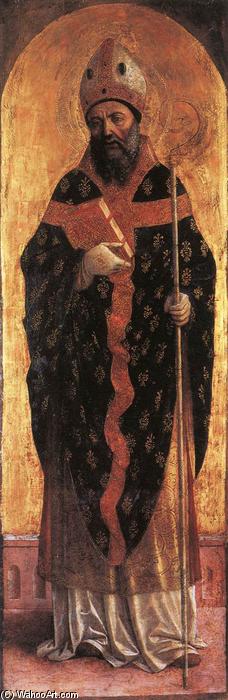
In this quiet depiction, we encounter St Augustine, a work attributed to the hand of Vincenzo Foppa. Created around 1465, the painting captures the influential theologian in a moment of profound contemplation. The figure is rendered with a gravity that reflects his historical importance, presented through the lens of the early Lombard school. It is a piece that invites a closer, more personal inspection of the subject's character.
The work is currently held within the Pinacoteca del Castello Sforzesco in Milan, Italy. This placement allows the portrait to remain connected to the artistic traditions of the region where Foppa established his reputation. The presence of the figure in such a significant collection speaks to the enduring nature of his contribution to Renaissance art. One can sense the deliberate intent behind the composition, focusing entirely on the presence of the saint.
Visual Composition and Subject Details
The figure is presented with a quiet, contemplative expression, his gaze directed slightly to his right as if lost in thought. He possesses a full beard and mustache, with hair that has begun to gray at the temples, suggesting the wisdom of age. A golden halo encircles his head, marking his sanctity and providing a luminous focus against the darker tones of his attire.
He is dressed in a black robe accented by red trim, a garment detailed with intricate patterns and gold embroidery that hints at his high ecclesiastical standing. Over this robe, he wears a pallium, the traditional vestment of a high-ranking prelate. In his left hand, he holds a book, a nod to his life as a theologian and philosopher, while his right hand rests upon a staff, a symbol of his authority.
Artistic Style and Visual Characteristics
The work is executed in a Renaissance style, demonstrating a sophisticated command of perspective and a precise understanding of human anatomy. There is a quiet strength in the way the figure is rendered, achieved through a careful application of light and shadow. This technical skill allows the physical presence of the subject to feel grounded and substantial. The composition is framed within an ornate arch, which lends a sense of architectural grandeur to the presentation.
The color palette is dominated by warm tones that contribute to a solemn and reverent atmosphere. Gold and red are particularly prominent, appearing in the halo and the intricate embroidery of the robes. These colors work in harmony with the darker elements of the vestments to create a sense of depth. The interplay of light across the textures of the fabric and the skin suggests a high level of craftsmanship, drawing the eye to the subtle details of the sitter's expression and the objects he holds.
Related Works by Vincenzo Foppa
To understand the breadth of Foppa's output, one might look toward his later religious commissions. In 1510, he produced St Luke, a work that now resides within San Maurizio al Monastero Maggiore in Milan. This piece reflects the artist's continued engagement with sacred subjects well into his career.
His earlier explorations of maternal themes are also well documented. He painted the Madonna and Child with an Angel in 1479. This specific composition is held in the Galleria degli Uffizi in Florence. Examining these various works allows for a deeper appreciation of the stylistic evolution present in his hand.
질의응답
St Augustine은(는) 수작업으로 그린 작품인가요, 아니면 프린트된 작품인가요?
수작업 제작: 숙련된 화가가 St Augustine을(를) 리넨 캔버스 위에 유화로 재현합니다.
St Augustine의 사이즈는 어떤 것을 선택해야 하나요?
사이즈는 55.4 x 18.0 cm (₩271335)부터 239.8 x 78.1 cm (₩1077200)까지 있으며, 이 페이지의 표에 주요 단계별 가격이 안내되어 있습니다.
배송은 얼마나 걸리나요?
배송은 전 세계 무료 특송으로 4~5주가 소요되며, 본 페이지에서 긴급 제작 옵션을 선택하실 수 있습니다. 제품은 조건 없이 100일 이내에 반품하여 전액 환불받으실 수 있습니다.
St Augustine 원본은 어디에 있나요?
원본은 밀라노에 위치한 카스텔로 스포르체스코 소장품입니다.
빈첸초 포파 작가는 St Augustine 작품에 어떤 재료를 사용했나요?
Oil
 미리보기

 공유하기
 공유하기
 상세 정보
 학습용 요약본


 다운로드
 유사 작품 더 보기
 X-레이
 슬라이드 쇼 보기
 질의응답

 통계 정보


