프린트 판매로 전환
 더 보기
더 보기







































 가로 또는 세로 중 어느 한 면이라도 105cm(약 41인치)를 초과하는 작품이나 복제화의 경우, 프레임은 분해된 키트 형태로 배송됩니다. 이는 안전한 배송을 보장하고 운송 중 발생할 수 있는 손상을 방지하기 위함입니다.


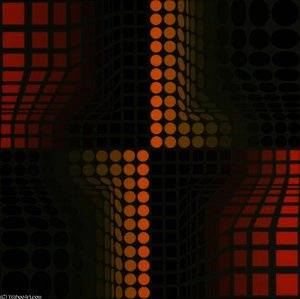
Victor Vasarely’s “Circles In Perspective”: A Dive into Optical Illusions
“Circles In Perspective” by Victor Vasarely is more than just a painting; it's an invitation to question the very nature of perception. Created by one of the pioneers of Op Art, this vibrant work encapsulates the artist’s lifelong fascination with geometry and its impact on human vision. The canvas explodes with a carefully orchestrated arrangement of small circles – predominantly in shades of blue and green – that seem to shift and dance before your eyes. Vasarely wasn't simply depicting circles; he was manipulating them to create an illusion, a deliberate disruption of the viewer’s natural tendency to perceive depth and form. This piece exemplifies the core tenets of Op Art, a movement born in the mid-20th century that sought to translate scientific theories about optical illusions into dynamic visual experiences.
The Genesis of Kinetic Abstraction
Born Károly Vaszary in 1906 in Pécs, Croatia – then part of Austria-Hungary – Vasarely’s artistic journey began unexpectedly. Initially drawn to medicine, he ultimately found his true calling in visual expression, a path forged through rigorous study and experimentation. His formative years were deeply influenced by the Bauhaus movement and Sándor Bortnyik's “Műhely” workshop, where he absorbed the principles of functional design and geometric abstraction. This training instilled within him a profound understanding of how our eyes and brains process information, leading him to meticulously craft works designed to stimulate and challenge this very system. The polka dots subtly integrated into the composition further enhance this effect, adding another layer of complexity to the optical experience.
Technique and Composition: A Calculated Illusion
Vasarely’s technique was remarkably precise. He employed a layering method, meticulously applying paint in thin washes to build up the circles and create the illusion of depth. The careful arrangement of these shapes – varying in size and subtly offset – generates a dynamic visual effect that seems to move across the canvas. The dominant blues and greens were chosen not just for their aesthetic appeal but also for their optical properties, further amplifying the sense of movement and vibration within the artwork. This deliberate control over color and form is characteristic of Vasarely’s approach, reflecting his scientific interest in visual perception.
Symbolism and Emotional Impact
"Circles In Perspective" speaks to a deeper human desire – the yearning for order and harmony amidst chaos. The geometric precision inherent in the composition suggests an attempt to impose structure on the world, while simultaneously embracing its inherent dynamism. Vasarely’s work evokes feelings of wonder, curiosity, and perhaps even slight disorientation, prompting viewers to actively engage with the artwork and reconsider their own perceptions. It's a testament to the power of art to challenge our assumptions and reveal the intricate workings of the human mind. This piece is an ideal addition to any collection seeking a bold statement or a captivating exploration of optical illusion.
질의응답
빅터 바사렐리의 "Circles In Perspective"은 어느 시대의 작품인가요?
"Circles In Perspective"은(는) Modern 시대의 작품입니다.
빅터 바사렐리의 "Circles In Perspective"의 색감은 선명한가요, 아니면 차분한가요?
빅터 바사렐리의 "Circles In Perspective"의 색채는 Balanced Soft의 채도와 Balanced의 강도를 보여줍니다.
"Circles In Perspective"에서 가장 눈에 띄는 색상은 무엇인가요?
빅터 바사렐리의 "Circles In Perspective"의 주요 색상은 Phthalo Green (#154d11)입니다.
이 작품에 대해 더 알아보기
 미리보기
미리보기
 공유하기
공유하기 공유하기
공유하기
 상세 정보
상세 정보 가이드 보기

 다운로드
다운로드
 유사 작품 더 보기
 X-레이
X-레이 슬라이드 쇼 보기
 질의응답
질의응답 통계 정보
통계 정보