

 실제 크기로 보기
 보내기
보내기 공유하기
공유하기
 상세 보기
상세 보기 가이드 보기

 이미지 다운로드
 유사 작품 더 보기
 X-레이
X-레이 슬라이드 쇼 보기
 통계 정보
통계 정보The Diaries


 상세 보기
상세 보기
이 페이지에 표시된 작품은 저작권법의 보호를 받으며, 이에 따라 동일한 복제품을 제작하거나 판매하는 것은 법으로 금지되어 있습니다. 이러한 권리 보호는 다음과 같은 국제 협약에 따라 시행됩니다. 베른 협약 또한 다음에서 명시하는 법률을 포함한 국내법에 의해 보호됩니다. 미국 저작권법 제17조.
저희는 존중을 담은 합법적인 대안으로서, 원작에서 영감을 받은 맞춤형 수제 유화 작품을 제공합니다. 저희의 숙련된 전문 화가들은 원작의 스타일, 분위기, 예술적 정수를 면밀히 연구하여, 그 자체로 독창적인 창작물이면서도 원작과 동일한 감동을 불러일으키는 새로운 작품을 만들어냅니다.
이 방식은 저작권 보호를 받는 예술 작품을 복제하거나 그대로 재현하는 것이 아니기에 저작권 규정을 완벽히 준수합니다. 대신, 이는 창의적인 재해석의 과정을 거칩니다. 즉, 원작에서 영감을 받되 원작과 동일하지 않은 새로운 회화 작품을 의미합니다.
핸드메이드 유화 복제화
작가가 직접 캔버스에 손으로 그린 유화 작품으로, 원하는 크기와 액자로 맞춤 제작해 드립니다. ( 프린트 판매로 전환 디지털 이미지 판매 채널로 전환)




P118B ₩10

P118H ₩10

P118W ₩10

P438Z ₩10

P508JH ₩12

P508YH ₩12

P805H ₩10

P805Z ₩10

P919BZ ₩10

P919G ₩10

P919XJ ₩10

P959ZH ₩10

P968JZ ₩12

W106C ₩8

W218G ₩10

W218JH ₩8

W218Y ₩10

W307PJ ₩10

W316G ₩10

W316PJ ₩8

W316Y ₩10

W398PJ ₩8

W4111J ₩10

W500HY ₩15

W500JH ₩15

W692G ₩12

W849H ₩8

W940BG ₩15

W953PJ ₩8




작품의 원본 비율을 그대로 유지하는 프리셋 사이즈 중에서 선택해 보세요.

액자나 벽면 크기에 맞춰 필요한 가로와 세로 길이를 입력해 주세요. 본 작품은 수작업으로 제작되므로, 요청하신 비율에 따라 작가가 그림의 가장자리를 조금 더 넓게 그리거나 일부를 조정하여 작업할 수 있습니다. 작업 시작 전, 최종 확인을 위해 디지털 목업 이미지를 보내드립니다. 이 페이지에 표시된 이미지는 실제 결과물과 다를 수 있으며, 오직 목업 이미지만이 정확한 결과물을 보여줍니다.
주문 완료 후 OriginalUniqueArt.com 팀에서 상세 안내를 위해 고객님께 이메일을 보내드리며, 미리보기 시안을 함께 제공해 드립니다.


 유리 옵션은 110cm 미만 크기에서만 선택 가능합니다.

The Diaries
재현 매체
복제본 규격
-


총 결제 금액
₩ 406326
The Diaries: An Exploration of Form and Ideology
Peter Friedl’s *The Diaries* (2015) presents a deceptively simple image—a bookshelf crammed with books—yet it embodies a profound conceptual engagement with art history and the broader anxieties surrounding representation. Born in Munich, Austria, in 1967, Friedl is recognized for his ability to dissect formal conventions while simultaneously interrogating their ideological underpinnings. This artwork exemplifies his signature approach: layering hollowed-out forms against one another to disrupt established hierarchies of power and offering a counterpoint to the modernist project’s promises.Conceptual Framework & Historical Context
Friedl draws inspiration from Mieke Bal's assertion that “nothing goes without saying,” prioritizing visual literacy as a crucial element in interpreting art. His work actively resists passive reception, prompting viewers to confront contradictions inherent within artistic endeavors and historical narratives. Specifically referencing the US Department of Housing and Urban Development’s American Homelessness Prevention and Rapid Re-Housing Program—a project designed to combat homelessness through financial assistance—Friedl utilizes the architectural scale model as a symbolic device. This model isn't merely a depiction of space; it represents a political stance, advocating for a future shaped by confronting societal inequities. The series underscores Friedl’s belief that art can serve as a catalyst for critical reflection and social change.Stylistic Characteristics & Technique
The painting itself is characterized by its deliberate austerity. Presented without contextual framing—a conscious decision to isolate the bookshelf—the sculpture invites contemplation on the history of modernism. Friedl employs a technique rooted in meticulous observation, capturing the textures and variations of light across the books’ surfaces. The arrangement isn't random; it reflects Friedl’s interest in presenting disparate concepts within a unified visual form. This juxtaposition highlights the tension between seemingly incompatible ideas—a core element of Friedl’s artistic philosophy. The use of muted colors contributes to an atmosphere of quiet contemplation, mirroring the contemplative mood conveyed by the subject matter itself.Symbolism & Emotional Resonance
The bookshelf serves as more than just a visual motif; it symbolizes knowledge, memory, and the accumulation of experience—themes central to Friedl’s oeuvre. The books themselves represent diverse voices and perspectives, reflecting the complexities of human history and intellectual discourse. By confronting viewers with this densely populated image, Friedl encourages them to engage in a dialogue about representation and its role in shaping our understanding of the world. Ultimately, *The Diaries* resonates with an emotional depth that transcends mere visual aesthetics—it speaks to the enduring human desire for connection and meaning amidst the uncertainties of contemporary life.Concluding Remarks
Thomas Peter Friedl’s *The Diaries* stands as a testament to his unwavering commitment to artistic innovation and intellectual rigor. It exemplifies his ability to transform seemingly commonplace subjects into vehicles for profound philosophical inquiry, cementing his place among the most influential artists of our time. Its understated elegance and conceptual complexity continue to inspire admiration and provoke discussion within the art world.질의응답
Thomas Peter Friedl의 "The Diaries"은(는) 무엇을 묘사하고 있으며, 어떤 분위기를 담고 있나요?
Thomas Peter Friedl의 "The Diaries"은(는) architecture, housingprogram, ideology, scalemodel, textimagerelation, historicalpowerstructures, modernism와(과) Calm 분위기가 어우러진 작품입니다.
Thomas Peter Friedl의 "The Diaries"을(를) 활용하기에 가장 좋은 용도와 공간은 무엇인가요?
"The Diaries"은(는) Accent 용도로 추천하며, Living Room 공간에 배치하기 좋습니다.
"The Diaries" 프린트의 권장 용도는 무엇인가요?
"The Diaries" 프린트의 권장 용도는 Accent입니다.
작가 소개
The Architect of Memory
In the quiet corners of Munich, where his story began in 1967, a mind was forming that would eventually seek to dismantle the very structures we use to understand history. Before he became an interlocutor of representational forms, he moved through the world with a different kind of lens, working as a theater critic. This early immersion in drama and linguistics shaped his later ability to treat the visual field as a stage where power and identity are constantly being reenacted. He did not merely observe; he learned how the placement of a prop or the cadence of a line could alter the perception of truth.
As he moved toward Berlin, his practice began to expand into a multidisciplinary exploration that refused to be pinned down by a single medium. He turned to photography, painting, video, and even architectural scale models to investigate how we construct our political and aesthetic consciousness. His work often functions through a strategy of radical neutrality, where the artist avoids arguing for a specific reading but instead exposes the conditions underging the creation of meaning itself. By using hollowed-out forms and layering disparate elements, he sought to resolve the contradictions found within modernism.
The Weight of the Model
Much of his most profound inquiry resides in the physical presence of the model. In his series known as Rehousing, which spanned from 2012 to 2019, he utilized architectural scale models to reflect on history and ideology. These were not mere miniatures but case studies for a mental geography. He reconstructed the childhood home of his parents in Austria alongside much more politically charged spaces, such as the cabin of Martin Heidegger in the Black Forest, the residence of Ho Chi Minh in Hanoi, and even a slave hut from a plantation in Louisiana. Each structure carried the weight of its own history, acting as a vessel for the ideologies that built them.
This fascination with the intersection of text and image led to monumental installations like The Diaries in 2015. In this work, a bookshelf crammed with over 400 handwritten notebooks presented a deceptively simple image that actually interrogated the anxieties of representation. He used these objects to explore themes of knowledge, memory, and experience, forcing a confrontation with the textures of light and the accumulation of human thought. Through such meticulous observation, he demonstrated that nothing goes without saying.
A Stage for Social Critique
His later explorations often turned toward the theatricality of social struggle. In works like Teatro Popular and his video installations, he utilized techniques from puppet theater and tableaux vivant to highlight the mechanisms of historiography. He was particularly drawn to the permeability of language and the boundaries of identity. His video work Report, created for documenta 14, examined how language can both connect and divide, using the empty stage of a national theater to let actors recite texts in their own mother tongues.
Even when dealing with heavy themes of racial bias and colonial legacies, his approach remained rooted in a piercing dramaturgy. In Liberty City, he staged a reversal of a violent historical event in Miami, using the blurry, uncut quality of footage to mimic an amateur recording. This method allowed him to walk the line between documentation and fiction, challenging the viewer's compassion and their preconceived notions of justice. His career remains a continuous effort to use the tools of art to question the very aesthetics of cultural memory.

Thomas Peter Friedl
1967 - , Germany
작가 정보 요약
- Full Name: Thomas Peter Friedl
- Notable Artworks:
- The Diaries
- German Village
- Installation View
- Place Of Birth: Munich, Germany
- Date Of Birth: 1967
관련 기사
OriginalUniqueArt.com F.A.Q.: 최고급 수집가를 위한 맞춤 벽화 및 프레스코 의뢰 가이드 - 규모, 설치, 전문가 팁
OriginalUniqueArt.com에서 최고급 수집가를 위한 맞춤 벽화 및 프레스코 제작 서비스를 경험하세요. 숙련된 아티스트의 섬세한 손길로 공간을 예술 작품으로 완성해 드립니다. 규모, 설치, 재료 선택까지 전문가가 책임집니다.
Digital Illustration Guide: Scaling Art Procurement Efficiency for Large-Scale Hospitality Projects
Master large-scale art procurement with our guide for hotel designers. Learn to leverage digital illustration, custom mockups, and efficient bulk ordering to scale high-quality, hand-painted reproductions across global hospitality projects with precision and cost-efficiency.
Scaling Artistic Vision: Maintaining Bespoke Quality in High-Volume Custom Painting for Commercial Spaces
Elevate commercial spaces with bespoke art solutions. Discover how to scale artistic vision while maintaining exceptional quality, artist collaboration & seamless project management. Expert guidance for hotels, offices & beyond.
호텔 브랜드 가치 극대화를 위한 아트 프로그램 전략적 관리: 사례 연구
호텔 브랜드 가치 극대화를 위한 아트 프로그램 전략적 관리 방안을 심층 분석합니다. 고객 경험 향상, 예술 공간 조성, 맞춤형 아트 컨설팅 노하우를 제공하여 호텔 경쟁력 강화에 기여합니다.
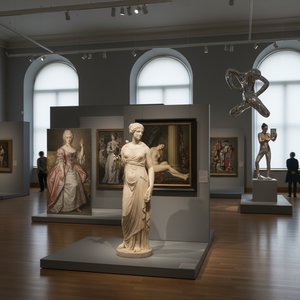
The Allure of the Pose: Representations of 'Model' Through Art History
Explore the fascinating history of the 'art model' through centuries of painting! Discover academic techniques, social contexts & the evolving role of models in art. OriginalUniqueArt offers custom reproductions and expert consultation.