Contemporary Realism · 1874
Forgiven (토마스 페이드, 1874)
토마스 페이드 (1826–1900) 작가의 Forgiven 1874년에 제작되었습니다. Contemporary Realism 운동에 속합니다. Oil On Canvas(으)로 제작되었습니다. 런던, United Kingdom에 위치한 Guildhall Art Gallery에 소장되어 있습니다. 크기는 36 × 48 cm입니다.
- 1874
- Oil On Canvas
- 36 × 48 cm
- Guildhall Art Gallery, 런던

 미리보기

 수작업 유화 작품
 공유하기
 공유하기
 학습용 요약본


 다운로드
 유사 작품 더 보기
 X-레이
 슬라이드 쇼 보기
 질의응답

 통계 정보
Forgiven 요약
- 제목
- Forgiven
- 작가
- 토마스 페이드 (1826–1900)
- 작가 출생지
- 커크cudbright, 영국
- 제작 연도
- 1874
- 매체
- Oil On Canvas
- 크기
- 36 × 48 cm
- 전시 장소
- Guildhall Art Gallery, 런던, United Kingdom
- 제작 시기
- 19th Century
- 주제
- family portrait, domestic scene, victorian era, warmth, rural life, intimate moment
Forgiven은(는) 무엇을 묘사하고 있나요?
Identification of Forgiven by Thomas Faed
In this intimate oil on canvas, titled Forgiven, the Scottish artist Thomas Faed explores the quietude of domestic life. Created in 1874, the work offers a glimpse into the sentimental realism that defined much of Faed's career. The piece is modest in scale, measuring 36 x 48 cm, which encourages a close, personal encounter with the figures depicted.
Faed, born in 1826 in Gatehouse of Fleet, United Kingdom, possessed a particular sensitivity to the textures of everyday existence. Through Forgiven, he captures a specific moment of familial connection, utilizing the medium of oil to build a sense of warmth within a humble setting. The work remains a significant example of his ability to translate human emotion into a visual narrative.
The Composition and Visual Elements
The scene unfolds within a dimly lit, rustic interior, capturing a quiet moment of domesticity. At the center of the composition, a family group is gathered around a table, consisting of an older man, a woman, and a young child. The arrangement feels somewhat cluttered, with various objects scattered throughout the space to suggest a lived-in, humble setting. This density of detail creates a sense of immediacy, as if we have stumbled upon a private, unposed instance of daily life.
Lighting is used with great subtlety here. The primary source of illumination emanates from a fireplace located on the left side of the frame, casting soft light across the figures and creating deep shadows that provide a sense of volume. This interplay of light and shadow allows for a clear sense of depth, achieved through the careful layering of the figures and the surrounding furniture. The atmosphere remains somber and quiet, grounded by a color palette dominated by muted greens, browns, and grays.
Technique and Style
The work is executed in oil on canvas, utilizing a painterly technique that prioritizes the immediate sensation of the scene. You can see the visible brushstrokes throughout the composition, which lend a sense of immediacy to the domestic setting. The lines are predominantly organic and slightly loose, avoiding the rigid precision of more academic works. This approach allows the forms to settle into the space with a natural, unforced quality.
The lighting is subdued, emanating from a fireplace to the side, which has a profound effect on how the shapes are perceived. Because of this soft illumination, the edges of the figures and objects lack sharpness; instead, they appear somewhat softened, blending gently into the shadows. This creates a palpable sense of volume and depth within the rustic interior. You can feel the tactile nature of the environment through the way the paint is applied to the rough wooden surfaces and the heavy folds of the fabric.
Where to See This Work Today
You may find this work at the Guildhall Art Gallery in London, United Kingdom. It is part of the collection held by the City of London, England. The gallery is situated within the Moorgate area, offering a quiet space to observe the nuances of Faed's brushwork.
The museum itself is housed in a stone building designed in a semi-Gothic style. It provides a dignified setting for such intimate domestic scenes. If you find yourself in the city, the architecture of the gallery complements the historical weight of the pieces within its walls.
Related Works by Thomas Faed
To understand the breadth of Faed's output, one might look toward his earlier compositions, such as His Only Pair, which dates from about 1860. This period of his career also produced Listeners Ne'er Hear Any Good Of Themselves, a work that reflects his interest in the nuances of human interaction. His ability to handle narrative was further demonstrated in The Last of the Clan, completed in 1865. These pieces offer a glimpse into the development of his specific approach to genre painting and the quietude of domestic life.
Several of his most significant paintings are held in permanent collections, allowing for a deeper study of his technical skill. The Silken Gown is part of the collection at the Tate Gallery. In the Aberdeen Art Gallery, one can find both Highland Mary and The Reaper. These works, alongside celebrated pieces like The Motherless Bairn and Scott and His Literary Friends at Abbotsford, illustrate the range of his subject matter, from intimate studies to more expansive, literary-inspired scenes.
Forgiven은(는) 어느 미술관에 소장되어 있나요?
Guildhall Art Gallery
런던, United Kingdom
시간의 태피스트리: 빅토리아 시대의 화려함과 로마의 메아리가 만나는 곳 런던의 역사적인 시티 지구, 그 심장부에서 길드홀 미술관 은 단순히 캔버스를 감상하는 것 그 이상의 경험을 선사합니다. 이곳은 인류 문명의 층위 속을 거니는 깊이 있는 감각적 여정을 제공합니다. 미술관의 문을 열고 들어서는 순간, 빅토리아 시대의 세련된 우아함과 로마 시대 영국을 지탱해 온 거칠고도 영속적인 돌들이 나란히 숨 쉬는 공간에 마주하게 됩니다.

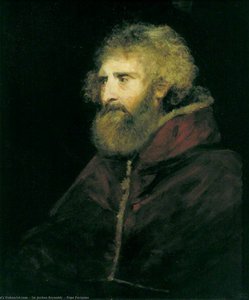

Forgiven의 고해상도 이미지
토마스 페이드, Forgiven (1874), Guildhall Art Gallery. 퍼블릭 도메인
Forgiven에 관한 질문과 답변
토마스 페이드의 "Forgiven"의 원화는 어디에서 감상할 수 있나요?
Forgiven의 원작은 Guildhall Art Gallery, 런던, United Kingdom에서 만나보실 수 있습니다.
토마스 페이드의 "Forgiven"의 기법은 무엇인가요?
"Forgiven"은(는) 어떤 내용을 담고 있나요?
"Forgiven"은(는) 저작권으로부터 자유로운가요?
토마스 페이드의 "Forgiven"은(는) 어떤 미술 사조에 속하나요?
아티스트 토마스 페이드 소개

1826–1900, 영국
토마스 페이드
스코틀랜드적 정서의 유산 토마스 페이드는 스코틀랜드 미술사에서 독보적인 위치를 차지하고 있으며, 종종 로버트 번스가 스코틀랜드 가요에 끼친 영향만큼이나 깊은 경외심을 담아 묘사되곤 합니다. 커크커드브라이트셔의 바레이 밀에서 태어난 페이드는 예술적 재능이 넘치는 놀라운 가족의 일원이었습니다. 그의 형제인 제임스와 존, 그리고 누이 수잔 모두 이 깊은 예술적 소명을 공유하고 있었습니다. 그의 유년 시절은 갤로웨이의 거칠면서도 아름다운 풍경 속에 뿌리를 두고 있었으며, 이러한 환경은 의심할 여지 없이 그의 가장 사랑받는 작품들 속에 흐르는 따스함과 가정적인 정서에 영감을 주었습니다.
토마스 페이드의 다른 작품들
 Worn Out
 Highland Mary1857
 Faults on Both Sides1861
 The Doctor's Visit1889
Forgiven 관련 에세이
 The Timeless Beauty of Oil on Canvas: A Masterclass in Texture, Impasto, and Artistic MasteryDiscover the profound allure of oil on canvas. Explore the mastery of impasto textures, the science of pigment longevity, and expert guides…
 Masterpieces of Quinten Metsys: The Top 25 Essential ArtworksExplore 25 iconic works by Quinten Metsys, the master of the Antwerp School. Discover his Flemish Renaissance gems on OriginalUniqueArt.com.
 Masterpieces of Realism: The Top 25 Artworks by Thomas EakinsExplore the top 25 masterpieces of American Realism by Thomas Eakins. Discover his iconic works and find curated art on OriginalUniqueArt.c…