Romanticism · 1830
Niagara Falls (토마스 콜, 1830)
토마스 콜 (1801–1848) 작가의 Niagara Falls 1830년에 제작되었습니다. Romanticism 운동에 속합니다. Oil On Canvas(으)로 제작되었습니다.
- 1830
- Oil On Canvas

 미리보기

 수작업 유화 작품
 공유하기
 공유하기
 학습용 요약본


 다운로드
 유사 작품 더 보기
 X-레이
 슬라이드 쇼 보기
 질의응답

 통계 정보
Niagara Falls 요약
- 제목
- Niagara Falls
- 작가
- 토마스 콜 (1801–1848)
- 작가 출생지
- 볼턴, 영국
- 제작 연도
- 1830
- 매체
- Oil On Canvas
- 운동성
- Romanticism
- 제작 시기
- 19th Century
- 주제
- waterfall, people, trees, rocks, river, mist
Niagara Falls은(는) 무엇을 묘사하고 있나요?
Identification of Niagara Falls by Thomas Cole
Niagara Falls is an oil painting created by Thomas Cole in 1830. The work focuses on the American wilderness and the depiction of natural power. It captures a large body of water falling from a great height, creating a scene of cascading water and rising mist. The landscape includes several trees and rocky terrain surrounding the falls.
The composition includes a man standing on a rock in the foreground. Two other individuals are visible within the scene: one person stands closer to the left side, while another is positioned further back on the right side. These figures provide a sense of scale against the massive movement of the water. The environment is characterized by lush, forested cliffs and a sky filled with clouds and mist.
The Composition and Visual Elements
The composition is centered on a large body of water falling from a great height, creating a vertical movement that dominates the scene. This cascading water descends into a lower river area, surrounded by several trees that frame the landscape. A man is positioned on a rock in the foreground, facing the falls. His presence provides a sense of scale against the massive volume of the water.
Two other people are visible within the landscape, distributed to create depth. One individual stands closer to the left side of the composition, while another person is located further back on the right side. These figures are placed amidst the natural terrain, which includes rocky outcrops and dense foliage. The arrangement of the trees and the placement of the figures guide the eye from the immediate foreground toward the distant, falling water.
Technique and Artistic Style
This oil painting is a primary example of the Romantic landscape style. As a foundational work of the Hudson River School, it utilizes a composition that emphasizes the scale of the natural world. The artist employs a specific technique of layering oil to render the textures of the cascading water and the surrounding rock formations. The application of paint allows for a depiction of mist rising from the base of the falls, creating a sense of atmospheric depth against the sky.
The artist relies heavily on the interplay of light and shadow to establish the environment. Light appears to catch the spray of the water and the edges of the foliage, while deep shadows are placed within the crevices of the cliffs and the dense areas of the forest. This contrast defines the physical volume of the landscape. The brushwork captures the movement of the water and the varied textures of the trees, grounding the scene in a tangible, physical reality.
Related Works by Thomas Cole
The artist's exploration of the American wilderness includes several significant compositions from different periods of his career. In 1826, he produced Kaaterskill Falls. This work focused on the vertical energy of the landscape. Later, in 1836, he completed The Oxbow. This painting juxtaposes a river valley against cultivated farmland. During that same year, he also finished The Course of Empire, a five-part series tracing the rise and fall of civilizations.
Cole continued to develop his approach to landscape and allegory in his later years. In 1842, he created The Voyage of Life, an allegorical series depicting the various stages of an individual's existence. These works demonstrate his ongoing interest in the relationship between the natural environment and human presence. His output moved from the study of specific waterfalls to broader, more complex thematic sequences.
Niagara Falls의 고해상도 이미지

토마스 콜, Niagara Falls (1830). 퍼블릭 도메인
Niagara Falls에 관한 질문과 답변
토마스 콜의 "Niagara Falls"은(는) 언제 제작되었나요?
토마스 콜의 "Niagara Falls"은(는) 1830년에 제작되었습니다.
토마스 콜의 "Niagara Falls"에는 어떤 기법이 사용되었나요?
토마스 콜은(는) "Niagara Falls" 작품에 Oil On Canvas 기법을 사용했습니다. 이 기법은 원작의 재료적 특성을 잘 보여줍니다.
토마스 콜의 "Niagara Falls"에는 어떤 소재가 등장하나요?
토마스 콜의 "Niagara Falls"에 담긴 주제: waterfall, people, trees, rocks, river, mist, clouds
토마스 콜의 "Niagara Falls"의 이미지를 자유롭게 복제할 수 있나요?
토마스 콜의 "Niagara Falls"은(는) 퍼블릭 도메인 - 저작권 보호 기간이 만료되었습니다 상태입니다. 이 상태에 따라 해당 작품 이미지의 복제 가능 여부가 결정됩니다.
"Niagara Falls"의 작가는 누구인가요?
"Niagara Falls"은(는) 토마스 콜의 작품입니다. 이 페이지의 정보는 토마스 콜의 원작에 대해 설명합니다.
토마스 콜의 "Niagara Falls"은(는) 어떤 미술 사조에 속하나요?
"Niagara Falls"은(는) Romanticism 양식의 작품입니다. 이 사조는 해당 작품이 속한 예술적 전통을 나타냅니다.
Niagara Falls은(는) 토마스 콜의 예술적 여정 중 어느 시기의 작품인가요?
"Niagara Falls"은(는) 토마스 콜의 Mature Period를 잘 보여주는 작품입니다.
"Niagara Falls"이(가) 제작될 당시 토마스 콜의 나이는 몇 세였나요?
1830년에 "Niagara Falls"이(가) 제작되었을 당시, 1801년에 태어난 토마스 콜의 나이는 29세였습니다.
토마스 콜의 "Niagara Falls"은(는) 퍼블릭 도메인에 해당하나요? 그 이유는 무엇인가요?
"Niagara Falls"의 저작권 상태(퍼블릭 도메인 - 저작권 보호 기간이 만료되었습니다)는 작가의 1848년 사망 시점을 기준으로 결정됩니다.
아티스트 토마스 콜 소개

1801–1848, 영국
토마스 콜
토마스 콜의 삶과 예술 1801년 2월 1일, 영국 랭커셔의 볼턴 레 무어스에서 태어난 토마스 콜의 시작은 훗날 그의 이름을 정의하게 될 그 웅장한 풍경들과는 거리가 먼 곳이었습니다. 1818년, 그의 가족은 미지의 광활한 영토에서 새로운 시작을 꿈꾸며 미국으로 이주했습니다. 초기 시절의 그는 여러 직업을 전전하는 삶을 살았습니다. 판화를 그리는 조각가로 일하기도 했고, 1822년부터는 초상화가로서 안정적인 기반을 잡기 시작했습니다.
토마스 콜의 다른 작품들
 옥스보우
 건축가의 꿈1840
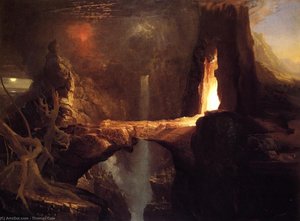 추격과 달빛 아래 불길1828
 산 미니아토에서 바라본 피렌체1837

Niagara Falls 관련 에세이
 French artworks of the 1880sFrench Impressionist masterpieces by Claude Monet, Pierre-Auguste Renoir, and Georges Seurat. Find museum-quality reproductions on Original…
 Barbizon School vs. Hudson River School: Two Visions of the Natural WorldDiscover the key differences between Barbizon and Hudson River School landscapes. Master art history with our expert comparison guide.
 The Sublime Cascade: Examining the Tradition of Waterfall Landscapes in Art HistoryExplore the evolution of waterfall landscapes from the Northern Renaissance to the Hudson River School. Trace this epic art history now.