프린트 판매로 전환
 더 보기
더 보기







































 가로 또는 세로 중 어느 한 면이라도 105cm(약 41인치)를 초과하는 작품이나 복제화의 경우, 프레임은 분해된 키트 형태로 배송됩니다. 이는 안전한 배송을 보장하고 운송 중 발생할 수 있는 손상을 방지하기 위함입니다.


A Symphony of Wilderness: The Majesty of Falls of the Kaaterskill
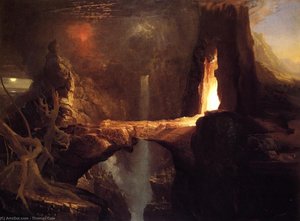
In the heart of the Hudson River School’s foundational era, Thomas Cole captured a moment of profound natural transcendence in his 1826 masterpiece, Falls of the Kaaterskill. This breathtaking landscape does not merely depict a geographical location; it invites the viewer into a sacred dialogue with the American wilderness. The composition is anchored by the powerful descent of water over rugged, ancient cliffs, where the mist from the falls seems to blur the line between the earthly and the divine. Through his masterful use of light and shadow, Cole transforms the rocky terrain and lush foliage into a living, breathing entity, evoking a sense of awe that remains as potent today as it was in the early nineteenth century.
The technique employed by Cole is a testament to his role as a pioneer of American landscape painting. Moving away from the rigid, formal traditions of European portraiture, he embraced a more fluid and atmospheric approach to capture the ephemeral qualities of light filtering through a dense canopy. The interplay of textures—the smoothness of cascading water against the jagged, moss-covered stones—demonstrates a sophisticated command of oil painting. His ability to layer tones creates a sense of immense depth, drawing the eye from the immediate foreground, where the details of the earth are tactile and sharp, toward the ethereal, receding waterfalls in the distance that dissolve into a soft, romantic haze.
Symbolism and the Spirit of a New Nation
Beyond its aesthetic splendor, Falls of the Kaaterskill serves as a profound allegory for the burgeoning American identity. During this period, the United States was a nation seeking its own visual language, distinct from the classical histories of Europe. Cole utilized the untamed landscape as a symbol of purity and spiritual potential. The solitary figure positioned near the center of the scene acts as a surrogate for the viewer, a quiet witness to the sublime power of nature. This presence emphasizes the Romantic ideal of the individual’s emotional connection to the infinite, suggesting that within the wild, unmapped territories of the New World, one might find a deeper truth about the human condition.
For the discerning collector or interior designer, this painting offers more than just visual beauty; it provides an emotional anchor for any space. The serene yet powerful atmosphere of the piece makes it an ideal centerpiece for rooms designed to inspire contemplation and tranquility. Whether placed in a grand library or a contemporary living space, a high-quality reproduction of this work brings with it a sense of historical weight and timeless elegance. It is a window into a lost era of discovery, offering a sophisticated touch of natural grandeur that complements both classical and modern decor, turning any wall into a portal to the sublime.
질의응답
토마스 콜의 "Falls of the Kaaterskill"은 어느 시대의 작품인가요?
토마스 콜의 "Falls of the Kaaterskill"은(는) 19th Century 시대의 작품으로, 이 시기는 해당 작품의 역사적 배경을 잘 보여줍니다.
"Falls of the Kaaterskill"에서 매체와 움직임은 어떻게 결합되어 있나요?
"Falls of the Kaaterskill"은(는) Hudson River School 양식의 Oil 기법으로 제작되었습니다.
학생들을 위한 토마스 콜의 "Falls of the Kaaterskill" 관련 팩트시트가 있나요?
토마스 콜의 "Falls of the Kaaterskill"에 대한 학습 가이드 페이지를 이용하실 수 있습니다. 이 페이지는 학생들과 수업용으로 제작된, 인쇄 가능한 작품 정보 시트를 제공합니다.
이 작품에 대해 더 알아보기
 미리보기
미리보기
 공유하기
공유하기 공유하기
공유하기
 상세 정보
상세 정보 가이드 보기

 다운로드
다운로드
 유사 작품 더 보기
 X-레이
X-레이 슬라이드 쇼 보기
 질의응답
질의응답 통계 정보
통계 정보