American modernism · 1924
Lucky Strike (스튜어트 데이비스, 1924)
스튜어트 데이비스 (1892–1964) 작가의 Lucky Strike 1924년에 제작되었습니다. American modernism 운동에 속합니다. Oil On Canvas(으)로 제작되었습니다. 크기는 46 × 61 cm입니다.
- 1924
- Oil On Canvas
- 46 × 61 cm

 미리보기

 수작업 유화 작품
 공유하기
 공유하기
 학습용 요약본


 다운로드
 유사 작품 더 보기
 X-레이
 슬라이드 쇼 보기
 질의응답

 통계 정보
Lucky Strike 요약
Lucky Strike은(는) 무엇을 묘사하고 있나요?
Identification of Lucky Strike by Stuart Davis
We are looking at Lucky Strike, a work from 1924 by the American painter Stuart Davis. This piece emerged during a period when Davis was establishing his presence within the modernist movement, moving away from the urban realism of his early training toward a more structured, fragmented language. It is a quiet encounter with the visual language of the 1920s.
Born in 1892 in Philadelphia, United States, Davis brought a specific sensibility to his compositions, often drawing from the textures of everyday life. In this particular work, he focuses on the geometry of consumer objects, specifically a box of Lucky Strike roll-up tobacco. The subject matter reflects the shifting landscape of an increasingly industrial and commercial society.
The painting captures a moment of stillness through a series of overlapping planes and shapes. It is a direct engagement with the material culture of his era, presented through a lens that prioritizes the arrangement of forms over a traditional, realistic depiction of the objects themselves.
Composition and Visual Elements
The arrangement of "Lucky Strike" is notably asymmetrical, creating a sense of movement that feels both deliberate and spontaneous. Rectangular forms dominate the visual field, echoing the industrial geometry of the objects depicted. These shapes are layered and overlap one another, establishing a subtle sense of depth despite the work's overall flatness. At the heart of this arrangement, the 'Lucky Strike' box is positioned centrally, acting as a visual anchor that commands immediate attention within the fragmented space.
A muted color palette of blues, greens, yellows, and browns defines the surface. Rather than blending these tones, the artist applies them in distinct blocks or planes, which reinforces the structural, geometric nature of the composition. Strong, defined lines delineate each shape, providing sharp edges that emphasize the interplay between the various forms. On the section representing the newspaper, extensive hatching creates a tactile, textured effect that contrasts with the smoother application of color elsewhere.
The perspective here is shallow and somewhat distorted, eschewing traditional spatial representation in favor of immediate visual impact. Depth is achieved not through receding lines, but through the strategic layering of objects and variations in color intensity. This approach creates a flattened, modern sensibility that prioritizes the arrangement of planes over a realistic depiction of three-dimensional space.
Technique and Materials Used
In this work, Davis utilizes oil paints applied to what is likely a primed canvas. The surface is characterized by a deliberate flattening of space, eschewing traditional depth in favor of a more immediate, modern arrangement. He achieves this through the use of bold color blocks and sharp, defined outlines that delineate the various geometric forms. This approach emphasizes the structural qualities of the objects rather than their three-dimensional volume.
Texture is introduced through specific application methods rather than through heavy impasto. You will notice the use of hatching, particularly within the newspaper section, which creates a tactile, rhythmic quality. This technique provides a subtle contrast to the smoother, more uniform planes of color found elsewhere in the composition. The interplay between these hatched areas and the solid blocks of pigment gives the surface a nuanced, layered presence.
Artistic Style and Influences
The aesthetic language of this work is deeply rooted in the principles of Cubism and Synthetic Cubism. You can see this in the way the composition is fragmented into overlapping planes and geometric shapes. Rather than seeking a realistic representation of space, the artist utilizes a shallow, somewhat distorted perspective. This approach allows for a layering of forms that prioritizes visual impact over traditional depth. The sharp, defined lines and the use of hatching on the newspaper section suggest a deliberate move toward abstraction while maintaining a connection to the physical world.
There is a strong sense of American Modernism at work here, particularly in how the piece engages with the realities of the 1920s. The subject matter focuses on the textures of consumer culture and the rhythms of everyday life. By incorporating elements like the tobacco box and newspaper headlines, the work reflects the industrial age and the rise of mass production. It captures a specific moment of urban modernity, where commercialism and daily existence begin to merge into a new, fragmented visual reality.
Related Works by Stuart Davis
To understand the trajectory of Davis's development, one might look toward his earlier explorations. His 1915 painting, Rocks, Gloucester, offers a glimpse into a different period of his evolution. This work belongs to a phase where his focus remained closer to the urban realism and everyday subjects that characterized his early aesthetic sensibilities. It provides a quiet point of comparison to the more fragmented, commercial-focused compositions that would define his later years.
As his style matured, he moved toward the abstraction of still lifes and landscapes. His 1928 work, Odol (Modernism), exemplifies this shift by blending recognizable imagery from popular culture with more abstract forms. This period saw him increasingly engaging with the visual language of the modern age. Later, in 1956, he produced Tropes de Teens, a piece that reflects his continued engagement with contemporary themes through a highly developed lens.
His later output also includes The Mellow Pad, a significant work that draws inspiration from the rhythmic energy of jazz. These various pieces, from his early studies to his later, more complex abstractions, illustrate a career spent navigating the intersection of high art and the everyday objects of American life.
Lucky Strike의 고해상도 이미지

스튜어트 데이비스, Lucky Strike (1924).
스튜어트 데이비스 (1892–1964), Lucky Strike, 1924, oil on canvas. 이미지: OriginalUniqueArt.com
Lucky Strike에 관한 질문과 답변
스튜어트 데이비스의 "Lucky Strike"은(는) 언제 제작되었나요?
"Lucky Strike"은(는) 1924년에 제작되었습니다. 이 시기는 스튜어트 데이비스의 예술적 경력과 당시의 시대상을 잘 보여줍니다.
"Lucky Strike"은 어떤 기법으로 제작되었나요?
스튜어트 데이비스의 "Lucky Strike"의 재료는 Oil On Canvas입니다. 복제화는 이 기법 특유의 질감을 그대로 구현하는 것을 목표로 합니다.
원작 스튜어트 데이비스의 "Lucky Strike"의 크기는 어떻게 되나요?
원작 스튜어트 데이비스의 "Lucky Strike"의 크기는 46 x 61 cm입니다.
"Lucky Strike"은(는) 어떤 내용을 담고 있나요?
스튜어트 데이비스의 "Lucky Strike"에 나타난 주제로는 tobacco box, newspaper, rectangular forms, blue, green, yellow, brown, hatching 등이 있습니다. 이들은 모여 작품의 소재를 요약해 보여줍니다.
스튜어트 데이비스의 "Lucky Strike"은(는) 퍼블릭 도메인인가요?
저작권과 관련하여, "Lucky Strike"은(는) 저작권 보호 대상입니다 상태입니다.
"Lucky Strike"을(를) 만든 작가는 누구인가요?
"Lucky Strike"의 작가는 스튜어트 데이비스입니다. 이 작품은 스튜어트 데이비스의 이름으로 등록되어 있습니다.
스튜어트 데이비스의 "Lucky Strike"은(는) 어떤 미술 사조에 속하나요?
"Lucky Strike"은(는) American modernism 양식의 작품입니다. 이 사조는 해당 작품이 속한 예술적 전통을 나타냅니다.
"Lucky Strike"은(는) 스튜어트 데이비스의 예술적 발전 단계 중 어느 시기를 나타냅니까?
"Lucky Strike"은(는) 스튜어트 데이비스의 Mature Period를 잘 보여주는 작품입니다.
"Lucky Strike"이(가) 제작될 당시 스튜어트 데이비스의 나이는 몇 세였나요?
1924년에 "Lucky Strike"이(가) 제작되었을 당시, 1892년에 태어난 스튜어트 데이비스의 나이는 32세였습니다.
아티스트 스튜어트 데이비스 소개
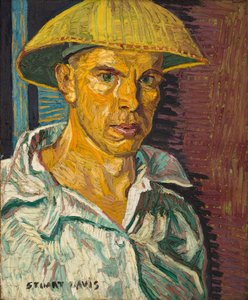
1892–1964, 미국
스튜어트 데이비스
스튜어트 데이비스: 아메리카 모더니즘의 선구자 1892년 12월 7일 필라델피아에서 태어난 스튜어트 데이비스는 어린 시절부터 예술적인 환경 속에서 성장했습니다. 그의 아버지 에드워드 와이어트 데이비스는 필라델피아 프레스의 미술 편집자였고, 어머니 헬렌 스튜어트 데이비스는 조각가였습니다. 이러한 가정환경은 의심할 여지 없이 그의 초기 예술적 관심을 키웠습니다. 데이비스는 1909년부터 1912년까지 뉴욕시의 로버트 헨리 미술학교에서 로버트 헨리의 지도를 받으며 정식 교육을 받았습니다.
스튜어트 데이비스의 다른 작품들
 오돌
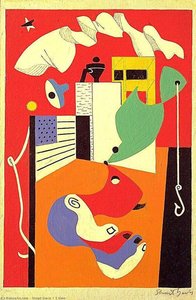 T View1951
 Sixth Avenue El1931
 Arboretum by Flashbulb
Lucky Strike 관련 에세이
 Anchoring Space: The Psychological and Aesthetic Impact of a Central Abstract Painting on Interior CompositionDiscover how a central abstract painting transforms your interior. Expert insights on color psychology, composition & bespoke art commissio…
 Spontaneity and Matter: Distinguishing CoBrA from Art InformelJean Dubuffet mixed sand, tar, and gravel into his 1947 works to create sculptural surfaces. Why did post-war artists reject traditional or…
 Stuart Davis: Modernist Abstraction & the Vibrant Spirit of the Jazz AgeExplore the vibrant world of Stuart Davis, a pioneer of American Modernism. Discover his jazz-inspired paintings, signature style & investm…