프린트 판매로 전환
 더 보기
더 보기







































 가로 또는 세로 중 어느 한 면이라도 105cm(약 41인치)를 초과하는 작품이나 복제화의 경우, 프레임은 분해된 키트 형태로 배송됩니다. 이는 안전한 배송을 보장하고 운송 중 발생할 수 있는 손상을 방지하기 위함입니다.


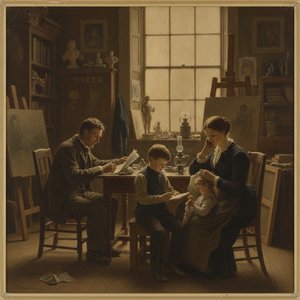
A Portrait of Loss and Remembrance: Sir John Everett Millais’s ‘The North-West Passage’
Sir John Everett Millais’s “The North-West Passage,” completed in 1874, stands as a cornerstone of the Pre-Raphaelite Brotherhood’s artistic vision—a movement that vehemently rejected academic conventions and championed meticulous observation alongside profound emotional resonance. More than just a depiction of a landscape, it's an exquisitely crafted tableau conveying grief, remembrance, and the enduring power of familial love against the backdrop of Victorian anxieties surrounding exploration and mortality.
- Subject Matter: The painting portrays a grieving mother holding her deceased infant son—a poignant meditation on bereavement rendered with unparalleled realism. Millais deliberately chose this subject matter to explore themes of maternal sorrow and the fragility of life, aligning powerfully with Victorian sensibilities regarding death and mourning rituals.
- Style & Technique: Characteristic of Pre-Raphaelite art, “The North-West Passage” employs a technique rooted in detailed botanical illustration—a hallmark of Millais’s scientific pursuits. He painstakingly recreated the interior of a cottage, capturing every nuance of texture and color with painstaking accuracy. The muted palette—dominated by earthy browns and greens—contributes to the painting's melancholic atmosphere.
- Historical Context: Created during an era obsessed with imperial expansion and scientific discovery, “The North-West Passage” reflects anxieties about venturing into uncharted territories. However, Millais subtly subverts this narrative of heroic ambition by portraying a scene of quiet domesticity—a deliberate rejection of the grandiose depictions favored by academic artists.
- Symbolism: The infant’s pallid skin symbolizes death and decay, while the mother's sorrowful gaze embodies universal grief. Millais utilizes symbolic imagery to elevate the painting beyond mere representation, inviting viewers to contemplate profound philosophical questions about life, loss, and the enduring bonds of family.
- Emotional Impact: “The North-West Passage” achieves its remarkable emotional impact through Millais’s masterful manipulation of light and shadow—creating a sense of intimacy and vulnerability. The painting compels contemplation on themes of mortality and remembrance, leaving an indelible impression on the viewer's psyche.
Displayed prominently at Tate Britain since its unveiling, “The North-West Passage” continues to captivate audiences with its breathtaking realism and evocative storytelling—a testament to Millais’s artistic genius and the enduring legacy of the Pre-Raphaelite Brotherhood. Its serene composition and subtle symbolism offer a poignant reflection on human experience, making it an invaluable addition to any discerning collection.
질의응답
존 에버렛 밀레이스의 "The North-West Passage"이(가) 공간의 분위기를 어떻게 바꿔주나요?
존 에버렛 밀레이스의 "The North-West Passage"은(는) Romantic 분위기를 자아내며, Living Room에 추천하는 작품입니다. 무드란 작품이 주변 공간에 선사하는 정취를 의미합니다.
존 에버렛 밀레이스의 "The North-West Passage"은(는) 언제 제작되었나요?
존 에버렛 밀레이스의 "The North-West Passage"은(는) 1874년에 제작되었습니다.
존 에버렛 밀레이스의 "The North-West Passage"에 대한 안내 페이지가 있나요?
"The North-West Passage"에 대한 안내는 작품의 학습 가이드 페이지에서 확인하실 수 있습니다. 이 페이지는 작품의 캡션, 크레딧, 그리고 상세 정보 표(작가, 제작 연도, 재료, 원본 크기, 소장처)를 포함하여 출력 가능한 형태의 팩트시트로 제공됩니다.
이 작품에 대해 더 알아보기
 미리보기
미리보기
 공유하기
공유하기 공유하기
공유하기
 상세 정보
상세 정보 가이드 보기

 다운로드
다운로드
 유사 작품 더 보기
 X-레이
X-레이 슬라이드 쇼 보기
 질의응답
질의응답 통계 정보
통계 정보