 프린트 판매로 전환
 상세 보기
상세 보기







































 가로 또는 세로 중 어느 한 면이라도 105cm(약 41인치)를 초과하는 작품이나 복제화의 경우, 프레임은 분해된 키트 형태로 배송됩니다. 이는 안전한 배송을 보장하고 운송 중 발생할 수 있는 손상을 방지하기 위함입니다.


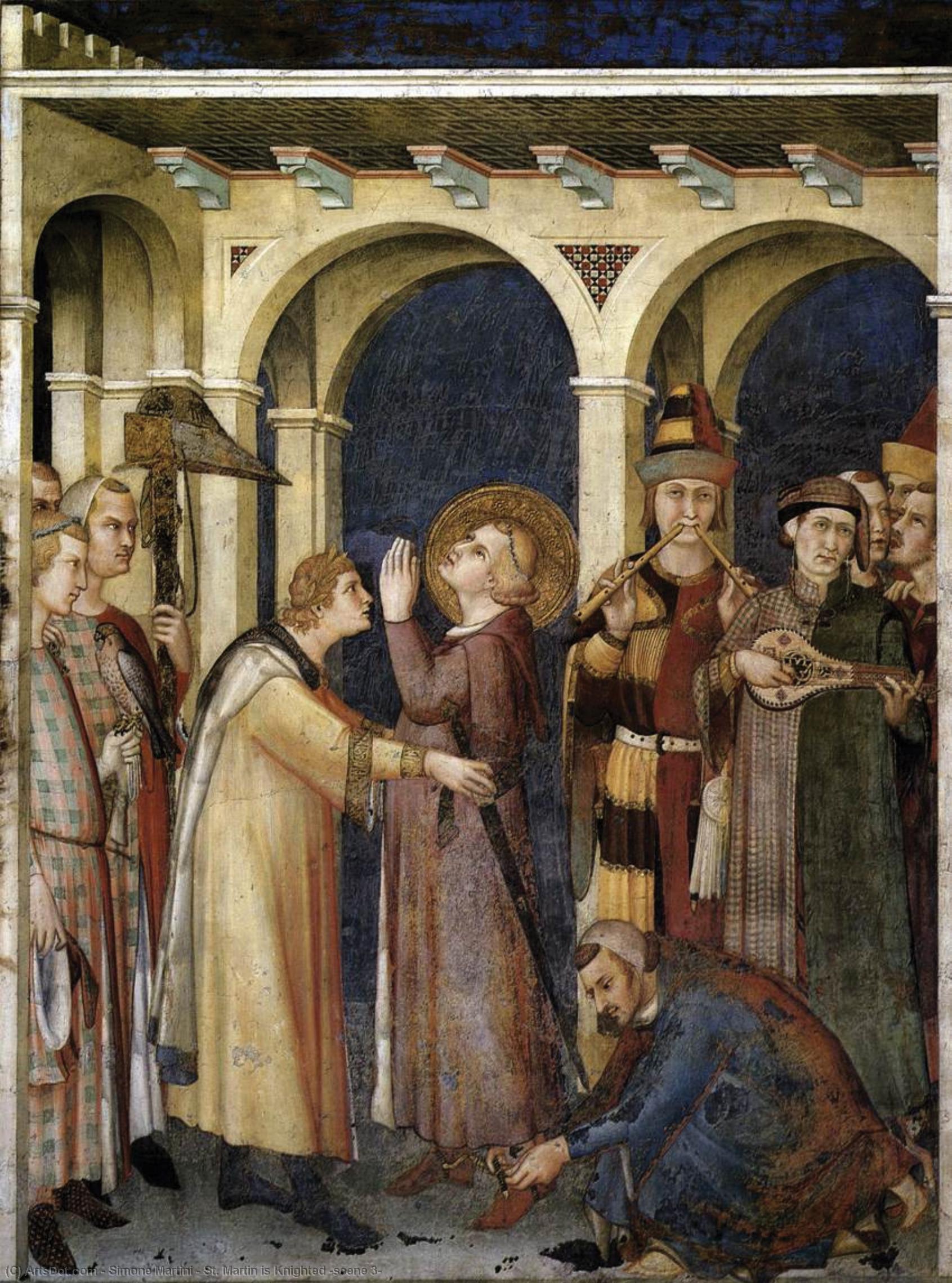
A Sacred Encounter: The Grace of St. Martin
In the quiet, luminous world of Simone Martini’s St. Martin is Knighted (scene 3), we are invited to witness a moment that transcends the boundaries of mere historical record, entering instead the realm of divine encounter. Created around 1312, this masterpiece captures a pivotal chapter in the life of St. Martin, the Roman soldier whose legendary compassion—clothing a beggar in the biting winter cold—led to his spiritual recognition. Here, the scene focuses on the solemnity of the accolade, where Martini depicts the ceremonial crowning by Bishop Fulco degli Albizzi. It is a profound meditation on faith and humility, rendered with a delicate touch that makes the sacred feel intimately present.
The composition breathes with the refined elegance of the International Gothic style. Martini, a master of the Sienese school, eschews heavy, monumental forms in favor of a lyrical grace. The figures are characterized by flowing lines and exquisitely sculpted drapery that seems to move with a life of its own. As one observes the kneeling St. Martin, his posture of earnest petition conveys a palpable sense of vulnerability and devotion. This is balanced by the spiritual authority of Bishop Albizzi, whose presence radiates holiness through the subtle use of a halo and a commanding yet merciful gesture. The surrounding onlookers—a kneeling woman and figures engaged with books and vessels—weave a tapestry of communal piety, suggesting that this act of divine benediction is witnessed and shared by the entire faithful community.
Technique and the Radiance of Siena
The emotional depth of this work is inseparable from Martini’s technical brilliance. Utilizing tempera paint on panel, the artist achieved a level of luminosity that remains breathtaking centuries later. The medium allowed for a meticulous application of color, creating subtle gradations that lend volume to the heavy robes and a celestial glow to the skin tones. This technique enables a play of light that seems to emanate from within the painting itself, particularly noticeable in the brilliant highlights of the liturgical garments and the soft, atmospheric depth of the setting.
Beyond its visual splendor, the painting serves as a window into the cultural zenith of Siena, Italy. During this era, Siena was a thriving center of economic and artistic innovation, fueled by the prosperity of the wool trade. The patronage of influential families like the Albizzi clan provided the fertile ground necessary for such spiritual narratives to flourish. For the modern collector or interior designer, a reproduction of this work offers more than just decoration; it brings into a space a sense of historical continuity and refined ornamentation. The painting’s ability to evoke reverence and contemplation makes it an ideal centerpiece for those seeking to infuse their surroundings with an atmosphere of peace, sophistication, and timeless spiritual truth.
질의응답
시몬 마르티니의 "St. Martin is Knighted (scene 3)"의 대비는 어느 정도로 강한가요?
시몬 마르티니의 "St. Martin is Knighted (scene 3)"의 대비 수준은 Bold입니다.
"St. Martin is Knighted (scene 3)"은(는) 누가 제작했으며 어떤 화풍인가요?
"St. Martin is Knighted (scene 3)"의 뒤에는 시몬 마르티니와 Late Gothic Style 운동이 자리하고 있습니다.
시몬 마르티니의 "St. Martin is Knighted (scene 3)"의 주요 색상은 무엇인가요?
시몬 마르티니의 "St. Martin is Knighted (scene 3)"의 주요 색상은 Espresso (#624d39)입니다.
More about this painting
 실제 크기로 보기
 보내기
보내기 공유하기
공유하기
 상세 보기
상세 보기 가이드 보기

 이미지 다운로드
 유사 작품 더 보기
 X-레이
X-레이 슬라이드 쇼 보기
 Q&A
Q&A 통계 정보
통계 정보