프린트 판매로 전환
 더 보기
더 보기







































 가로 또는 세로 중 어느 한 면이라도 105cm(약 41인치)를 초과하는 작품이나 복제화의 경우, 프레임은 분해된 키트 형태로 배송됩니다. 이는 안전한 배송을 보장하고 운송 중 발생할 수 있는 손상을 방지하기 위함입니다.


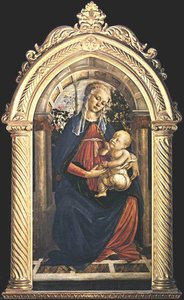
Virgin and Child with Young St John the Baptist
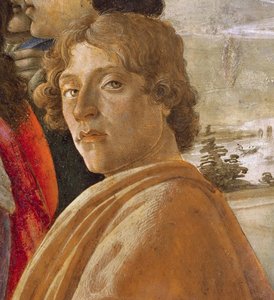
Sandro Botticelli’s “Virgin and Child with Young St John the Baptist” stands as an emblem of Renaissance artistic achievement—a testament to Botticelli's unparalleled ability to distill profound religious themes into exquisitely crafted visual form. Created in 1470, this oil on wood painting measuring 90 x 67 cm resides within the hallowed halls of the Musée du Louvre in Paris, France, attracting admirers from across the globe who seek to immerse themselves in its timeless beauty.The Composition: Harmony and Grace
The artwork’s visual narrative unfolds with deliberate elegance. Botticelli depicts Mary cradling Jesus while enveloped by two figures—a woman presumed to be a relative or companion of Mary on her left, and an older man observing the scene with contemplative interest on her right. Scattered throughout the background are smaller vignettes depicting individuals near the upper-left corner and another at the lower-right, adding depth and complexity to the composition. Notably, nestled beneath Mary’s gaze is St John the Baptist—a youthful figure symbolizing innocence and divine grace—further enhancing the painting's serene atmosphere. The careful arrangement of these elements contributes to a harmonious balance that reflects Botticelli’s mastery of perspective and spatial representation.Symbolism: A Celebration of Faith
Beyond its aesthetic appeal, “Virgin and Child” is laden with symbolic significance. Dominating the scene is a dining table adorned with a cake—a potent emblem representing the joyous celebration associated with Jesus' birth. This gesture underscores the painting’s spiritual core, conveying themes of piety, familial devotion, and divine providence. Botticelli’s meticulous attention to detail extends to the depiction of Mary’s garments—richly embellished fabrics that reflect Florentine aristocratic taste—underscoring the importance of material splendor as a conduit for spiritual contemplation.Artistic Significance: Renaissance Humanism Embodied
Botticelli's stylistic approach embodies the humanist ideals prevalent during the Renaissance, prioritizing human beauty and anatomical accuracy. The use of oil on wood allows for exceptional textural richness, capturing subtle nuances of light and shadow that imbue the figures with palpable emotion. Botticelli’s influence can be discerned in subsequent artists who sought to emulate his refined style—a legacy that continues to inspire creativity today. He skillfully blended Gothic traditions with emerging Renaissance sensibilities, establishing himself as a pivotal figure in shaping Western art history.Context in Art History: The Evolution of Nudity
The depiction of the nude in art underwent considerable transformation throughout antiquity and beyond, reflecting evolving societal standards for aesthetics and morality. From classical Greece to the Baroque era, artists explored the human form as a vehicle for conveying beauty, perfection, or sensual desire—often imbued with mythological narratives. Botticelli’s work aligns with this revival of classical ideals, where the human body was celebrated as an instrument of divine creation—a perspective that distinguishes it from earlier Byzantine art, which prioritized spiritual contemplation over anatomical realism.Relevance Today: An Enduring Masterpiece
“Virgin and Child” remains a cornerstone of Western artistic heritage—a source of fascination for scholars, artists, and collectors alike. Its enduring appeal stems not only from its visual splendor but also from its profound exploration of faith, family, and human dignity. For those wishing to delve deeper into Botticelli’s oeuvre or the broader context of Renaissance art, OriginalUniqueArt offers exceptional reproductions—allowing viewers to appreciate the artistry of this iconic masterpiece firsthand.- Leonardo Da Vinci: Garment study for a seated figure (266 x 233 cm, Musée du Louvre, Paris, France)
- Jean Goujon: Pietà (67 x 182 cm, Musée du Louvre, Paris, France)
- Jean Goujon: Nymph (Musée du Louvre, Paris, France)
- Jean Goujon: Naiad (74 x 195 cm, Musée du Louvre, Paris, France)
질의응답
산드로 보티첼리의 "성모자와 어린 세례 요한"의 재료와 크기는 어떻게 되나요?
산드로 보티첼리의 "성모자와 어린 세례 요한"의 기법은 캔버스 위 아크릴 물감이며, 크기는 90 x 67 cm입니다.
산드로 보티첼리의 "성모자와 어린 세례 요한"을(를) 활용하기에 가장 좋은 용도와 공간은 무엇인가요?
"성모자와 어린 세례 요한"은(는) 주목받는 중심작 용도로 추천하며, 거실 공간 공간에 배치하기 좋습니다.
초기 르네상스 사조의 작품 "성모자와 어린 세례 요한"은 어떤 감정을 전달하나요?
"성모자와 어린 세례 요한"의 평온함한 정서는 초기 르네상스 양식과 조화를 이룹니다.
이 작품에 대해 더 알아보기
 미리보기
미리보기
 공유하기
공유하기 공유하기
공유하기
 상세 정보
상세 정보 가이드 보기

 다운로드
다운로드
 유사 작품 더 보기
 X-레이
X-레이 슬라이드 쇼 보기
 질의응답
질의응답 통계 정보
통계 정보