프린트 판매로 전환
 상세 보기
상세 보기







































 가로 또는 세로 중 어느 한 면이라도 105cm(약 41인치)를 초과하는 작품이나 복제화의 경우, 프레임은 분해된 키트 형태로 배송됩니다. 이는 안전한 배송을 보장하고 운송 중 발생할 수 있는 손상을 방지하기 위함입니다.


Melancholy, 1945 – A Descent into Surrealist Dreamscape
Salvador Dalí’s “Melancholy,” painted in 1945, isn't merely a visual spectacle; it’s an invitation to wander through the labyrinthine corridors of the subconscious mind. This arresting canvas embodies the core tenets of Surrealism—a deliberate rejection of rational thought and embrace of dreamlike imagery—and stands as a testament to Dalí’s unparalleled ability to translate psychological anxieties into breathtaking artistic form. The painting depicts a desolate landscape bathed in muted blues and grays, punctuated by unsettling geometric shapes and figures that defy conventional perspective. It's a scene steeped in sorrowful contemplation, prompting viewers to confront the complexities of memory and emotion.Composition & Technique: Precision Amidst Illusion
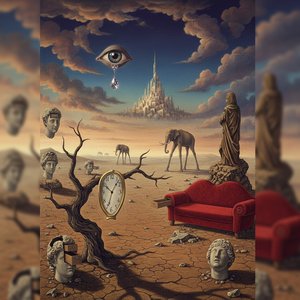
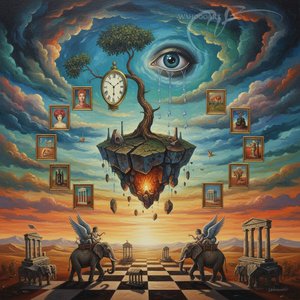
Dalí’s meticulous approach—his Paranoid-Critical Method—is evident throughout “Melancholy.” He painstakingly renders details with astonishing accuracy despite portraying an environment fundamentally divorced from reality. The dominant form on the right side is amorphous, pulsating with a palpable sense of unease, while smaller figures and objects float in mid-air, creating a disconcerting interplay between stillness and movement. A large oval shape dominates the center, containing what appears to be a plane—a subtle nod to anxieties surrounding technological advancement and warfare prevalent during Dalí’s era. Soft, flowing lines delineate organic shapes – reminiscent of biological forms – contrasting sharply with angular lines present in architectural elements like the airplane, emphasizing the tension between nature and constructed space. The artist skillfully employs texture through smooth surfaces juxtaposed with areas suggesting rough or organic textures, furthering the painting's immersive quality.Symbolism & Emotional Resonance: Echoes of Loss and Uncertainty
“Melancholy” overflows with symbolic references that invite profound interpretation. Recurring motifs characteristic of Dalí’s oeuvre—melting clocks symbolizing the fluidity of time and decay; elephants with elongated legs representing resilience amidst vulnerability; and distorted human figures embodying psychological fragmentation—contribute to the painting's overarching mood of melancholy and isolation. The drooping forms within the landscape mirror a pervasive sense of despair, while the desolate expanse underscores the feeling of abandonment. The airplane serves as a potent emblem of both progress and potential destruction, encapsulating anxieties about navigating an uncertain future. Ultimately, Dalí compels us to confront uncomfortable truths about human experience—the inevitability of loss, the fragility of identity, and the pervasive influence of subconscious desires.Historical Context: Surrealism's Response to Trauma
Painted in the aftermath of World War II, “Melancholy” reflects the anxieties and disillusionment that gripped Europe following the devastation of conflict. Surrealism emerged as a reaction against the horrors of war and the perceived limitations of rational thought, seeking refuge in the realm of dreams and fantasy—a deliberate attempt to bypass conscious censorship and access primal emotions. Dalí’s exploration of psychological states aligns perfectly with this artistic movement's core mission: to liberate the imagination from societal constraints and delve into the hidden depths of human consciousness.Conclusion: An Enduring Legacy of Artistic Vision
“Melancholy” remains a captivating masterpiece, demonstrating Dalí’s mastery of technique and his profound understanding of the human psyche. Its haunting beauty lies not merely in its visual splendor but also in its ability to provoke contemplation—to encourage viewers to confront their own fears and desires and to appreciate the transformative power of art as a conduit for emotional expression. A high-quality reproduction captures this essence, allowing admirers worldwide to experience Dalí’s visionary artistry firsthand.질의응답
살바도르 달리의 "Melancholy, 1945"은(는) 무엇을 묘사하고 있으며, 어떤 분위기를 담고 있나요?
"Melancholy, 1945"은(는) dreamscape, symbolism, melting clock, landscape, distortion, psyche, surreal imagery을(를) 보여주며, 기록된 분위기는 Dramatic입니다.
"Melancholy, 1945"의 작가는 누구인가요?
"Melancholy, 1945"의 작가는 살바도르 달리입니다. 이 작품은 살바도르 달리의 이름으로 등록되어 있습니다.
살바도르 달리의 "Melancholy, 1945"의 휘도는 어느 정도인가요?
살바도르 달리의 "Melancholy, 1945"의 휘도는 Dark입니다. 휘도는 색상이 빛을 얼마나 반사하는지를 나타냅니다.
More about this painting
 실제 크기로 보기
 보내기
보내기 공유하기
공유하기
 상세 보기
상세 보기 가이드 보기

 이미지 다운로드
 유사 작품 더 보기
 X-레이
X-레이 슬라이드 쇼 보기
 Q&A
Q&A 통계 정보
통계 정보