프린트 판매로 전환
 상세 보기
상세 보기







































 가로 또는 세로 중 어느 한 면이라도 105cm(약 41인치)를 초과하는 작품이나 복제화의 경우, 프레임은 분해된 키트 형태로 배송됩니다. 이는 안전한 배송을 보장하고 운송 중 발생할 수 있는 손상을 방지하기 위함입니다.


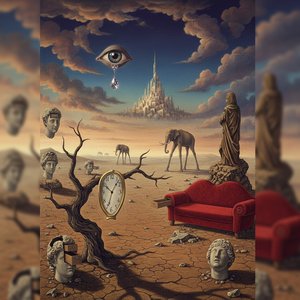
A Dreamscape of Temporal Distortion
In the hauntingly beautiful 1967 masterpiece “Mane, thecel, phares,” Salvador Dalí invites us into a realm where the boundaries between reality and the subconscious dissolve into a singular, breathtaking vision. This evocative work, executed with the delicate precision of gouache, presents a scene that feels less like a landscape and more like a fragment of a fever dream. At its heart, a solitary figure stands poised atop an inverted clock face, clutching a luminous lantern that pierces through the surrounding gloom. The composition is punctuated by the presence of birds—some perched with quiet stillness, others seemingly caught in mid-flight—which weave a sense of movement and organic life into an otherwise surreal and static environment. For the discerning collector, this piece offers more than mere visual interest; it provides a window into the profound psychological depths that Dalí mastered throughout his illustrious career.
The technique employed here is a testament to Dalí’s technical virtuosity. By utilizing gouache, the artist achieved a velvety, matte texture that allows for subtle gradations of light and shadow, lending the painting an ethereal, almost otherworldly glow. The palette is masterfully muted, relying on deep, somber tones to establish a sense of mystery, while sudden bursts of luminosity draw the eye toward the central symbolic elements. This careful manipulation of light creates a dramatic chiaroscuro effect, where every brushstroke serves to destabilize the viewer's perception and evoke a feeling of profound disorientation. It is this very tension between meticulous realism and deliberate distortion that makes the work so captivating for those looking to introduce a sense of intellectual depth and conversation-starting drama into a sophisticated interior.
Symbolism and the Echoes of History
To gaze upon “Mane, thecel, and phares” is to engage with a complex web of biblical and psychological symbolism. The title itself refers to the cryptic message from the Book of Daniel—Mene, Mene, Tekel, Upharsin—a divine warning of an approaching end. This historical and religious weight is mirrored in the artwork's motifs; the inverted clock face serves as a recurring Dalínian symbol for the fluidity and unreliability of time, suggesting a world where the rational laws of physics have been suspended. The birds, often representing rebirth or the flight of the soul, add a layer of spiritual complexity to the composition, contrasting the heavy, existential dread of the title with a flicker of ephemeral life.
Emerging from the post-World War II era, this work reflects the broader Surrealist movement's preoccupation with exploring the irrational and the unseen. Dalí does not merely depict a scene; he constructs an emotional landscape that resonates with themes of loss, transformation, and the search for meaning amidst chaos. For interior designers and art enthusiasts alike, a high-quality reproduction of this piece serves as a powerful focal point. It brings with it an aura of prestige and a profound sense of narrative, making it an ideal acquisition for those who seek to surround themselves with art that challenges the mind and stirs the soul.
질의응답
살바도르 달리의 "Mane, thecel, phares"을(를) 활용하기에 가장 좋은 용도와 공간은 무엇인가요?
살바도르 달리의 "Mane, thecel, phares"에 대해 기록된 두 가지 추천 사항은 Conversation 용도와 Living Room 공간입니다.
"Mane, thecel, phares"은(는) 언제 제작되었으며, 어떤 사조에 속하나요?
"Mane, thecel, phares"은(는) 1967년에 Surrealist Expressionism 사조의 흐름 속에서 제작되었습니다.
살바도르 달리의 "Mane, thecel, phares"의 색채 정체성은 무엇인가요?
"Mane, thecel, phares"은(는) Celadon (#bab8af)이(가) 주를 이루는 Neutrals 색조로 정의됩니다.
More about this painting
 실제 크기로 보기
 보내기
보내기 공유하기
공유하기
 상세 보기
상세 보기 가이드 보기

 이미지 다운로드
 유사 작품 더 보기
 X-레이
X-레이 슬라이드 쇼 보기
 Q&A
Q&A 통계 정보
통계 정보