유화 원작 구매
 Despair에 관한 모든 것







































 가로 또는 세로 중 어느 한 면이라도 105cm(약 41인치)를 초과하는 작품이나 복제화의 경우, 프레임은 분해된 키트 형태로 배송됩니다. 이는 안전한 배송을 보장하고 운송 중 발생할 수 있는 손상을 방지하기 위함입니다.


A Visceral Encounter with Pop Art's Emotional Core
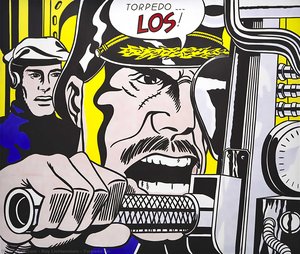
In the pantheon of twentieth-century masterpieces, few works capture the intersection of mass media aesthetics and raw human vulnerability as poignantly as Roy Lichtenstein’s “Despair.” Created in 1979, this striking piece transcends its comic-strip origins to offer a profound meditation on anxiety. At first glance, the viewer is met with a stylized, cartoonish figure, yet the simplicity of the form belies a deep psychological complexity. The central focus remains fixed upon an expressive face, where a wide-open mouth serves as a silent, haunting scream—a visual cue for anguish that resonates far beyond the boundaries of the canvas. While the background features scattered figures that hint at a larger, perhaps more chaotic narrative, they remain secondary to the overwhelming sense of individual isolation and distress that radiates from the protagonist.
The brilliance of “Despair” lies in Lichtenstein’s masterful command of the Pop Art lexicon. He famously rejected traditional illusionistic depth, opting instead for a deliberate flatness that prioritizes immediate visual impact. To achieve this, he utilized the iconic Ben-Day dots technique—a method borrowed from the halftone printing processes found in mid-century newspapers and comic books. This meticulous application of small, colored dots creates a textured, mechanical surface that mimics mass production while simultaneously elevating the subject matter to the realm of fine art. The interplay of bold, primary color blocks against these rhythmic patterns creates a tension between the "low" culture of commercial printing and the "high" art of gallery exhibition, making it an irresistible centerpiece for any modern collection.
Symbolism, Color, and the Echoes of an Era
The emotional temperature of the painting is dictated by its vibrant yet unsettling color palette. Lichtenstein employs a dominant scheme of red and yellow to amplify the artwork’s inherent intensity. In this composition, red functions as more than just a pigment; it symbolizes passion, danger, and the heat of an unfolding crisis, while the bright yellow provides a jarring contrast that heightens the sense of alarm. Occasional blue accents ground the composition, yet they cannot dampen the feverish energy of the primary tones. This chromatic strategy ensures that the viewer’s eye is constantly moved across the canvas, mirroring the restless, unsettled state of the character depicted.
To understand “Despair,” one must also consider the historical atmosphere of its creation. Emerging in the late 1970s, the work reflects a period of profound duality in American life—a time when the post-war economic optimism was beginning to be eclipsed by shadows of social unrest and political instability. Lichtenstein captures this zeitgeist perfectly, translating societal anxieties into a universal language of suffering and identity crisis. For the discerning collector or interior designer, “Despair” offers more than mere decoration; it provides a sophisticated conversational piece that invites contemplation on the human condition. Whether placed in a contemporary gallery setting or as a bold statement in a curated residential space, this reproduction brings the enduring legacy of Lichtenstein’s visionary Pop Art into the modern home.
질의응답
Despair은(는) 수작업으로 그린 작품인가요, 아니면 프린트된 작품인가요?
수작업 제작: 숙련된 화가가 Despair을(를) 리넨 캔버스 위에 유화로 재현합니다.
Despair의 사이즈는 어떤 것을 선택해야 하나요?
사이즈는 35.6 x 28.1 cm (₩271335)부터 247.2 x 195.5 cm (₩2404029)까지 있으며, 이 페이지의 표에 주요 단계별 가격이 안내되어 있습니다.
배송은 얼마나 걸리나요?
배송은 전 세계 무료 특송으로 4~5주가 소요되며, 본 페이지에서 긴급 제작 옵션을 선택하실 수 있습니다. 제품은 조건 없이 100일 이내에 반품하여 전액 환불받으실 수 있습니다.
로이 리히텐슈타인 작가는 Despair 작품에 어떤 재료를 사용했나요?
Painting
 미리보기

 공유하기
 공유하기
 상세 정보
 학습용 요약본


 다운로드
 유사 작품 더 보기
 X-레이
 슬라이드 쇼 보기
 질의응답

 통계 정보