프린트 판매로 전환
 상세 보기
상세 보기







































 가로 또는 세로 중 어느 한 면이라도 105cm(약 41인치)를 초과하는 작품이나 복제화의 경우, 프레임은 분해된 키트 형태로 배송됩니다. 이는 안전한 배송을 보장하고 운송 중 발생할 수 있는 손상을 방지하기 위함입니다.


A Divine Encounter in Oil and Wood
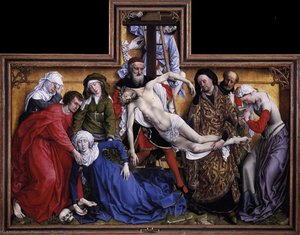
To stand before the Sforza Triptych is to step through a portal into the profound spiritual landscape of the Northern Renaissance. Completed around 1460, this extraordinary altarpiece by the Flemish Master Rogier van der Weyden (or his highly skilled workshop) serves as much more than a religious relic; it is a masterclass in the intersection of human emotion and divine grace. The work was commissioned for Alessandro Sforza, a prominent member of the Milanese dynasty, and it carries within its three hinged panels a narrative of devotion that remains as palpable today as it was in the fifteenth century. As light dances across the meticulously rendered surfaces, the viewer is invited into a sacred space where the boundaries between the earthly and the celestial begin to blur.
The composition of the triptych is famously irregular, yet this very asymmetry lends the piece an organic, breathing quality that draws the eye in a rhythmic dance across the panels. In the central scene, the weight of the Crucifixion anchors the soul, with Christ’s sacrifice presented with a raw, poignant realism. Surrounding him, the figures are not merely static icons but vessels of grief and reverence. The technique employed—oil paint on wood panels—allows for an unprecedented luminosity. Through the delicate application of glazes, Van der Weyden achieved a depth of color that seems to glow from within, capturing the subtle sheen of fine fabrics, the cold hardness of armor, and the soft, translucent quality of human skin with breathtaking precision.
The Language of Symbolism and Detail
Every brushstroke in the Sforza Triptych serves a higher purpose, weaving a complex tapestry of symbolism that rewards the contemplative observer. The artist’s background as a goldsmith is evident in the microscopic attention to texture; one can almost feel the heavy weight of the velvet drapery and the intricate metallic glints of period attire. This dedication to detail was not merely for aesthetic pleasure but was deeply rooted in the devotio moderna movement, which encouraged believers to find the divine in the minute details of the physical world. The presence of saints such as St. Bavo, St. Francis, St. Catherine, and St. Barbara on the wings provides a celestial court that flanks the central mystery, creating a sense of a continuous, eternal liturgy.
For the modern collector or interior designer, this piece offers a profound sense of historical gravity and intellectual depth. The triptych does not simply decorate a space; it commands it. Its ability to evoke a mood of quiet contemplation makes it an ideal centerpiece for environments that value heritage, stillness, and sophistication. Whether viewed as a window into the pious heart of the 15th century or as a triumph of Early Netherlandish technical mastery, the Sforza Triptych remains an enduring symbol of how art can bridge the gap between the temporal and the eternal.
질의응답
로지에 반 데르 베이덴의 "Sforza Triptych"의 프린트 제품은 어디에서 구매할 수 있나요?
로지에 반 데르 베이덴의 "Sforza Triptych"의 프린트를 구매하시려면, 해당 작품의 파인 아트 프린트 페이지에서 간단히 주문하실 수 있습니다: 코튼 캔버스 또는 아카이브용 캔버스지에 인쇄된 파인 아트 프린트.
"Sforza Triptych"은(는) 어떤 화풍에 속하나요?
로지에 반 데르 베이덴의 "Sforza Triptych"은(는) Early Netherlandish Renaissance 사조에 속합니다. 이 사조는 해당 작품의 양식적 배경을 제공합니다.
로지에 반 데르 베이덴의 "Sforza Triptych" 작품은 작가의 본국에 보관되어 있나요?
네, 해당 작품은 작가의 본국에 보관되어 있습니다.. 로지에 반 데르 베이덴의 출생국은 벨기에이며, "Sforza Triptych"의 원작을 소장하고 있는 미술관은 벨기에에 있습니다.
More about this painting
 실제 크기로 보기
 보내기
보내기 공유하기
공유하기
 상세 보기
상세 보기 가이드 보기

 이미지 다운로드
 유사 작품 더 보기
 X-레이
X-레이 슬라이드 쇼 보기
 Q&A
Q&A 통계 정보
통계 정보