프린트 판매로 전환
 더 보기
더 보기







































 가로 또는 세로 중 어느 한 면이라도 105cm(약 41인치)를 초과하는 작품이나 복제화의 경우, 프레임은 분해된 키트 형태로 배송됩니다. 이는 안전한 배송을 보장하고 운송 중 발생할 수 있는 손상을 방지하기 위함입니다.


Robert W. Salmon’s Venetian Reverie: A Window into Luminist Landscape
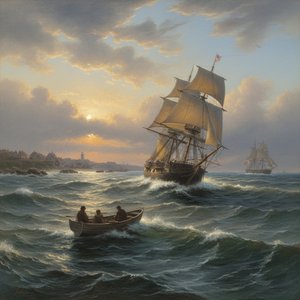
Robert W. Salmon's “View of Venice,” painted in 1845, stands as a testament to the burgeoning Luminist movement and its fascination with capturing fleeting moments of natural beauty—a remarkable achievement considering it was created during a period marked by significant artistic experimentation. This serene depiction transports viewers back to mid-Victorian Italy, offering more than just a picturesque panorama; it embodies an ethos of quiet contemplation and meticulous observation that distinguishes Salmon’s oeuvre from the grand narratives favored by many of his contemporaries.A Synthesis of Influences: Artistic Roots
Salmon's artistic journey began in Whitehaven, Cumbria, where he absorbed the formative influence of the surrounding maritime landscape—a tradition upheld by Dutch marine painters of the seventeenth century who championed atmospheric perspective and tonal gradation to convey realism. Furthermore, Salmon’s training extended beyond the seas, delving into the stylistic explorations of Italian vedute artists like Canaletto and Bernardo Bellotto, masters of capturing urban vistas with astonishing accuracy. However, perhaps most crucially, he embraced the tenets of Claude Lorrain, whose idealized landscapes prioritized sublime grandeur and spiritual resonance—a deliberate choice that would profoundly shape Salmon’s artistic vision.Technical Brilliance: Luminist Precision
Salmon's masterful technique exemplifies the Luminist style. He employed a restrained palette dominated by muted blues and greens, skillfully blending pigments to achieve subtle gradations of tone that convincingly simulate the diffused light characteristic of Venetian canals at dusk. The artist meticulously rendered details—the reflections shimmering on the water’s surface, the textures of weathered buildings—demonstrating an unwavering commitment to capturing the essence of his subject matter with painstaking precision. Unlike Impressionists who sought to depict immediate sensory experience, Salmon prioritized conveying a mood of tranquility and contemplation through carefully calibrated observation and tonal harmony.Venetian Life Illuminated: Contextual Significance
“View of Venice” wasn’t merely a visual record; it served as a conduit for understanding the cultural landscape of its time. Painted during a period of considerable artistic innovation, Salmon's work aligns with broader trends toward realism and psychological depth within British art. The bustling harbor scene—complete with boats laden with cargo and figures engaged in daily activities—offers glimpses into the economic vitality of Liverpool and Venice alike. Moreover, the inclusion of Santa Maria della Salute basilica reinforces the spiritual dimension of Venetian life, reflecting the piety prevalent during the Victorian era.Emotional Resonance: A Moment Frozen in Time
Ultimately, Salmon’s “View of Venice” transcends its technical merits to evoke a powerful emotional response. The painting's stillness invites viewers to pause and appreciate the beauty of the natural world—a sentiment echoed by Luminist painters across Europe. There is an undeniable serenity conveyed through the muted colors and soft brushstrokes, capturing not just what was seen but also how it felt: a quiet reverence for the grandeur and complexity of Venetian life. It remains a captivating reminder that art can transport us beyond time and place, fostering contemplation and inspiring appreciation for enduring artistic ideals.질의응답
로버트 W. 살몬의 "View of Venice"와 유사한 작품은 어디에서 찾을 수 있나요?
로버트 W. 살몬의 "View of Venice"의 유사한 작품들 페이지에서 관련 작품들을 만나보세요.
"View of Venice"은(는) 로버트 W. 살몬의 예술적 발전 단계 중 어느 시기를 나타냅니까?
"View of Venice"은(는) 로버트 W. 살몬의 예술적 생애 중 Mature Period 시기의 작품입니다. 이 분류를 통해 해당 작품을 작가의 예술적 발전 과정과 연결해 볼 수 있습니다.
로버트 W. 살몬의 "View of Venice"에서 느껴지는 감정은 무엇인가요?
"View of Venice"은(는) Tranquil한 분위기를 자아냅니다. 이 정서적 톤은 작품이 전달하는 인상을 설명합니다.
이 작품에 대해 더 알아보기
 미리보기
미리보기
 공유하기
공유하기 공유하기
공유하기
 상세 정보
상세 정보 가이드 보기

 다운로드
다운로드
 유사 작품 더 보기
 X-레이
X-레이 슬라이드 쇼 보기
 질의응답
질의응답 통계 정보
통계 정보