프린트 판매로 전환
 더 보기
더 보기







































 가로 또는 세로 중 어느 한 면이라도 105cm(약 41인치)를 초과하는 작품이나 복제화의 경우, 프레임은 분해된 키트 형태로 배송됩니다. 이는 안전한 배송을 보장하고 운송 중 발생할 수 있는 손상을 방지하기 위함입니다.


A Poignant Encounter in the American Landscape
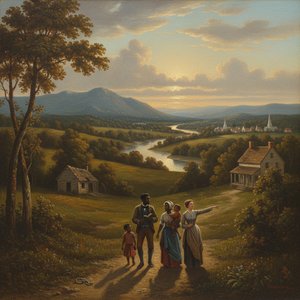
In the tender brushstrokes of Robert Seldon Duncanson’s 1853 masterpiece, Uncle Tom and Little Eva, we are invited into a moment of profound stillness and quiet connection. The painting presents a scene of serene companionship, where a man and a young girl sit nestled beneath the protective canopy of a sprawling tree. Clad in luminous white garments that seem to catch the soft, filtered light of the afternoon, they exist in a world seemingly removed from the turbulence of their era. As the woman—or perhaps the youthful figure representing Eva—points toward a distant horizon, her gesture draws our eyes across the tranquil water where a solitary boat rests near the shore. This delicate interaction between the figures and the vastness of the landscape creates a sense of longing and wonder, capturing a fleeting instance of peace amidst the shifting tides of history.
Duncanson, a pioneer of the American landscape tradition, utilizes his mastery of light and atmosphere to elevate this narrative scene into something much more than a mere portrait. The composition is enriched by the presence of birds in flight, scattered throughout the sky like living notes of music, adding a layer of kinetic energy to an otherwise motionless tableau. Through his expert use of color and texture, Duncanson achieves a luminous quality that breathes life into the natural elements, from the verdant foliage of the sheltering tree to the shimmering reflections on the water's surface. For the discerning collector or interior designer, this piece offers a sophisticated interplay of light and shadow, making it an ideal centerpiece for spaces that value tranquility, depth, and historical resonance.
Historical Resonance and Symbolic Depth
To understand the emotional weight of Uncle Tom and Little Eva, one must look through the lens of its mid-19th-century context. Created in 1853, a period of intense social upheaval in the United States, the painting subtly engages with the cultural zeitgeist of the time. The figures, evocative of characters from Harriet Beecher Stowe’s influential literature, represent much more than a simple pastoral scene; they embody themes of innocence, resilience, and the enduring human spirit. The choice of white clothing serves as a powerful symbol of purity and spiritual light, contrasting beautifully with the earthy, grounded tones of the American landscape that Duncanson so loved to depict.
The artistry lies in how Duncanson weaves these heavy historical themes into a soft, romanticized aesthetic. He does not rely on overt political statements but instead uses the harmony of nature—the calm water, the steady tree, and the rhythmic flight of birds—to suggest a yearning for peace and justice. This subtle approach allows the artwork to resonate on multiple levels: as a beautiful landscape, a touching character study, and a profound historical document. For those seeking to adorn their homes with art that inspires contemplation, this reproduction offers an unparalleled opportunity to possess a piece that is as intellectually stimulating as it is visually breathtaking.
A Timeless Addition to the Refined Interior
For the art enthusiast or the professional decorator, a high-quality reproduction of this work serves as more than just decoration; it acts as a window into a pivotal moment in American art history. The painting’s palette—a sophisticated blend of soft whites, deep greens, and tranquil blues—complements a wide array of interior styles, from classic traditionalism to modern organic aesthetics. Its ability to evoke a sense of calm and nostalgia makes it a transformative element in any room, providing a focal point that invites guests to linger and reflect.
Owning a piece that celebrates the legacy of Robert Seldon Duncanson means bringing into one's environment a testament to perseverance and artistic brilliance. The meticulous detail captured in every leaf and every ripple of water ensures that this reproduction maintains the soul of the original 1853 masterpiece. Whether placed in a sunlit library or a quiet study, Uncle Tom and Little Eva continues to tell a story of connection, beauty, and the enduring power of the natural world.
질의응답
"Uncle Tom and LIttle Eva"은(는) 어떤 화풍에 속하나요?
로버트 셀던 던컨슨의 "Uncle Tom and LIttle Eva"은(는) Hudson River School 사조에 속하며, 이 사조는 해당 작품의 양식적 배경을 잘 보여줍니다.
로버트 셀던 던컨슨의 "Uncle Tom and LIttle Eva"은(는) 어떤 공간에 잘 어울릴까요?
로버트 셀던 던컨슨의 "Uncle Tom and LIttle Eva" 작품에 추천하는 공간은 Living Room입니다. 물론 이 제안은 고객님의 인테리어 스타일에 맞춰 자유롭게 조정하실 수 있습니다.
Uncle Tom and LIttle Eva은(는) 로버트 셀던 던컨슨의 예술적 여정 중 어느 시기의 작품인가요?
"Uncle Tom and LIttle Eva"은(는) 로버트 셀던 던컨슨의 Mature Period를 잘 보여주는 작품입니다.
이 작품에 대해 더 알아보기
 미리보기
미리보기
 공유하기
공유하기 공유하기
공유하기
 상세 정보
상세 정보 가이드 보기

 다운로드
다운로드
 유사 작품 더 보기
 X-레이
X-레이 슬라이드 쇼 보기
 질의응답
질의응답 통계 정보
통계 정보