Orphism · 1939
Rythm (로베르 들로네, 1939)
로베르 들로네 (1885–1941) 작가의 Rythm 1939년에 제작되었습니다. Orphism 운동에 속합니다. Oil On Canvas(으)로 제작되었습니다. 파리, 프랑스에 위치한 파리 시립 현대 미술관에 소장되어 있습니다.
- 1939
- Oil On Canvas
- 파리 시립 현대 미술관

 미리보기

 수작업 유화 작품
 공유하기
 공유하기
 학습용 요약본


 다운로드
 유사 작품 더 보기
 X-레이
 슬라이드 쇼 보기
 질의응답

 통계 정보
Rythm 요약
- 제목
- Rythm
- 작가
- 로베르 들로네 (1885–1941)
- 작가 출생지
- 파리, 프랑스
- 제작 연도
- 1939
- 매체
- Oil On Canvas
- 전시 장소
- 파리 시립 현대 미술관, 파리, 프랑스
- 운동성
- Orphism
- 제작 시기
- Modern
- 주제
- circle, pattern, shapes, spiral, swirl, colors
Rythm은(는) 무엇을 묘사하고 있나요?
The Composition of Form and Color
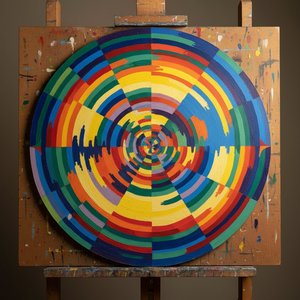
The painting Rythm, dated 1939, presents a central circular structure composed of intersecting geometric shapes and varied color segments. This primary circle is divided into multiple sections, each containing distinct patterns and internal designs. Smaller circles are nested within the larger circular framework, creating a layered effect of concentricity. Two additional circles appear in the periphery: one in the upper right corner and another in the lower left corner. The arrangement of these shapes suggests a spiral or a swirling motion. The surface is characterized by a variety of hues that interact through their proximity, creating a sense of movement across the canvas.
The technique relies on the application of color to define form rather than using line to outline recognizable objects. The artist utilizes the principles of Orphism, focusing on the interaction of light and chromatic intensity. The shapes are not static; they are organized to create a visual rhythm through the interplay of curves and counter-curves. This method uses the physical action of looking to activate the vision, as the eye moves between the contrasting colors and the varying thicknesses of the circular discs.
Historical Context and Artistic Intent
Created in 1939, this work belongs to a period when the artist had moved toward a more radical, non-objective form of abstraction. This phase of production followed a return to the circular forms that characterized earlier explorations of harmony. The composition reflects a departure from figurative subjects, focusing instead on the expressive potential of color alone. The organization of these shapes and their spatial relationships determine the visual tempo of the piece.
The work is situated within the School of Paris movement. It reflects a theoretical interest in how color functions as an active force capable of shaping perception. By utilizing contrasting complementary colors, such as red and green or blue and orange, the painting creates a synchromic effect. This approach seeks to move beyond the representation of the physical world, aiming instead to establish a direct connection between the viewer's eye and the agitation of light and color.
Rythm은(는) 어느 미술관에 소장되어 있나요?
파리 시립 현대 미술관
파리, 프랑스
파리의 주요 시립 미술관 파리 16구 프레지던트 윌슨 대로 11번지에 자리 잡은 파리 시립 현대 미술관은 도시를 대표하는 중요한 시립 미술관입니다. 이곳은 20세기와 21세기를 관통하는 현대 및 동시대 예술의 연구와 보존에 헌신하며 예술적 가치를 이어오고 있습니다. 2013년 1월 1일부터는 파리 뮤제(Paris Musées) 공공 기관에 통합된 14개의 파리 시립 미술관 중 하나로서 그 위상을 공고히 하고 있습니다.


Rythm의 고해상도 이미지

로베르 들로네, Rythm (1939), 파리 시립 현대 미술관. 퍼블릭 도메인
Rythm에 관한 질문과 답변
로베르 들로네의 "Rythm"의 원화는 어디에서 감상할 수 있나요?
Rythm의 원작은 파리 시립 현대 미술관, 파리, 프랑스에서 만나보실 수 있습니다.
로베르 들로네의 "Rythm"에는 어떤 기법이 사용되었나요?
로베르 들로네의 "Rythm"에는 어떤 소재가 등장하나요?
로베르 들로네의 "Rythm"은(는) 퍼블릭 도메인인가요?
아티스트 로베르 들로네 소개

1885–1941, 프랑스
로베르 들로네
색채 추상 선구자: 로베르 들로네의 삶과 예술 1885년 파리에서 태어난 로베르 들로네는 20세기 초 급진적인 예술적 변화를 이끄는 핵심 인물로 부상했습니다. 처음에는 전통 회화에 매료되었지만, 그의 여정은 결국 색채와 빛을 탐구하는 방향으로 나아갔고, 이는 그의 유산을 정의하고 추상 미술 탄생에 크게 기여하게 되었습니다. 들로네는 단순히 세계를 *재현*하는 데 관심이 없었습니다. 그는 아내 소니아 들로네 및 같은 비전을 공유하는 다른 예술가들과 함께 오르피즘 운동을 공동 창립하여 생동감 넘치는 기하학적 형태와 빛나는 색조의 언어를 통해 세상의 본질을 포착하고자 했습니다.
로베르 들로네의 다른 작품들
 파리의 도시1912
 에펠 탑1914
 The Eiffel Tower1910
 Window1912

Rythm 관련 에세이
 Orphism: A Symphony of Color and Form – Exploring the Abstract Roots of Modern ArtExplore Orphism, the vibrant abstract art movement pioneered by Robert & Sonia Delaunay. Discover its unique color theory, lasting influenc…
 Mastering Abstraction: The Top 25 Essential Works by Wassily KandinskyExplore 25 iconic Kandinsky masterpieces and the birth of abstraction. Discover the full collection online at OriginalUniqueArt.com.
 Sonia Delaunay: A Life in Color – Exploring the Rhythms of Abstraction and SynesthesiaExplore the vibrant world of Sonia Delaunay, a pioneer of abstract art and co-founder of Orphism. Discover her revolutionary use of color, …