
 미리보기
미리보기
 공유하기
공유하기 공유하기
공유하기
 상세 정보
상세 정보 가이드 보기

 다운로드
다운로드
 유사 작품 더 보기
 X-레이
X-레이 슬라이드 쇼 보기
 질의응답
질의응답 통계 정보
통계 정보The Incoming Tide

- 76.0 x 130.0 cm


 더 보기
더 보기
지클레 / 아트 프린트
빠른 제작과 다양한 마감 옵션을 제공하는 박물관 수준의 지클레이 및 캔버스 프린트. ( 수작업 채색 복제본 주문하기 디지털 이미지로 전환)




































작품의 원본 비율을 그대로 유지하는 프리셋 사이즈 중에서 선택해 보세요.

액자나 벽면 크기에 맞춰 필요한 가로와 세로 길이를 입력해 주세요. 프린트는 원본 이미지보다 크게 제작할 수 없으며 오직 자르는 것만 가능하므로, 비율이 다른 사이즈를 선택할 경우 이미지의 일부가 잘려 나갈 수 있습니다. 인쇄 작업에 들어가기 전, 최종 확인을 위해 디지털 목업을 보내드립니다. 이 페이지에 표시된 이미지는 실제 잘리는 영역을 나타내지 않으며, 오직 목업을 통해서만 정확한 확인이 가능합니다.


 유리 옵션은 110cm 미만 크기에서만 선택 가능합니다.

The Incoming Tide
지클레 / 아트 프린트
복제본 크기
-


최종 결제 금액
₩ 108616
Composition and Style
The composition of The Incoming Tide is characterized by a serene atmosphere, with the ocean in the background and the sandy shore stretching out towards the water's edge. The painting features several people scattered along the shoreline, enjoying their time by the sea. The presence of birds flying above the beach adds to the peaceful ambiance of the scene. Light and color play a crucial role in creating the overall mood of the painting, with the soft hues of the sky and the ocean blending harmoniously with the warm tones of the sand.Artist and Influences
Richard Wane was a talented artist known for his landscape paintings. His work is often compared to that of other notable artists, such as Harry Wilson, who created the remarkable painting War at Sea. To learn more about Richard Wane and his artwork, visit https://OriginalUniqueArt.com/@/Richard-Wane. For information on other artists and their paintings, such as James Ensor's Carnaval sur la plage, explore the extensive collection at https://OriginalUniqueArt.com.- View The Incoming Tide by Richard Wane at /en/art/show/art-aqu9xy-en/
- Discover more about the Wolverhampton Art Gallery and its collections
- Learn about other artists, such as William Bell Scott and his painting Sand pools
The Musée Réattu in Arles, France, is another notable museum featuring an impressive collection of artworks. For more information on this museum and its collections, visit /art/list/?Filter=A@D3CEDD-The-Museum-Musee-Reattu-(Arles-France).
질의응답
"The Incoming Tide"은(는) 어느 작가의 작품인가요?
"The Incoming Tide"의 작가는 Richard Wane입니다.
Richard Wane의 "The Incoming Tide"은(는) 언제 제작되었나요?
Richard Wane의 "The Incoming Tide"은(는) 1890년에 제작되었습니다.
"The Incoming Tide"의 고해상도 다운로드 버전을 구매할 수 있나요?
Richard Wane의 "The Incoming Tide"의 디지털 이미지는 다음의 디지털 이미지 파일 페이지에서 구매하실 수 있습니다: 고해상도 디지털 이미지 다운로드.
작가 정보
Richard Wane: A Coastal Visionary of the Isle of Man
Richard Wane (1852-1904) remains a quietly significant figure in 19th and early 20th-century British art, an artist whose evocative depictions of coastal landscapes and harbors owe much to his formative years on the Isle of Man. Born in Lancashire, Wane’s artistic journey led him to this windswept island, a place that profoundly shaped his visual language and subject matter. His work isn't characterized by grand narratives or revolutionary techniques; instead, it offers intimate glimpses into the rhythms of maritime life, the subtle shifts of light on water, and the rugged beauty of the Manx coastline – a world rendered with a remarkable sensitivity to atmosphere and detail.
Wane’s early artistic training took place at the Manchester Academy of Fine Arts, providing him with foundational skills in drawing and painting. However, it was his relocation to the Isle of Man in the late 1870s, where he married Marian Millinger, a fellow artist, that truly ignited his creative spirit. The island’s dramatic geography – its towering cliffs, sheltered harbors, and ever-changing weather – provided an inexhaustible source of inspiration. Unlike many artists who sought grand vistas or heroic subjects, Wane focused on the everyday: fishing boats returning to port, weathered cottages clinging to the hillsides, and the ceaseless dance between land and sea.
The Palette of Peel and Beyond
Wane’s artistic style is often described as Impressionistic, though it's more accurately characterized by a meticulous observation of light and color. He employed a muted palette – predominantly blues, greens, greys, and browns – to capture the subtle nuances of his subjects. His brushwork was typically loose and expressive, conveying movement and texture with remarkable skill. Unlike some artists who sought to recreate reality with photographic precision, Wane prioritized capturing the *feeling* of a place—the dampness of the air, the chill of the wind, the sense of solitude and timelessness.
His most celebrated works depict Peel, a historic port town on the west coast of the Isle of Man. These paintings are not merely topographical representations; they’re imbued with a deep understanding of the local culture and traditions. He frequently depicted scenes of fishermen unloading their catches, sailors mending nets, and families gathering in the harbor – capturing the essence of island life. His meticulous attention to detail—the weathered faces of the fishermen, the intricate rigging of the boats, the reflections on the water—demonstrates a profound respect for his subjects.
A Member of Artistic Circles
Wane’s artistic career extended beyond the Isle of Man. He exhibited regularly at prestigious venues in Britain, including the Royal Academy, the Royal Hibernian Academy, and the Royal Society of British Artists. His work was also featured in exhibitions at the New Water Colour Society and the Royal Institute of Painters in Water Colours. He was a member of several prominent art clubs, including the Liverpool Sketching Club, demonstrating his commitment to the artistic community.
Notably, Wane’s connections within the British art world were facilitated by his marriage to Marian Millinger, who also possessed artistic talent and social connections. Their shared passion for art fostered a supportive environment that allowed Wane to develop his skills and gain recognition. His association with Edward Christian Qualye, another Manx artist, further enriched his artistic network.
Legacy and Historical Context
Despite his consistent output and membership in established artistic circles, Richard Wane never achieved the level of widespread fame or financial success enjoyed by some of his contemporaries. This relative obscurity is perhaps a reflection of the changing tastes of the art world at the turn of the 20th century, which increasingly favored more overtly modern styles. However, Wane’s work continues to be appreciated for its quiet beauty, its intimate portrayal of island life, and its masterful handling of light and color.
Wane's paintings offer a valuable window into the cultural landscape of the Isle of Man during a period of significant social and economic change. His art documents the lives of ordinary people—fishermen, sailors, and farmers—and preserves a record of a disappearing way of life. His legacy lies not in grand pronouncements or revolutionary innovations, but in the enduring power of his evocative coastal scenes – paintings that invite viewers to pause, reflect, and connect with the timeless beauty of the Manx landscape.

Richard Wane
1852 - 1904
작가 정보 요약
- Full Name: Richard Whittaker Wane
- Nationality: British
- Date Of Birth: 1852
- Date Of Death: 1904
- Place Of Birth: Eccleston, Lancashire
- Notable Artworks:
- Street Scene, Ipswich
- On the Anglesea Coast
- A Day's Sport
- A Quaint Corner
- Artistic Movement Or Style: Landscape/Coastal
- Artists Who Influenced This Artist: ['None],\n "Artists or movements influenced by this artist": [None']
관련 콘텐츠

Sun, Sand, and Soul: 10 Stunning Artworks That Capture the Beach
Immerse yourself in the serene beauty of the coast through 10 iconic seascape paintings. From Impressionist waves to modern coastal masterpieces, explore the stories behind these timeless ocean-inspired artworks. Find museum-quality reproductions at OriginalUniqueArt.com. Explore the full collection online.
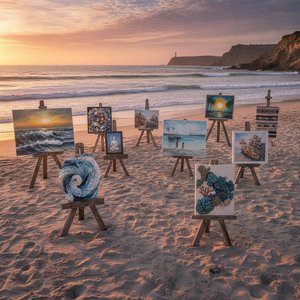
Sun, Sand, and Soul: 10 Stunning Artworks That Capture the Magic of the Beach
Escape to the shore through 10 iconic beach artworks. From Impressionist waves to serene seascapes, explore the stories behind these timeless masterpieces and find museum-quality reproductions for your home. Discover all masterpieces on OriginalUniqueArt.com.

Capturing the Tide: The Enduring Presence of Seascape and Maritime Art
Explore the profound evolution of seascape art from Romanticism to Impressionism. Discover timeless maritime mastery today.

19th Century Masterpieces: 10 Paintings That Defined an Era | OriginalUniqueArt
Journey through 19th century art with OriginalUniqueArt! Explore 10 iconic paintings – from Monet & Renoir to Courbet – and discover the stories behind Romanticism, Realism & Impressionism. Find museum-quality reproductions for your home decor. Explore the full collection online!

Richard Wilson: Deconstructing Landscape & Memory in Contemporary Installation Art
Explore Richard Wilson's groundbreaking landscape paintings & his enduring influence on contemporary installation art. Discover investment opportunities, provenance insights & the materiality of memory in this expert analysis.